Genre: Creative Nonfiction

Inside the NYT

Caption: 

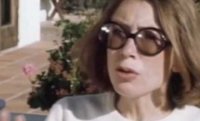
For his new documentary film, Page One: Inside the New York Times, filmmaker Andrew Rossi gained unprecedented access to the paper's newsroom and the inner workings of the Media Desk for a year. Check out the footage of David Carr, a reporter, Media Equations columnist, and author of The Night of the Gun, a memoir published by Simon & Schuster in 2008.

A Challenge of Six for Your Fourth

This summer SMITH Magazine is bringing writers another of its famed challenges in literary brevity.

Amidst this weekend's celebrations of liberty from it, perhaps now's the perfect time to reflect on the contest theme—work—using six words exactly.

From now until Labor Day, a new sub-theme will be introduced every two weeks, and writers are invited to enter their six-word memoir on that particular aspect of work on the SMITH website. This week's competition, judged by The Happiness Project author Gretchen Rubin, asks, "Why do you do what you do?" (Some recent entries: "Who doesn't love the payroll lady?" and "I can work in my slippers.")

There is no fee to enter, and the magazine is partnering with Mercer, a human resources firm, to offer the winner of each two-week-long challenge an iPad2 or Blackberry Playbook. All entries will also be considered for a Six Words About Work book. For more information, to read entries, and to submit your own, visit the contest web page.

U.K.'s Second Oldest Literary Prize Is Suspended

A nearly seventy-year-old literary award that honored works in all genres by young, emerging writers is buckling under the pressure of budget woes. Booktrust, the organization that has for the past nine years sponsored the John Llewellyn Rhys Prize, given since 1942 to writers under the age of thirty-five, announced earlier this week that government funding cuts forced it to revamp its program portfolio, shuttering the awardat least for 2011.

The prize, according to author Margaret Drabble, who won the award in 1966 and lamented its loss in the Guardian, is "one of the most romantic and distinguished of prizes," more so than the oldest major U.K. award, the James Tait Black Memorial Prize, or the Booker. The five-thousand-pound award (roughly eight thousand dollars) is given to writers "at the outset of their careers, when a sign of approval means much more than it does in their cynical, competitive, commercial later years."

The 2009 winner, Evie Wyldwho won for her novel, After the Fire, a Still Small Voice (Pantheon)says the award "gave me a platform to work off, and I'm not sure I'd be in the position I am in now, had the Rhys not brought such a large amount of attention with it," including radio appearances and articles. Among the other poets and prose writers who have taken the prize in the past are Angela Carter, Andrew Motion, V. S. Naipaul, and Jeanette Winterson.

Booktrust, which is pursuing alternate avenues for maintaining the prize, told the Guardian it hopes to bring the Rhys "back with a bang as soon as possible," possibly even in 2012.

In the video below, Wyld reads from her winning book, a "romantic thriller about men who aren't talking."

Kelly Norman Ellis on Chicago's South Side

Poet Kelly Norman Ellis, author of Tougaloo Blues and longtime P&W-supported writer and presenter of literary events, dotes on Chicago's South Side and the Neighborhood Writing Alliance.

I’ve lived and worked on Chicago’s South Side for almost thirteen years. As an educator and writer, I am attracted to organizations that express a commitment to writing and art outside the academic community. Our writing program at Chicago State seeks to coalition build with community organizations so that our students realize the benefits and necessity of teaching outside of the academy.

The Neighborhood Writing Alliance (NWA) located on the South Side of Chicago fills this need. NWA runs writing workshops for adults in low-income neighborhoods throughout Chicago, and publishes selected pieces from those workshops in its quarterly award-winning publication, Journal of Ordinary Thought (JOT). Founded in 1996 by Hal Adams, Deborah Epstein, and Sunny Fischer, NWA grew out of JOT, which was founded by Hal Adams in 1991.

Hundreds of Chicago adults have participated in NWA writing groups in a range of settings—from public libraries and public schools (where parents participate) to social service agencies and public housing projects. Workshops are conducted across ethnic lines. In one workshop, I taught African Americans born in Chicago, Mississippi, and Jamaica; Polish immigrants; fourth generation Irish Americans and second generation Mexican Americans. Participants in these workshops write primarily from their own experience, but through writing and discussion make connections between their personal experiences and broader social issues.

Workshop leaders are Chicago-based professional writers and arts educators such as Krista Franklin, Toni Asante Lightfoot, Parneshia Jones, Tony Lindsay, Carlos Flores, and Valerie Wallace, to name a few. NWA also has an impressive Writer’s Advisory Council, which includes Achy Obejas, Alex Kotlowitz, television journalist Bill Kurtis. The legendary Studs Turkel also served on the council before his death.

Our MFA program at Chicago State believes in the connection of writing and social justice. NWA demonstrates this principal at work by providing internships to our writing students on the graduate and undergraduate level, allowing them to experience the successful marriage of art and activism.

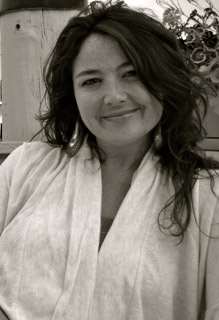
Photo: Kelly Norman Ellis. Credit: Natasha Marin.

Support for Readings/Workshops events in Chicago is provided by an endowment established with generous contributions from Poets & Writers Board of Directors and others. Additional support comes from the Friends of Poets & Writers.

Pages

Subscribe to Creative Nonfiction