Genre: Creative Nonfiction

The Memoir Project

Caption: 

"Just because it happened doesn't make it interesting." Author and teacher Marion Roach Smith offers this and other priceless nuggets of advice for anyone thinking of writing a memoir in The Memoir Project: A Thoroughly Non-Standardized Text for Writing & Life, forthcoming from Grand Central Publishing on June 9.

Adam Haslett and Eileen Myles Among Lammy Winners

The twenty-third annual Lambda Literary Awards were announced last night in New York City. Coinciding with this year's Book Expo America, the awards event brought out over four hundred attendees in celebration of LGBT literature.

Adam Haslett was honored for his novel, Union Atlantic (Nan A. Talese), the follow-up to his story collection, You Are Not a Stranger Here (Doubleday, 2002), a finalist for both the National Book Award and the Pulitzer Prize. Eileen Myles, author of more than a dozen books and chapbooks of poetry, fiction, and nonfiction, won the award in lesbian fiction for Inferno (A Poet's Novel) (OR Books).

Anna Swanson and Brian Teare took the prizes in poetry, Swanson for her debut collection, The Nights Also (Tightrope Books), and Teare for Pleasure (Ahsahta Press). Two novelists won in debut fiction, Amber Dawn for Sub Rosa (Arsenal Pulp Press) and David Pratt for Bob the Book (Chelsea Station Editions). The Lunatic, the Lover and the Poet (Harper Perennial) by Myrlin Hermes won in bisexual fiction, and Holding Still For as Long as Possible (House of Anansi Press) by Zoe Whittall received the transgender fiction prize.

Barbara Hammer and Julie Marie Wade were also recognized for their memoirs, Hammer! Making Movies Out of Sex and Life (Feminist Press) and Wishbone: A Memoir in Fractures (Colgate University Press), respectively. A complete list of winners, including honorees in drama, anthology, and young adult literature, is posted on the Lambda Literary website.

In the video below, fiction winner Haslett presents a dramatic reading of passages from Union Atlantic.

Recycled Denim Paper

Caption: 

Looking for a distinctive cover for your homemade chapbook or writing journal? Check out book artist Pam Deluco's process of using recycled denim to make paper in this video, which was produced by Shape What's to Come, an online community of women sponsored by—who else?—Levi's. When your cover is ready, have a look at DIY: How to Make and Bind Chapbooks.

Course Trailers?

Caption: 

We've all seen movie trailers and book trailers, but here's a new one: a trailer for an undergraduate lecture course that was offered last fall at the University of Michigan. "Comparative Literature 382: Literature and the Other Arts: Dividing Time: Art House Animation and Poetics" used animated films, poems, short stories, aesthetic theory, and film criticism to examine "how the timing, technique, technology, attention to audience, and intertextual relations of a given work condition our experience of it."

Contest Looks for Truth—or Fiction—at Twenty-Four Frames a Second

Quiddity, a literary journal out of Benedictine University in Springfield, Illinois, has launched its inaugural contest for a prose book trailer. The biennial competition is open to short films based on both unpublished manuscripts and published books of fiction or creative nonfiction, offering a five-hundred-dollar prize in each category.

Aside from the cash prize, Quiddity will also arrange to promote the winning trailers in the journal and on National Public Radio member station WUIS Springfield, as well as on the Web sites of both. The journal's prose editor David Logan and emerging novelist A. D. Carson will judge.

Authors should submit films of no longer than three minutes in the manuscript category, and publishers or presses should submit entries for published books; entry is free. Complete guidelines and entry forms are available on the Quiddity website.

Entries aren't due until December 10, but a look at Carson's sample trailer below might leave some writers wanting to carve out substantial time to get production just right, or assemble a crew—friends and colleagues are permitted to assist in the trailer's creation. Videos simply featuring authors reading do not qualify for this competition.

Nom de Plume

Caption: 

Next month Harper will publish Nom de Plume: A (Secret) History of Pseudonyms, in which Carmela Ciuraru tells the stories of more than a dozen pseudonymous authors, including Mark Twain, Isak Dinesen, Lewis Carroll, and George Eliot, and explores the creative process and "the darker, often crippling aspects of fame."

Martha’s Vineyard Institute of Creative Writing Summer Writers’ Conference

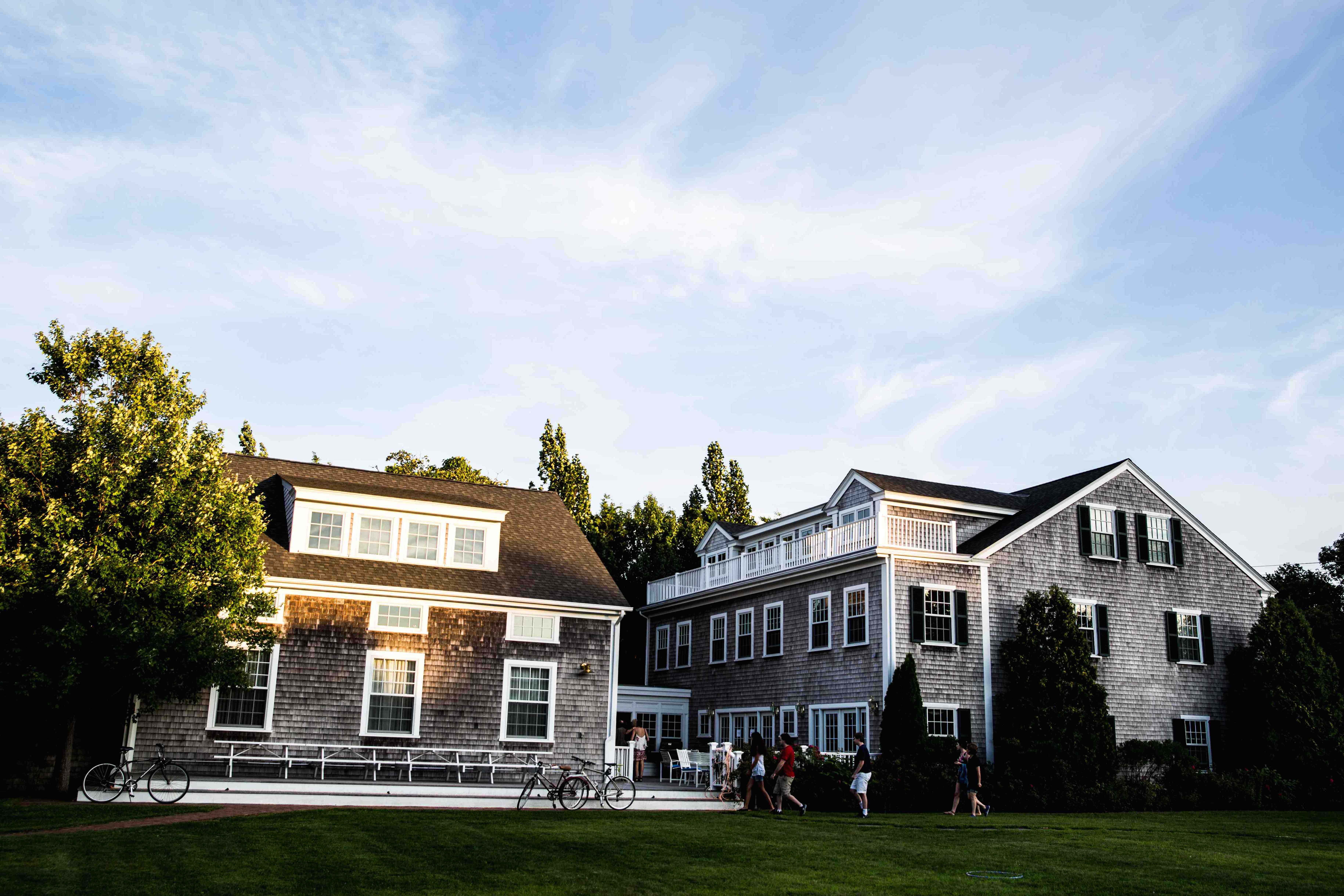
The 2021 Martha’s Vineyard Institute of Creative Writing Summer Writers’ Conference was held from June 6 to June 12 and from June 13 to June 19 at the Vineyard Arts Project (VAP) campus in downtown Edgartown on the island of Martha’s Vineyard, Massachusetts. The conference featured weeklong seminars with daily workshops in poetry and fiction, as well as manuscript consultations, panel discussions, and readings. The faculty included poets Amelia Martens, Adrian Matejka, Elizabeth Schmuhl, Britton Shurley, and Keith Taylor; and fiction writers Tia Clark, John T.

Type: 
CONFERENCE
Ignore Event Date Field?: 
yes
Event Date: 
January 18, 2026
Rolling Admissions: 
ignore
Application Deadline: 
January 18, 2026
Financial Aid?: 
no
Financial Aid Application Deadline: 
January 18, 2026
Free Admission: 
no
Contact Information: 

Martha’s Vineyard Institute of Creative Writing Summer Writers’ Conference, 7 East Pasture Road, Aquinnah, MA 02535. (954) 242-2903. Alexander Weinstein, Director. 


Alexander Weinstein
Director
Contact City: 
Martha’s Vineyard
Contact State: 
MA
Contact Zip / Postal Code: 
02535
Country: 
US
Add Image: 

Ayelet Waldman on Working With Literary Agent Mary Evans

In honor of Mother's Day, we asked Ayelet Waldman, author of Bad Mother: A Chronicle of Maternal Crimes, Minor Calamities, and Occasional Moments of Grace, to talk about how she works with her literary agent Mary Evans

You've written an eclectic mix of fiction and nonfiction: mystery novels, literary novels, personal essays, as well as a new foray into television. Does your agent, Mary Evans, play a role in deciding what to write next? Does she offer long-term career advice, encourage or discourage you in taking on the next project?
She's wonderfully encouraging, my biggest cheerleader next to my husband. She's always eager for me to try new things, to stretch my wings in different directions. She's never once said anything like, "Oh the mysteries are working, don't try to write more 'literary' fiction" or "The nonfiction mommy stuff sells well, do more of that." I think she genuinely views her role as facilitating my growth as a writer, even when, on occasion, that means making a less commercial choice.

Agents are notoriously over extended and distracted as they deal with their many clients, or courting editors, answering numerous queries, etc. Do you wait for Mary Evans to contact you, for instance, if she's had a manuscript for a long while with no word? Or do you not hesitate to call or write to check in?
I feel truly blessed. Mary always calls me back right away, and on the very rare occasion where she can't return my call within a couple of hours, she's hugely apologetic. She turns my manuscripts around immediately, usually that same weekend, and certainly within a week or two. I feel comfortable (perhaps too comfortable) checking in about the work she's looking at, about my career in general, about how much I hate the Republican majority in the House.

Daughter's Keeper, published in 2003, your first literary novel, was rejected thirty-one times before finding a publisher. Tell us about Mary Evans's role in seeing that novel to fruition. Did she edit, or suggest rewrites between submissions?
Absolutely. In fact, it's my fault it was rejected so many times, not hers. She very gently suggested from the beginning that I do more work on it before I sent it out, but I was about to give birth and I desperately wanted the novel out the door. Had I done what she said, I probably would have sold the novel a lot earlier. And in the end, of course I had to do the work anyway.

And last, a related question: Does Mary Evans edit your work, either a full manuscript or a nonfiction proposal, before it's sent out to editors? Or does she send it out as is?
I wouldn't feel comfortable sending something out without her practiced eye. She reads everything, comments on everything, and yet doesn't push. She'll read multiple drafts of a novel, even when we're at the stage of things where I'm submitting directly to my editor. I like having her input, and I think she enjoys this part of the job.


Landing a Literary Agent by Going Viral (and Being Funny)

If somehow you're one of the few who missed Richmond, Virginia, attorney David Kazzie's hilarious Xtranormal animation, "So You Want to Write a Novel," that zinged around the Internet a few months back, then watch it right now, but only if you're sitting somewhere where it's appropriate to laugh out loud. It lampoons the vast, blind ambition of certain novice writers, and tickled agents, editors, writers, as well as would-be writers and readers alike. The video, as they say, went viral, and one of the multitude of people who liked it, was Ann Rittenberg, a Manhattan literary agent who represents Dennis Lehane, and who, with Laura Whitcomb, has written a how-to guide called Your First Novel.

Kazzie noticed Rittenberg had linked to his video, and found it particular exciting as he is a huge Dennis Lehane fan. Kazzie and Rittenberg chatted, and it turned out, Kazzie did indeed have an unpublished manuscript, a thriller. Rittenberg liked his sensibility. David Kazzie now has an agent, and, yes, it's Ann Rittenberg.

Bonus: Ann Rittenberg's "The Successful Writer’s Personality" and an interview with David Kazzie. Also, check out more with Ann Rittenberg in Eryn Loeb's article, "Seek and You Shall Sign" in The Poets & Writers Guide to Literary Agents.

Pages

Subscribe to Creative Nonfiction