Genre: Creative Nonfiction

Era of Ignition

Caption: 

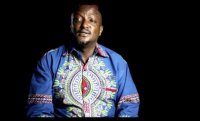
“The book looks at my experience and goes through some of the stories and the encounters that I have lived through while also looking at this larger sense that our culture right now is going through its own existential crisis.” Amber Tamblyn, author of Era of Ignition: Coming of Age in a Time of Rage and Revolution (Crown Archetype, 2019), talks about her coming-of-age memoir and her personal approach to activism.

End of March Contest Roundup

As we head into the end of March, consider submitting to these writing contests for poets and prose writers. Each contest offers a prize of at least $1,000 and has a deadline of March 31.

Arts & Letters Prizes: Three prizes of $1,000 each and publication in Arts & Letters are given annually for a group of poems, a short story, and an essay. GennaRose Nethercott will judge in poetry, Peter Nichols will judge in fiction, and Pam Houston will judge in nonfiction. Entry fee: $20. Deadline: March 31.

Bellingham Review Literary Awards: Three prizes of $1,000 each and publication in Bellingham Review are given annually for works of poetry, fiction, and creative nonfiction. The 49th Parallel Award for Poetry is given for a poem or group of poems; Nickole Brown will judge. The Tobias Wolff Award for Fiction is given for a short story; Robin Hemley will judge. The Annie Dillard Award for Creative Nonfiction is given for an essay; Ira Sukrungruang will judge. Entry fee: $20. Deadline: March 31.

Black Lawrence Press Hudson Prize: A prize of $1,000, publication by Black Lawrence Press, and 10 author copies is given annually for a collection of poems or short stories. The editors will judge. Entry fee: $25. Deadline: March 31.

Bosque Press Fiction Prize: A prize of $1,000 and publication in bosque is given annually for a short story or a novel excerpt by a writer over the age of 40. Julie Williams will judge. Entry fee: $22. Deadline: March 31.

Elixir Press Antivenom Poetry Award: A prize of $1,000 and publication by Elixir Press is given annually for a first or second poetry collection. Ariana-Sophia Kartsonis will judge. Entry fee: None. Deadline: March 31.

Fish Publishing Poetry Prize: A prize of €1,000 (approximately $1,180) and publication in the Fish Publishing anthology is given annually for a single poem. The winner is also invited to read at the anthology launch event at the West Cork Literary Festival in July. Billy Collins will judge. Entry fee: $17. Deadline: March 31.

Florida Review Editors’ Awards: Three prizes of $1,000 each and publication in Florida Review are given annually for a group of poems, a short story, and an essay. The editors will judge. Entry fee: $25. Deadline: March 31.

Indiana Review Poetry and Fiction Prizes: Two prizes of $1,000 each and publication in Indiana Review are given annually for a group of poems and a story. Entry fee: $20. Deadline: March 31.

Lascaux Review Poetry Prize: A prize of $1,000 and publication in Lascaux Review is given annually for a single poem. Entry fee: $15. Deadline: March 31.

Narrative Winter Story Contest: A prize of $2,500 and publication in Narrative is given annually for a short story, a short short story, an essay, or an excerpt from a longer work of fiction or creative nonfiction. A second-place prize of $1,000 is also awarded. The editors will judge. Entry fee: $26. Deadline: March 31.

Press 53 Prime Number Magazine Awards: Two prizes of $1,000 each and publication in Prime Number Magazine are given annually for a poem and a short story. Ginger Murchison will judge in poetry and Pinckney Benedict will judge in fiction. Entry fee: $15. Deadline: March 31.

Red Hen Press Nonfiction Award: A prize of $1,000 and publication by Red Hen Press is given annually for an essay collection, memoir, or book of narrative nonfiction. Nikki Moustaki will judge. Entry fee: $25. Deadline: March 31.

Willie Morris Award for Southern Poetry: A prize of $2,500 will be given annually for poem that exudes the American South in spirit, history, landscape, or experience. The winner will also receive an all-expenses-paid trip to New York City in October. Susan Kinsolving will judge. Entry fee: None. Deadline: March 31.

Visit the contest websites for complete guidelines, and check out the Poets & Writers Grants & Awards database and Submission Calendar for more contests in poetry, fiction, and creative nonfiction.

Spring-Cleaning

3.28.19

Leanne Shapton’s second book, Important Artifacts and Personal Property From the Collection of Lenore Doolan and Harold Morris, Including Books, Street Fashion, and Jewelry (Sarah Crichton Books, 2009), takes the form of a fictional auction catalogue. The objects being sold—everything from furniture to photographs—present a chronology of an invented couple’s entire love affair from start to finish. How might the wider meaning of spring-cleaning as a transformative purge present an opportunity to use your possessions to tell a story about your own life? Jot down a list of objects that hold significance from a past relationship. Perhaps you’ve thrown them out or even hidden them because of their unpleasant associations. Think of them as objectively as possible, as if viewed in an auction catalogue, and write a personal essay using impersonal descriptions to reveal a series of events in your past that combine to form a larger story about this relationship.

Writers at the Eyrie

A residency of two weeks or one month in November is offered to a poet, a fiction writer, or a nonfiction writer at a private apartment in Brooklyn, New York. The resident is provided with some meals. Writers over the age of 24 who are not residents of New York City are eligible. Submit via postal mail a writing sample of 7 to 10 poems or one to two stories or essays of up to 30 pages, a project description, a brief bio, and a résumé with a $10 application fee by August 30. Visit the website for complete guidelines.

Type: 
RESIDENCY
Ignore Event Date Field?: 
yes
Event Date: 
January 20, 2026
Rolling Admissions: 
ignore
Application Deadline: 
January 20, 2026
Financial Aid?: 
no
Financial Aid Application Deadline: 
January 20, 2026
Free Admission: 
yes
Contact Information: 

Writers at the Eyrie, 118 North Ninth Street, Brooklyn, NY 11249. Margot Farrington, Director.

Contact City: 
Brooklyn
Contact State: 
NY
Country: 
US

Funnels and Sieves

3.21.19

“There is a model of translation that resembles a funnel—everything from the source language swirls toward a single opening, and it all comes out the same way,” says Jeremy Tiang in “The Art of Translation: Many Englishes, Many Chineses” in the March/April issue of Poets & Writers Magazine. “The kitchen implement I prefer is the sieve—allowing as much as possible through, falling as it will, breaking up clumps to ease the flow.” Think about a favorite book of translated literature, and write a personal essay that reflects upon your feelings about the translation choices within it. Consider Tiang’s analogy: Does it feel like the words came from the source language through a funnel or a sieve? Were there rough patches, or did the work feel frictionless? Which do you prefer and why?

Whiting Award Winners Announced

At a ceremony tonight in New York City, the Whiting Foundation announced the recipients of its 2019 Whiting Awards. The annual $50,000 awards are given to emerging poets, fiction writers, nonfiction writers, and dramatists on the basis of “early-career achievement and the promise of superior literary work to come.”

The ten winners are poets Kayleb Rae Candrilli, Tyree Daye, and Vanessa Angélica Villarreal; fiction writers Hernan Diaz, Nafissa Thompson-Spires, and Merritt Tierce; nonfiction writers Terese Marie Mailhot and Nadia Owusu; and dramatists Michael R. Jackson and Lauren Yee. Find out more about the winners at the Whiting Foundation website, and read excerpts of their work at the Paris Review.

Since establishing the awards in 1985, the Whiting Foundation has awarded $8 million to 340 emerging writers. Previous winners include poets Terrance Hayes and Jorie Graham and fiction writers Colson Whitehead and Denis Johnson. Last year’s winners included poets Anne Boyer and Tommy Pico, fiction writers Patty Yumi Cottrell and Weike Wang, and nonfiction writer Esmé Weijun Wang.

The annual awards are not open to submissions. A group of writers, professors, editors, agents, critics, booksellers, and other literary professionals nominate writers; a smaller panel of writers, scholars, and editors select the winners. In addition to the Whiting Awards, the Whiting Foundation administers grants to creative nonfiction writers, scholars in the humanities, literary magazines, and people who work “to preserve, document, and disseminate the timeless cultural heritage that is under threat around the world.”

Photos clockwise from top left: Kayleb Rae Candrilli, Tyree Daye, and Vanessa Angélica Villarreal; fiction writers Hernan Diaz, Nafissa Thompson-Spires, Lauren Yee, Michael R. Jackson, Nadia Owusu, Terese Marie Mailhot, and Merritt Tierce.

Masterpiece of the Day: Write Treatment Workshops

Maryann DeLeo is a filmmaker and writer. She has been attending the Write Treatment Workshops at Mount Sinai Beth Israel in New York led by Emily Rubin for more than two years.

I was listening to a talk and the speaker said, “Are your days masterpieces? Make every day a masterpiece.” I thought of my days, and my first reaction was, No, my days are not masterpieces. Then I had a flash of Wednesdays at the writing workshop! Those days—they are masterpieces.

And it’s not just for the writing. It’s because of Emily Rubin, who leads the P&W–supported Write Treatment Workshops at Mount Sinai Cancer Centers. A fellow writer, Emily brings her love of literature, art, dance, theater, and music to the class. Her enthusiasm for the arts is evident with her weekly show-and-tell—holding up a catalogue from the latest exhibition she’s seen, or the playbill from a recent theater experience. She bursts into the room at Mount Sinai with so much to tell us about what’s happening in the world. I want to go to everything she tells us about. One student says to her, “You know about everything.”

Then Emily gets down to business: writing. She brings prompts that give us a way in to the writing or not. We can jump off from there, or we can go it alone writing about anything that comes up in our minds.

Each Wednesday she patiently unpacks our stories, one by one. She only looks slightly askance when a writer hems and haws about their “masterpiece” of the day. She wants each of us to stand tall and read with confidence.

I don’t know how she does it but she always finds something in the story that’s good storytelling, good writing. She takes the pages we write in our blue notebooks to heart. “You’re publishing your writing when you read it here,” she says. I breathe that in. If Emily says so, it is so. So we read, we publish, we get to be heard, by our own ears and by a dozen others.

We have created something, and Emily loves it into existence. It’s not that every piece will go on to loftier goals but for those minutes we read, we have Emily’s attention and all the other writers (although there is one writer who groans when he sees all I’ve written telling me, “You’ve written a novel!”). We have managed to get on our conference table soapbox and express who we are this day, this afternoon, these few hours. This is no small gift.

When I was in treatment for my cancer, I spent many afternoons lying on my bed, too weary to get myself up and out. Then I saw a flyer for one of Emily’s workshops. I didn’t go the first time I saw the flyer, but a seed was planted that maybe, someday, I could go. It was something to aspire to. When I get my energy back, I’m going, I told myself.

While still in treatment and fed up with lying about, there was that first Wednesday I got myself to the conference room at West Fifteenth Street. I was a bit shy but as soon as I saw Emily smiling, welcoming me into the room, the jitters went away. I became a regular. I’ve been attending the workshops for more than two years. I’m hooked. When I don’t go, I feel my day is not a masterpiece, something is missing from Wednesday.

I’ve filled many blue notebooks. I’m always startled at what comes out during the hours I’m writing. I didn’t know I thought that. Where did that come from? Some of my notebook writings move on, progress, and expand. And some I file away, to be continued.

I never just fling anything I write on Wednesday away. It’s all for something, even if it’s just for me to reflect on a part of my life I haven’t looked at before. It’s all part of my story.

There’s a quote Emily gave us by Natalie Goldberg that stays with me: “We are important and our lives are important, magnificent really, and their details are worthy to be recorded.... We were here; we are human beings; this is how we lived.”

Support for the Readings & Workshops Program in New York City is provided, in part, by public funds from the New York State Council on the Arts, and the New York City Department of Cultural Affairs, with additional support from the Frances Abbey Endowment, the Cowles Charitable Trust, and the Friends of Poets & Writers.

Photo: Maryann DeLeo at the 2019 Womens March in Washington, D.C. (Credit: Eileen Kenny).

Call Me By Your Name

3.14.19

In his essay “Being John” published in the Morning News, John Sherman writes about his experiences sharing a first name with over five million other people in the United States. Sherman also considers the rise and fall in popularity of different names and the trend in valuing unique and individualistic names over traditional ones, musing on how our identities are formed by our names with all their attendant histories, politics, pleasures, and nuisances. Write a personal essay about your own name, perhaps diving into some Internet research to see how popular it has been over time, its origins, and touching upon possible namesakes. What are your feelings about sharing your name with others? Did you ever wish for another name, or have you ever changed your name? How has your perspective on your name changed over time?

Lammy Finalists Announced

Lambda Literary has announced the finalists for the thirty-first Lambda Literary Awards. Established in 1989, the annual awards—also known as the “Lammys”—recognize and honor books published during the previous year by lesbian, gay, bisexual, and transgender writers. The winners will be announced at an awards ceremony on June 3 at the NYU Skirball Center for the Performing Arts in New York City. Special awards will also be given to recognize writers who “have left an indelible mark on LGBTQ literature.”

“In the ongoing work of LGBTQ equality, literature plays a distinct and powerful role—offering roadmaps for loving, fighting, and thriving,” says Sue Landers, executive director of Lambda Literary. “We are thrilled to announce [this year’s] finalists, which reflect our community’s vast and continually evolving brilliance.”

This year Lambda Literary will give out awards in twenty-four categories, including a new award for Bisexual Poetry. Other categories include fiction, mystery, horror, memoir/biography, drama, anthologies, and LGBTQ Studies, A panel of more than sixty judges selected the finalists from a group of over a thousand books. Visit the website for the complete list of finalists.

Winners last year included Carmen Maria Machado’s Her Body and Other Parties (Graywolf Press) for Lesbian Fiction, CAConrad’s While Standing in Line for Death (Wave Books) for Gay Poetry, and C. Riley Snorton’s Black on Both Sides: A Racial History of Trans Identity (University of Minnesota Press) for Transgender Nonfiction.

Based in Los Angeles, the Lambda Literary Foundation has been a resource for LGBTQ writers since 1987. With a mission to “nurture and advocate for LGBTQ writers,” the organization hosts an annual writing retreat and literary festival, publishes an online magazine, and runs educational programs, among other initiatives.

Read more about the organization in Jonathan Vatner’s article “Lambda Literary Looks to the Future” from the September/October 2018 issue of Poets & Writers Magazine.

Reginald Dwayne Betts

Caption: 

Poet, memoirist, and teacher Reginald Dwayne Betts speaks with PBS NewsHour’s Jeffrey Brown about his experience as a teen in prison and how poetry gave him a new identity. Betts is the author of Bastards of the Reagan Era (Four Way Books, 2015) and Felon, forthcoming from Norton in October, and is a recipient of the 2019 Barnes & Noble Writers for Writers Award.

Pages

Subscribe to Creative Nonfiction