Whiting Foundation Announces 2019 Literary Magazine Prizes

The winners of the 2019 Literary Magazines Prizes are the Common, American Short Fiction, Margins, the Black Warrior Review, and the Offing.
Jump to navigation Skip to content
The winners of the 2019 Literary Magazines Prizes are the Common, American Short Fiction, Margins, the Black Warrior Review, and the Offing.
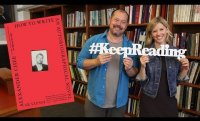
“I like questions, my imagination likes them too.” In this A Word on Word series video, Alexander Chee speaks about his essay collection, How to Write an Autobiographical Novel (Mariner Books, 2018), and his writing process which involves engaging in conversation with his fictional characters.
Just a few days left to submit to the following writing contests, all with a deadline of July 14 or July 15. Each contest offers a first-place prize of at least $1,000 and publication. Good luck!
Cincinnati Review Robert and Adele Schiff Awards in Poetry and Prose: Two prizes of $1,000 each and publication in Cincinnati Review are given annually for a poem and a piece of fiction or creative nonfiction. Rebecca Lindenberg will judge in poetry and Michael Griffith will judge in prose. Entry fee: $20. Deadline: July 15.
Comstock Review Muriel Craft Bailey Award: A prize of $1,000 and publication in Comstock Review is given annually for a single poem. David Kirby will judge. Entry fee: $28. Deadline: July 15.
Literal Latté Poetry Award: A prize of $1,000 and publication in Literal Latté is given annually for a poem or group of poems. Entry fee: $10. Deadline: July 15.
Los Angeles Review Literary Awards: Four prizes of $1,000 each and publication in Los Angeles Review are given annually for a poem, a short story, a short short story, and an essay. Matty Layne Glasgow will judge in poetry, Tammy Lynne Stoner will judge in fiction, Brittany Ackerman will judge in flash fiction, and Adrianne Kalfopoulou will judge in nonfiction. Entry fee: $20. Deadline: July 14.
Narrative Poetry Contest: A prize of $1,500 and publication in Narrative is given annually for a poem or group of poems. The poetry editors will judge. Entry fee: $25. Deadline: July 14.
Rattle Poetry Prize: A prize of $10,000 and publication in Rattle is given annually for a poem. A Reader’s Choice Award of $2,000 is also given to one of ten finalists. Entry fee: $25. Deadline: July 15.
Santa Fe Writers Project Book Award: A prize of $1,500 and publication by the Santa Fe Writers Project is given biennially for a book of fiction or creative nonfiction. Carmen Maria Machado will judge. Entry fee: $30. Deadline: July 15.
The Word Works Tenth Gate Prize: A prize of $1,000 and publication by the Word Works is given annually for a poetry collection by a poet who has published at least two full-length books of poetry. Entry fee: $25. Deadline: July 15.
Visit the contest websites for complete guidelines, and check out the Grants & Awards database and Submission Calendar for more contests in poetry, fiction, and creative nonfiction.
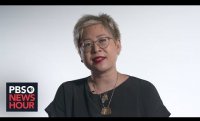
“We can be unrelentingly hard to ourselves, and under such circumstances, it’s a shame to not let the world’s light stick to us when we have the chance.” Esmé Weijun Wang, author of The Collected Schizophrenias (Graywolf Press, 2019), speaks about the importance of prioritizing compliments over criticism in this PBS NewsHour video.
Amanda Lee Koe’s debut novel, Delayed Rays of a Star (Nan A. Talese, 2019), begins with a photograph taken by Alfred Eisenstaedt at a party in Berlin in 1928, a chance snapshot of Marlene Dietrich, Anna May Wong, and Leni Riefenstahl during their early years of celebrity. Koe’s novel explores each of their lives and worlds, as they navigate womanhood in Berlin, Hollywood, the Alps, and Paris. Taking inspiration from this idea of drawing narrative—both historical and mythological—from a single image, search through your old photos and select one that depicts a few people from your past. Consider the period and its conventions, and research news events that were occurring at the time. Write a personal essay that examines your relationship with each person and their relationships with one another while also weaving in historical events and your memories about the particular occasion.
“Every conversation between us then had a way of spiraling into the same abyss. Real men were impossible to understand. Real men suffered. Real men were broken.” Jaed Coffin reads from his second memoir, Roughhouse Friday (Farrar, Straus and Giroux, 2019), which is featured in Page One in the July/August issue of Poets & Writers Magazine, and talks about his experiences barroom boxing in Alaska with Kathryn Miles for Portland Public Library’s Literary Lunch series.
“A plume came and a plume went,” said NASA scientist Paul Mahaffy about the possibility of a sign of life detected on Mars after a startling spike in the amount of methane gas found in a crater prompted excitement. A second test a few days later, however, came up with nothing. Write an essay about a time when something occurred which gave rise to a certain expectation, and then the situation did not pan out as hoped. What was the progression of emotions involved? How did your interactions with those around you fluctuate over the course of your experience?
In this PBS NewsHour video, NPR’s Maureen Corrigan and the Washington Post’s Carlos Lozada highlight their favorite books for summer reading, which include Ocean Vuong’s On Earth We’re Briefly Gorgeous (Penguin Press, 2019), Jill Ciment’s The Body in Question (Pantheon, 2019), and José Olivarez’s Citizen Illegal (Haymarket Books, 2018).
Submissions are currently open for several awards given for works of fiction and nonfiction, including the Autumn House Press Literary Prizes, the Moth International Short Story Prize, and the Lascaux Review Prize in Flash Fiction. All of the contests are open for submissions until June 30.
Autumn House Press Literary Prizes: Two prizes of $1,000 each and publication by Autumn House Press are given annually for a book of fiction and a book of creative nonfiction. Each winner also receives a $1,500 travel and publicity grant. Aimee Bender will judge in fiction, and Paul Lisicky will judge in nonfiction. Entry fee: $30.
Hidden River Arts William Van Wert Fiction Award: A prize of $1,000 and publication in Hidden River Review of Arts & Letters is given annually for a short story or a novel excerpt. Entry fee: $17.
Lascaux Review Prize in Flash Fiction: A prize of $1,000 and publication in Lascaux Review is given annually for a work of flash fiction. Previously published and unpublished stories are eligible. Entry fee: $15.
The Moth International Short Story Prize: A prize of €3,000 (approximately $3,411) and publication in the Moth is given annually for a short story. A second-place prize of publication, a weeklong retreat at the Circle of Missé in Missé, France, and a €250 (approximately $284) travel stipend; and a third-place prize of €1,000 (approximately $1,137) and publication are also given. Kit de Waal will judge. Entry fee: $17.
University of North Texas Press Katherine Anne Porter Prize: A prize of $1,000 and publication by University of North Texas Press is given annually for a collection of short fiction. Entry fee: $25.
University of Pittsburgh Press Drue Heinz Literature Prize: A prize of $15,000 and publication by University of Pittsburgh Press is given annually for a collection of short fiction. Writers who have published at least one previous book of fiction or a minimum of three short stories or novellas in nationally distributed magazines or literary journals are eligible. Entry fee: none.
Willow Springs Books Spokane Prize for Short Fiction: A prize of $2,000 and publication by Willow Springs Books is given annually for a short story collection. Entry fee: $27.50
Visit the contest websites for complete guidelines, and check out the Grants & Awards database and Submission Calendar for more contests in poetry, fiction, and creative nonfiction.
This past Sunday, Nik and Lijana Wallenda, seventh-generation members of the Flying Wallendas circus family, walked a 1,300-foot wire tightrope suspended between two skyscrapers, twenty-five stories above Times Square in New York City. “It was hard to hold it together,” stated Nik in an interview in the New York Times, describing the emotionally intense moment when he met his sister in the middle of the wire, before they carefully passed each other and then continued their separate ways to opposite ends. Write a personal essay about a time when you met someone face-to-face for an intense confrontation. How did the anticipation build as you got closer to meeting, and how was the tension released?