



Small Press Points
Small Press Points highlights the happenings of the small press players. This issue features Contact Editions, Hours Press, Clear Cut Press, Gaspereau Press, and Luquer Street Press.
Jump to navigation Skip to content
Articles from Poet & Writers Magazine include material from the print edition plus exclusive online-only material.
Small Press Points highlights the happenings of the small press players. This issue features Contact Editions, Hours Press, Clear Cut Press, Gaspereau Press, and Luquer Street Press.
For some writers, community service comes naturally. But for those of us who are accustomed to guarding our precious writing time with our lives, the very thought of adding another activity—no matter how worthy—is daunting. We watch in awe as fellow writers teach, mentor, and travel to remote locations to give workshops to populations ranging from the incarcerated to the homeless to senior citizens. Why do they do it? How do they find the time and emotional energy? Is it possible to serve others without neglecting one's own work?
Small Press Points highlights the happenings of the small press players. This issue features Story Line Press, Sarabande Books, Anon. Books, and Rain Taxi.
Page One features a sample of titles we think you'll want to explore. With this installment, we offer excerpts from Vanishing Point by David Markson and Sky Girl by Rosemary Griggs.
Literary MagNet chronicles the start-ups and closures, successes and failures, anniversaries and accolades, changes of editorship and special issues—in short, the news and trends—of literary magazines in America. This issue's MagNet features Tameme, Translation Review, Double Change, Circumference, Quick Fiction, the Paris Review, the Virginia Quarterly Review, Diagram, Tiferet: A Journal of Spiritual Literature, Glut, and Bullfight: A Literary Review.
Thanks to muscular marketing and persistent promoting—notable traits of the Academy of American Poets—April has been established as the month to appreciate poetry. But there are other designated days and months during which everyone can celebrate creative writing, both as an art form and as yet another way to turn an average day into a holiday.

Only weeks before he turned 55, my father, the poet William Matthews, delivered a manuscript of poems to Peter Davison, his longtime friend and editor at Houghton Mifflin. It turned out to be the last book he wrote. He died of a heart attack on November 12, 1997, the day after his birthday.
How to herald National Poetry Month, year nine? Look to the stars. That's what the Academy of American Poets will do on April 6 in New York City.

In January, Chuck Palahniuk began teaching a free yearlong writers workshop that doesn't appear in the course listings for any college, university, or community arts center. Forget about academic credits—Palahniuk's workshop exists entirely online.

Poet Susan Atefat-Peckham and her six-year-old son were killed in a car accident in Ghor Safi, Jordan, on February 7, 2004. A professor in the MFA program at Georgia College & State University, Atefat-Peckham was in the Middle East as a Fulbright scholar teaching creative writing at the University of Jordan. She was 33. The following Direct Quote was originally posted on October 12, 2001, following the publication of her book That Kind of Sleep.
At some point every writer must turn her attention from the art of creating to the business of selling. And while many authors would like to avoid the industry altogether, a basic understanding of it—from the top five houses to the independents—is an unavoidable necessity.
Small Press Points highlights the happenings of the small press players. This issue features Ugly Duckling Presse, Del Sol Press, Scienter Press, and Low Fidelity Press.
Literary MagNet chronicles the start-ups and closures, successes and failures, anniversaries and accolades, changes of editorship and special issues—in short, the news and trends—of literary magazines in America. This issue's MagNet features the Kenyon Review, the Iowa Review, the Paris Review, Poetry, Ploughshares, spork, Petroglyph, Isotope, Poetry Daily,Verse Daily, and Literal Latté.
In 1998, Dan Bowers, an engineering consultant in Red Lion, Pennsylvania, was on a mission. His son-in-law, Chief Master Sergeant Frederick Honeywell, was serving at an Air Force base in Kuwait that had no recreational facilities and no library—and indeed, no books. When Honeywell's wife, Chris, told her father about the problem, Bowers sent some of his own books, as well as donations from others, overseas. It was the first deployment of what eventually became Operation Paperback. Six years later, the nonprofit organization has sent nearly 150,000 books to American troops in more than 30 locations, including Afghani-stan, Iraq, Bosnia, and Kosovo.
Six months ago Larry Portzline, a professor of writing and literature at Harrisburg Community College in Pennsylvania, started a grassroots movement called Bookstore Tourism—a series of bus trips to urban centers where reader-tourists can patronize independent bookstores. At the end of March, a group of readers from the Harrisburg area will travel approximately 200 miles to the 10th annual Virginia Festival of the Book, where they will participate in festival events (readings, book signings, seminars, and so on) and visit the many independent bookstores that are in Charlottesville, Virginia, including New Dominion Bookshop, the Book Cellar, and Blue Whale Books.

At some point during her two-year stint atop an ancient 200-foot redwood tree in Humboldt County, California—an effort to to save the old-growth forest—environmental activist and writer Julia Butterfly Hill was approached by HarperSanFrancisco for the rights to publish her memoir, Legacy of Luna. Hill accepted the offer, with one stipulation: Her book had to be printed on 100 percent postconsumer recycled paper manufactured without the use of chlorine bleach.

Writers who hang out in academia to help pay the rent are likely to find that their job description comes to include inviting other writers to visit their campus and then hosting them through their visit, introducing them to their lecture audience, and sitting in on the informal sessions with students that typically complete the visitor’s tour of duty. Such visitations are, I believe, a generally worthwhile feature of any college writing program: beneficial to the visitor, obviously, who gets paid or otherwise rewarded and may possibly gain a few additional readers; potentially enlightening for the visitor’s audience (even those whose curiosity may be more sociological, anthropological, or even clinical than literary); and at least marginally beneficial for the host as well, as I shall attempt to illustrate.
Page One features a sample of titles we think you'll want to explore. With this installment, we offer excerpts from The Epicure's Lament by Kate Christensen and Sad Little Breathing Machine by Matthea Harvey.
Northeastern Wyoming is a rugged place, where the ruins of turn-of-the-century homesteads still stand in the tall grass, and communities gather every spring to watch cowboys wrestle their calves down for branding. An average of five people per mile populate this High Plains landscape of low, bison-backed hills and rushing creeks. Such rough, isolated grace makes the region an ideal, though unexpected, environment for an artists colony—or better yet, two of them.

When it comes to getting poetry into unexpected places, the sky's the limit for Billy Collins. Last fall the former United States poet laureate and author of eight books of poetry partnered with Delta Air Lines to create an audio program of poetry to be offered periodically to passengers on its entire fleet of airplanes.

This month the world’s first independent publisher of women’s writing, the Feminist Press, launches a steamy—and unlikely—series of pulp fiction titles.
For writers seeking a structured learning environment without geographical or scheduling restrictions, the Internet can be a viable alternative to the bricks-and-mortar classroom.
British poet and novelist Thomas Hardy, author of Tess of the D’Urbervilles and The Return of the Native, among other literary classics, wanted his personal papers burned after his death. In 1928, a bonfire was dutifully lit but not everything was consigned to the flames. Hardy’s second wife, Florence, saved at least 12 notebooks filled with information and sources on which the author based his later works of fiction. Thomas Hardy’s ‘Facts’ Notebook, edited by William Greenslade and released this month by Ashgate Publishing, is only the most recent to appear.
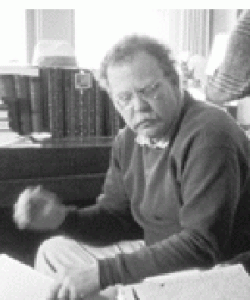
A simple film about the solitary pleasures of reading has turned into a successful campaign to revive a short-lived literary career. Dow Mossman’s only novel, The Stones of Summer, was originally published in 1972 by the now-defunct press Bobbs-Merrill. After being lauded by John Seelye in the New York Times Book Review as “a marvelous achievement” that offered “fulfillment at the first stroke, which is so often the sign of superior talent,” the book went out of print and its author faded into obscurity. Last month it was reissued by Barnes & Noble Books.
Literary MagNet chronicles the start-ups and closures, successes and failures, anniversaries and accolades, changes of editorship and special issues—in short, the news and trends—of literary magazines in America. This issue's MagNet features American Poetry Review, Land-Grant College Review, 88: A Journal of Contemporary American Poetry, The Prose Poem: An International Journal, Sentence: A Journal of Prose Poetics, Octopus Magazine, Transition, Granta, and Evergreen Review.