Q&A: Meg Reid Leads Hub City
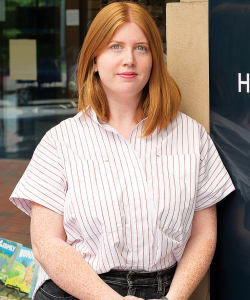
The new executive director of Hub City Writers Project shares her vision for HCWP, emphasizing values of regionality, accessibility, and transparency.
Tags:
Jump to navigation Skip to content
The new executive director of Hub City Writers Project shares her vision for HCWP, emphasizing values of regionality, accessibility, and transparency.
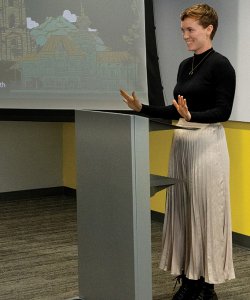
The Worldbuilding Initiative, a new public-facing program at Arizona State University, uses ideas and skills from creative writing to encourage participants to take an active role in imagining a more equitable and sustainable future.
Recently, con artists have taken to impersonating real editors, agents, or filmmakers from reputable organizations to extort large payments from unsuspecting authors. Literary professionals share advice on spotting and reporting scams.
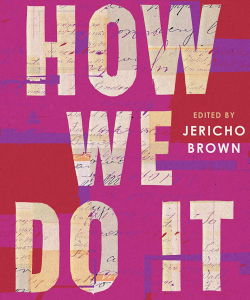
A look at three new anthologies, including How We Do It: Black Writers on Craft, Patience, and Skill and Ingenious Pleasures: An Anthology of Punk, Trash, and Camp in Twentieth-Century Poetry.
In this video from Adam Savage’s Tested, the host visits the American Bookbinders Museum in San Francisco and speaks with executive director Anita Engles about the history of book cover designs and proves that maybe you can judge a book by its cover.

Undergraduate writing programs, books on writing, literary organizations, summer workshops, events, contests, and other resources for those who are driven to put thoughts, emotions, and ideas into words at a young age.
With the rise of AI-generated writing, writers and publications alike struggle with the question of what authorship means.

A poet shares how she builds a life around her writing in rural Wisconsin, where literary community takes surprising—and sometimes amusing—forms. She finds both struggle and abundance in her chosen path.
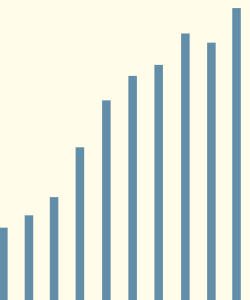
A trio of academics—including two poets—has compiled data on the winners and judges of major literary prizes in the U.S. Their findings raise critical questions about how social hierarchies influence who gets rewarded for their writing.

The authors of The Invisible Art of Literary Editing engage in a dialogue about textual doneness.