




David Foster Wallace
"If your fidelity to perfectionism is too high, you never do anything," said David Foster Wallace in this March 1996 interview with Leonard Lopate, animated by Patrick Smith.
Jump to navigation Skip to content
"If your fidelity to perfectionism is too high, you never do anything," said David Foster Wallace in this March 1996 interview with Leonard Lopate, animated by Patrick Smith.
The Butler University–based literary magazine Booth is currently accepting short story submissions for its annual literary prize. The winner will receive $1,000 and publication in Booth. The deadline is May 31.
Using the online submission system, writers may submit a story between 500 and 7,500 words with a $20 entry fee. All entries will be considered for publication. One runner-up will receive $250. Roxane Gay will judge. Butler University students and staff, as well as friends and students of the judge, are not eligible to enter.
Established in 2009, Booth publishes two print issues per year, and features one author or new piece of writing on its website every week. The staff is comprised of students in the MFA program at Butler University in Indianapolis. The annual prize alternates genres each year, and the editors accept general submissions, including poetry, fiction, nonfiction, and comics, from September through April.
Visit the website for more information and complete submission guidelines, and check out the current installation of Poets & Writers Magazine's Literary MagNet to hear more from the Booth editors about future plans for the journal.
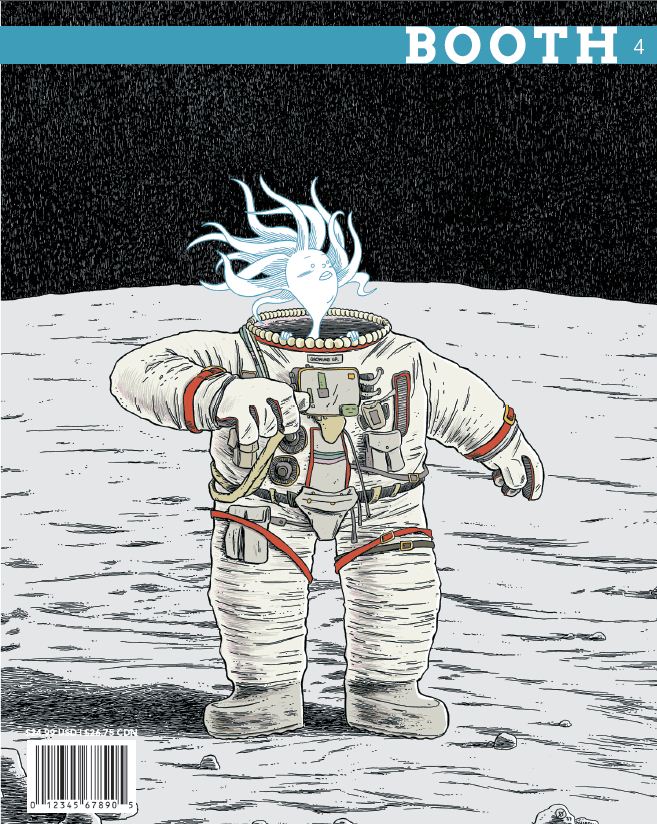
The current issue of Booth, above, features cover art and interior comics by Dustin Harbin.
A free app to help navigate the Los Angeles Times Festival of Books; authors in Venice, Italy, have mobilized to save the city's bookshops; novelist Ben Dolnick reveals the writing tricks he's used and ones he's discarded; and other news.
What if you could live again and again, until you got it right? That is the tantalizing premise of Kate Atkinson's latest novel, Life After Life, published this month by Reagan Arthur Books. The novel has already been shortlisted for the Women’s Prize for Fiction, better known by its previous name, the Orange Prize.
In the age of Facebook and Twitter, some tenets of the personal essay—confession, self-reflection, and cultural investigation, to name a few—have made their way further into the digital mainstream. Some authors have even written entire books on Twitter. With this in mind, create a series of micro-essays using Twitter as a model. They might be slightly disconnected vignettes or they may work to create a larger, more cohesive story. Either way, keep each individual piece to 140 characters and maintain some form of narrative thread throughout. If you’re feeling adventurous, try to utilize things like hashtags, links, and “Tweetspeak.” If you have a Twitter account, consider posting each piece as you finish.
There are two men sitting in the booth of a diner eating dinner together and talking. A woman sits outside in a parked car, watching them through the window. Who are they? What is their relationship to one another? What are the men discussing? What is the woman thinking? What does she do next? Write a story that opens with this scene and explores these questions.
Michelle Dean takes a detailed look at the game of women's memoir; Paisley Rekdal comes to the defense of the poetry workshop; J. Robert Lennon dispenses advice for the literary-minded and lovelorn alike; and other news.
New York Times illustrator, artist, chef, and author of Mumbai New York Scranton, published by Scribner in March, discusses her memoir about her adventures abroad with author and humorist John Hodgman at New York City's Strand Book Store.
In the aftermath of the Boston Marathon bombings, authors share their thoughts, including Susan Orlean, Jill Lepore, and Dan Chiasson; Jeva Lange details her quest for Melville's Moby-Dick at the 2013 New York Antiquarian Book Fair; essayist Walter Benjamin's thirteen tips for writers; and other news.
Write a poem of fourteen lines. Instead of using the first person (I), use only the second person (you).
