




Germany Digitizes WWI Documents, North Carolina Writers React to “Poet Gate,” and More
San Francisco bookstores struggle with high rents; writers discussing money; one-star reviews of classic literature; and other news.
Tags:
Jump to navigation Skip to content
San Francisco bookstores struggle with high rents; writers discussing money; one-star reviews of classic literature; and other news.
"I used to sit around and think about ways to make money. None of these ways were very promising." Poet Suzanne Lummis reminisces before reading "Ways to Make Money #1," published in the December 2013 issue of Spillway magazine. Lummis is the cofounder and director of the Los Angeles Poetry Festival.
Deep within us, we have desires or goals we might be nervous about bringing out into the open for whatever reason. Maybe we feel embarrassed or that we can't compete with those who have already mastered the skill we seek to learn. You might have felt this way when showing your writing to someone for the first time—or maybe you still haven't shown your writing to anyone yet. This week, think about whether there are any factors that make it difficult for you to share your work. If you've taken the leap and put yourself out there, write about what that felt like. If you have yet to do so, write about what's holding you back.
The Man Booker Prize Foundation announced the longlist today for the 2014 Man Booker Prize for Fiction. This year marks the first time in the prize's history that any author, irrespective of nationality, with work written originally in English and published in the United Kingdom, is eligible to win.
The longlist includes Howard Jacobson, a former Man Booker winner, for J (Jonathan Cape); two previously shortlisted authors, Ali Smith for How to Be Both (Hamish Hamilton) and David Mitchell for The Bone Clocks (Sceptre); and the Anglo-Indian writer Neel Mukherjee for The Lives of Others (Chatto & Windus). The American writers making the longlist are Richard Powers for Orfeo (Atlantic Books), Siri Hustvedt for The Blazing World (Sceptre), Joshua Ferris for To Rise Again at a Decent Hour (Viking), and Karen Joy Fowler for We Are All Completely Beside Ourselves (Serpent’s Tail). British writers Paul Kingsnorth for The Wake (Unbound) and David Nicholls for Us (Hodder & Stoughton); Tasmanian writer Richard Flanagan for The Narrow Road to the Deep North (Chatto & Windus); and Irish writers Joseph O’Neill for The Dog (Fourth Estate) and Niall Williams for History of the Rain (Bloomsbury) round out the list.
The panel of six judges is chaired by British philosopher A. C. Grayling. The decision to expand the prize this year has been controversial; previously the prize was restricted to authors from Britain and other countries in the Commonwealth, as well as Ireland and Zimbabwe. Last year, Eleanor Catton, a novelist from New Zealand, won the prize for her 832-page novel The Luminaries. At 28, Catton was the youngest recipient of the award in its forty-five-year history.
The shortlist will be announced on September 9, and the winner—who will receive a £50,000 (approximately $85,177) purse—will be announced on October 14.
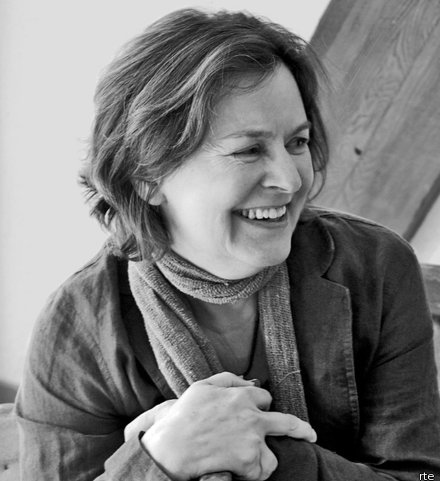
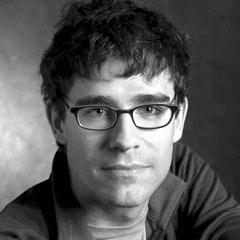
Photos: Fowler (left), Ferris (right)
Amazon shushes authors; Sweetness #9 receives the “Colbert Bump”; the Baffler opens archives online; and other news.
Hari Kunzru's digital memoir, Twice Upon a Time: Listening to New York (Atavist Books, 2014), incorporates music, recordings, movable text, and photographs for an interactive experience. Read more about Atavist Books in the July/August issue of Poets & Writers Magazine.
Some people slow down in their golden years, taking it easy and enjoying the family and friends they've gathered around them in the comfort of their community, while others try to continue to live like their younger selves. This week, write a story about an older person who still has the mindset and physical stamina of a twenty-something. How does this affect her interactions with her peers? What are her secrets? Is she one of those people who wishes to live forever, or does she simply make a habit of staying healthy? Think about how a person's biological age and true age are related and what happens when they are in conflict.
BitLit partners with HarperCollins; Julia Turner named editor in chief of Slate; the burdens placed upon writers of color in academia; and other news.
Spoken word poet Tony Styxx performs a piece about resilience and hope in a short film by Kelli Camille Films.
It’s easy to get bogged down by the ideas behind the poem you are writing, losing sight of the harmonic structure of the words themselves and the rhythm of lines and pauses. This week chose a poem that you love and memorize it. Say it to yourself over and over again, until it escapes the page and makes a home in your body. Try not to think about how the poet would want it to sound—concentrate instead on how it sounds in your voice, how it inhabits you. Once you get comfortable with the process, try this with your own poems.
