Deborah Levy

Caption: 

“If you look at the Greek myths, they’re always about unhappy families; Aristotle told us that politics starts in the family—I think that’s true.” Deborah Levy, whose most recent novel, Hot Milk (Hamish Hamilton, 2016), is shortlisted for the 2016 Man Booker Prize, talks about the elements of family in Hamlet that have always haunted her. This video is part of the Hay Festival: Talking About Shakespeare video series celebrating William Shakespeare’s four hundredth anniversary.

Genre: 

Hair Care

Last month, French president Francois Hollande’s hair made the news when it was revealed that its maintenance requires a personal, on-call hairdresser who is paid a salary equivalent to almost eleven thousand dollars per month. Write an essay about the care—whether it’s a lot, a little, or none—that you put into your own hair. Do you prioritize practicality or aesthetics? Have there been phases in your life when you had particularly memorable haircuts? Are your hairstyles representative of that time in your life?

Amanda Lee Koe

Caption: 

“I think that with writing, it’s really a space that you own...this sort of free space where you’re really sure of what you’re doing and it doesn’t matter what anyone else thinks or what sorts of boxes even exist out there.” Amanda Lee Koe, author of Ministry of Moral Panic (Epigram Books, 2013) and winner of a 2016 PEN/Heim Translation Fund Grant for Ten Years of Marriage by Su Qing, talks about the relationship between her creative process and inspirations, which include the city of Singapore.

Genre: 

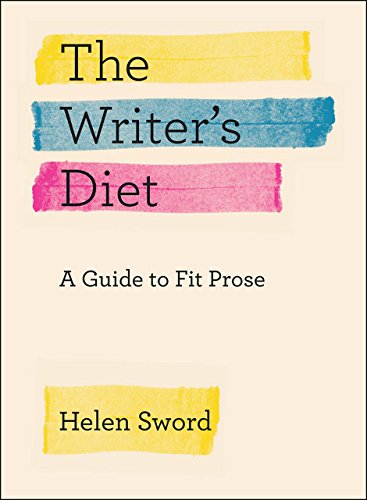
The Writer’s Diet: A Guide to Fit Prose

by
Author: 
Helen Sword
Published in 2016
by University of Chicago Press

“This book will help you energize your writing, boost your verbal fitness and strip unnecessary padding from your prose.” In The Writer’s Diet: A Guide to Fit Prose, Helen Sword helps writers at all stages apply this vigorous regimen to their own work to create cleaner, clearer writing at the sentence level. Part of the Chicago Guides to Writing, Editing, and Publishing series, this book includes five chapters, each focusing on a different aspect of the sentence—verbs, nouns, prepositions, adjectives and adverbs, and “waste words”—and includes exercises to put Sword’s guiding principles into practice.

Part II

This week, find a short story you wrote in the past and reread it, making note of new observations about the characters and their actions, as well as pacing and style. Then, write a sequel to the story that either takes place immediately after the ending of the original or far off into the future. Use the experiences and wisdom you yourself have gained in the window of time since writing the original story to imbue your characters with newfound maturity, insight, and energy as they face fresh challenges. 

Moving Between Genres

Caption: 

“You have to really free your mind from the word obligation.” During an event at the Center for Fiction, authors Francisco Goldman, Idra Novey, and Rivka Galchen answer questions from the audience about moving between fiction and other genres, which leads to a discussion about the importance of donuts.

Corn Sweat

Heat dome, corn sweat, thundersnow. Meteorologists and weather reports often coin new words and phrases for the purposes of both explaining and entertaining. Learn some new weather-related terminology, or create your own phrases that explain existing and made-up weather phenomena. Select one of these terms as the title of a poem, and allow it to guide your imagination as you write your lines. Do you end up with a poem that is somehow connected to meteorology, or does the title lead you toward a completely different direction?

Pages

Subscribe to Poets & Writers RSS