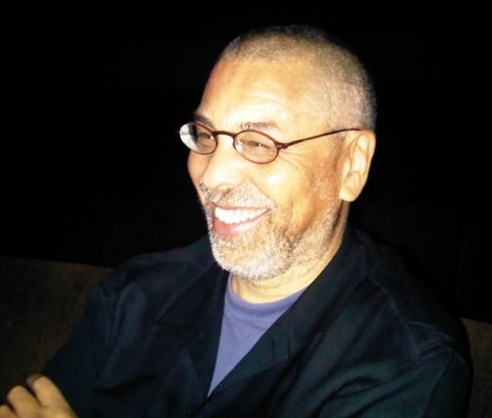
Peter J. Harris, founder and Artistic Director of Inspiration House, is an African American cultural worker who has since the 1970s published his poetry, essays, and fiction in a wide range of national publications; worked as a publisher, journalist, editor, and broadcaster; and been an educator, and workshop leader for adults and adolescents. Harris is also founding director of The Black Man of Happiness Project, a creative, intellectual, and artistic exploration of Black men and joy. He is a mainstay of the Los Angeles arts community and has been supported by P&W as both a writer and event curator.
 What are your reading dos?
I choose poetry that feels right for the moment and best captures my artistic voice, as well as the ideas and emotions welling within me as I absorb the atmosphere of the venue.
I try to contribute to the overall harmonics of the event, but prioritize sharing work that resonates with my journey as a human being and focuses the audience’s attention on that journey.
When producing or curating, my essential “do” is to present programs that include virtuosos—poets with vitality and distinctive voices, who are enchanted by the power of well-chosen language.
How do you prepare for a reading?
Give thanks for the invitation. I choose work that addresses the theme of the reading and review works-in-progress I'm inspired to revisit, in hopes that my preparations might include sharpened insights and heightened skills to complete the new poem in time.
Over the years, I’ve found that publicly reading freshly minted work is difficult, but exhilarating. I can’t rely on memory or familiarity to take it to the bridge. Reading a new poem makes me nervous, slows me down, quiets the room, and demands that I concentrate on feeling/capturing the nuances of the poem in real time. Under the right circumstances, folks in the audience experience and witness in a positive way the humility of my struggle, and they lean in to listen and join me on the exploration.
What’s your crowd-pleaser, and why does it work?
Honesty. Fearlessness. Conversational, passionate delivery of the poem. Resist the urge to lean on what some folks might call a signature poem.
Place the poems first. The audience is there to hear the work, not to see me, even if I’m the “featured” poet.
What’s the inspiration behind the Inspiration House PoetryChoir?
Inspiration House PoetryChoir, a collaboration between a shifting roster of virtuoso poets and improvisational musicians, is my old KPFK radio show stood up on its feet. The radio show, “Inspiration House: VoiceMusic for Whole Living,” aired from 1999 to 2004 on KPFK-FM, Pacifica Radio for Southern California. The show featured poets reading their work to recorded music. Poets selected poetry in response to the music, and I selected music in response to the poetry.
Inspiration House PoetryChoir events unfold in the same unscripted way, with the audience encouraged to respond spontaneously—with shouts of encouragement, amens, and affirmation—to the skill of the poets and musicians, stitching their voices into the dialogue, and helping to produce a testament to whole living.
The Inspiration House PoetryChoir is also a reflection of my thinking that poetry readings can become ceremonies that are mini rites of passages, in which participants begin the experience in one state of mind/being; plunge into the deep exchange between poets sharing their work, while musicians improvise musical responses to the poetry, all of us losing ourselves within the blending of words, intonations, audience responses, and dynamic silence; then leave the gig renewed and recommitted to cultural work that contributes to the creation of a humane society.
What do you consider to be the value of literary programs and the role of the writer in the community?
Ideally, literary programs are concentrated opportunities to swap ideas, testimony, and stories that celebrate our uncensored voices. Sometimes they present virtuosos whose mastery sets or expands standards of excellence. Sometimes they are briar patches to intensify the creative and artistic intimacies of writers of a common cultural or stylistic flow. Sometimes they call us to cross borders and be ethical witnesses to the evolution of themes and issues that hip us and humble us, so we’re reminded to stay curious and hungry to learn.
The role of the writer in the community? Scribe. Critic. Griot. Historian. Entertainer. Provocateur. Visionary. Tour-guide to big ideas, insecurities, and private insights that unlock public understandings. Mas o menos!
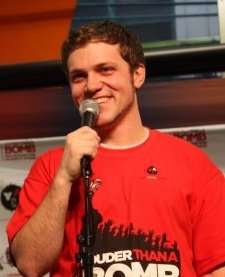
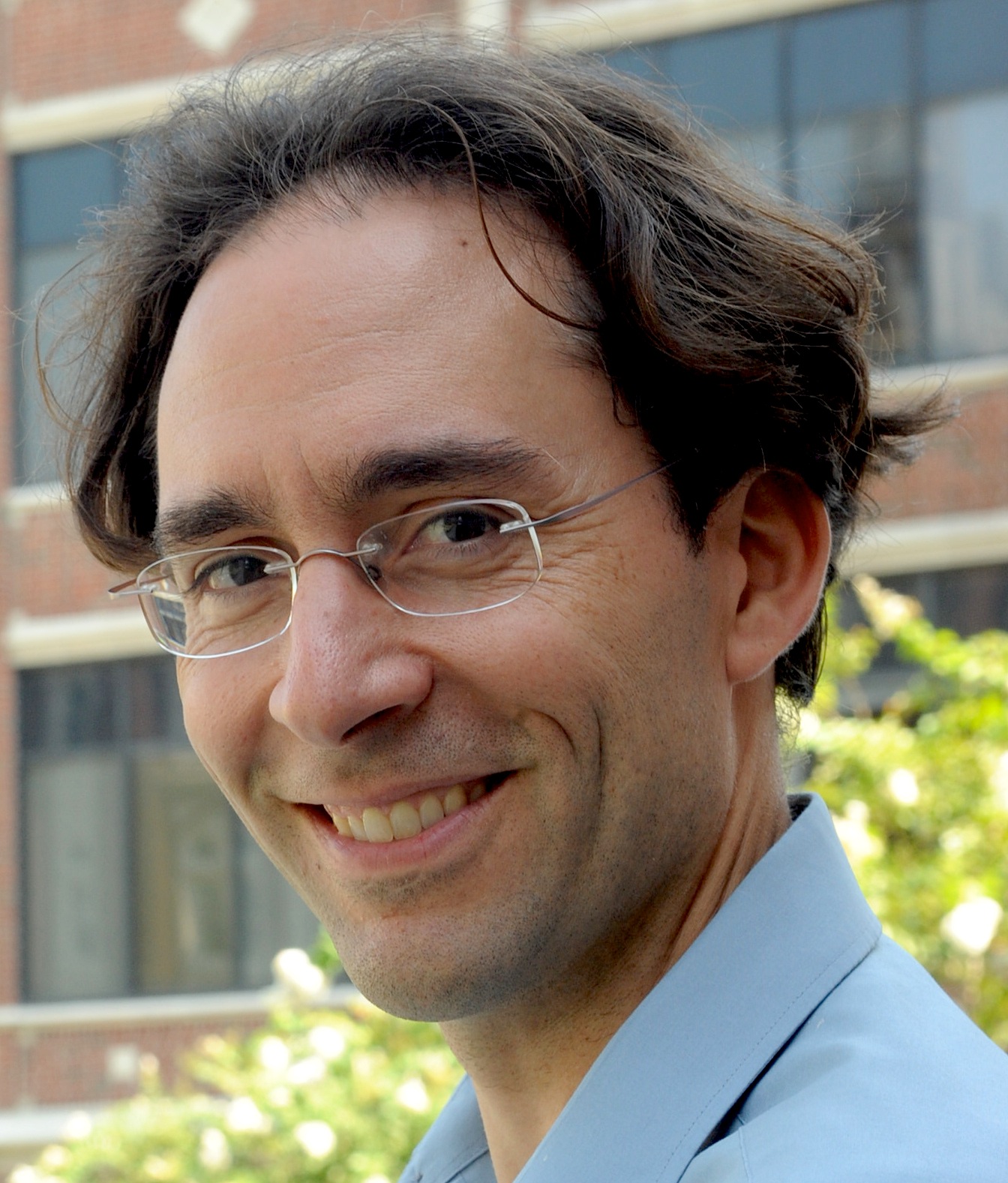
Photo: Peter J. Harris. Credit: Adenike Harris.
Major support for Readings/Workshops in California is provided by The James Irvine Foundation. Additional support comes from the Friends of Poets & Writers.





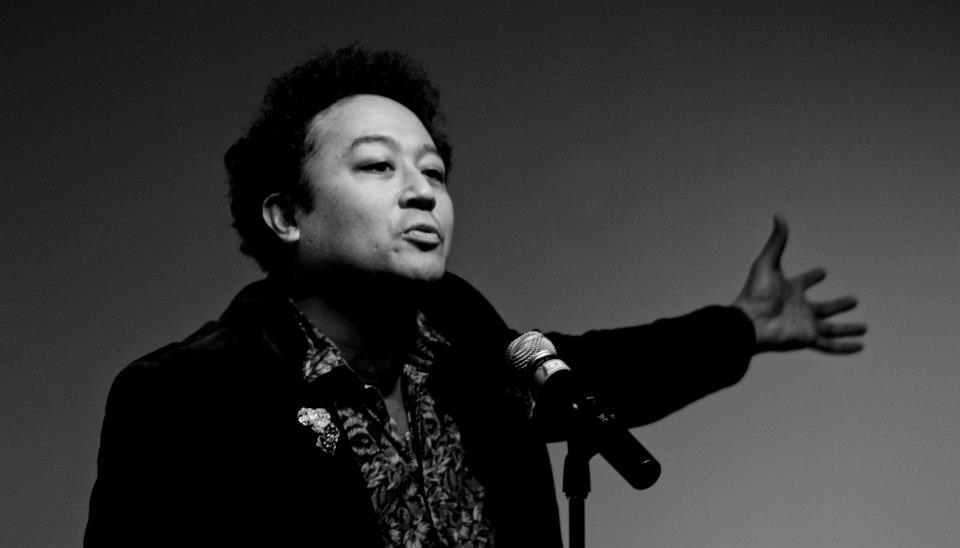
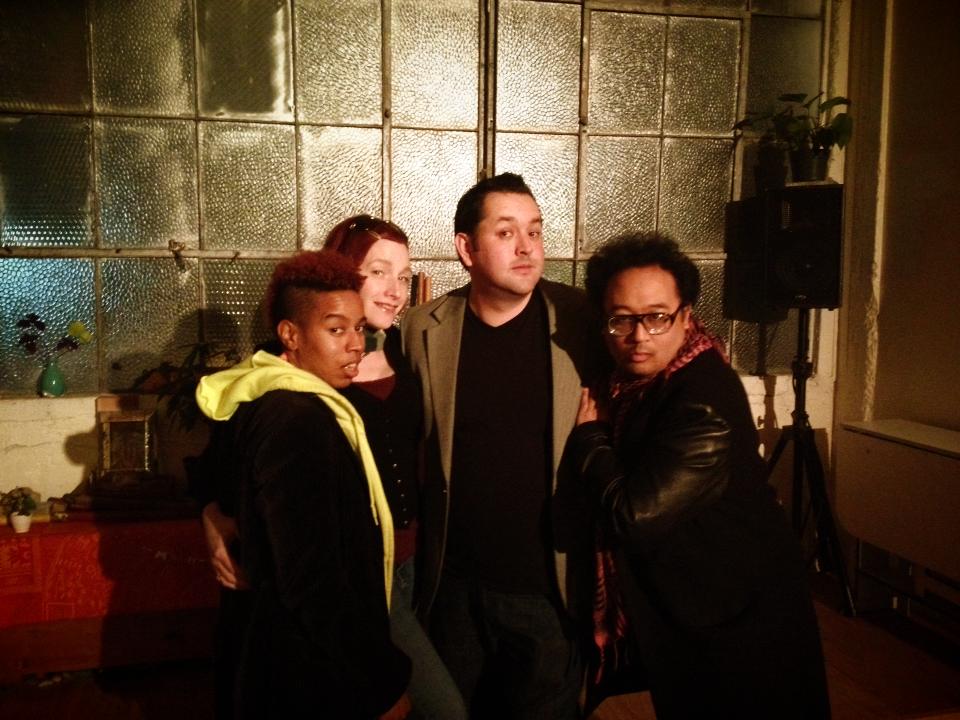 Mase’s poem “Neighbor” was a big hit. The poem is about a homophobic neighbor who gives Mase nasty stares: “Queer people fuck better...and you know it because you live next door...to me.” Baruch’s poem on being “thin” is the best queer poem on body image: “If I were thin I would move a pile of needles naked from one room to another...and sleep with so many skinny boys in my bed because I’d be thin and we can lie in a line on the bed...” Natasha Muse broke her stand-up set into progressions during which she spoke of coming out as trans, starting out as Ewan McGregor and then ending up looking like Nicole Kidman, so watching Moulin Rouge hits her in a very personal way. Natasha concluded her set by talking about becoming a mom and living with her female spouse. The evening had some of the best comedic queer material that I have come across. The owner of The Living Room Project, Micah Hobbes, was impressed by the talent and acknowledged humor as a healing tool.
 To some, Team Englewood High School on Chicago’s South Side seems like an unlikely gathering spot for over one hundred young poets. Englewood is a neighborhood that many folks view negatively, even though a large number of them have never stepped foot inside. The Riots on the Warp Land poetry slam, now in its third year, was created to bring awareness to some of the great things that people who live and work on the South Side are doing.
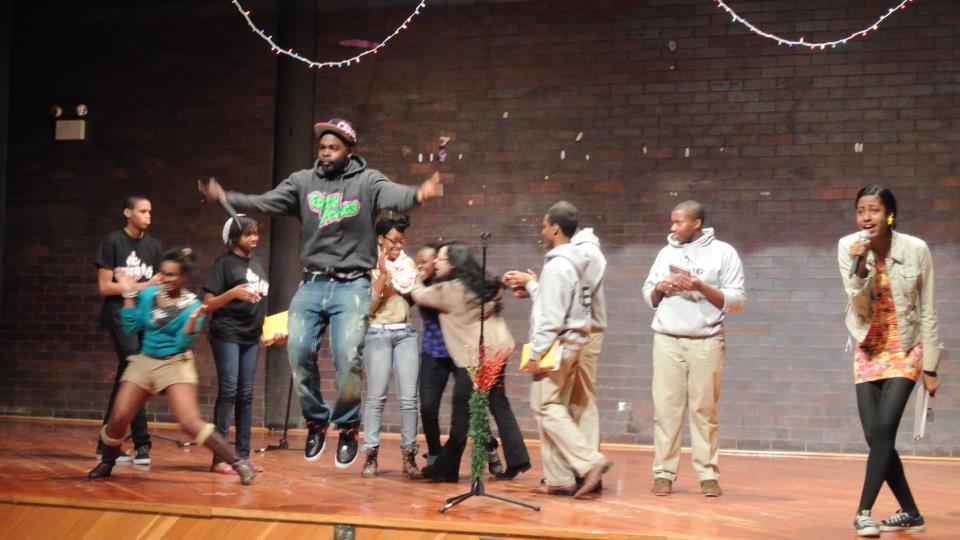 As far as the slam itself, there were three preliminary bouts, with the winner going to finals. I won’t go into detail about who won or who scored the highest. I, the promoters, and Young Chicago Authors don’t place emphasis on the competition, and we tell the kids that from the get-go. Writing and interaction are our goals. Calling it a poetry slam is our gimmick to get kids and community excited about poetry, which is why slam was invented.
 What makes your organization and its programs unique?
  How do you find and invite writers?
  What are your reading dos?
 A poetry slam, we now know, has rules. Poems are orally presented, in front of a microphone. The poems must fit in a time slot of three minutes. Structure, rhyme, and meter are optional. Poets come to the front of the audience, one at a time, and deliver their work. Then the judges (there were five of us at the September slam) hold up cards ranging from one to ten, and fractions thereof. So, the poet might receive an 8.7 or a 9.3, a la Olympics. A time-/scorekeeper records the scores, discards the high and low, and averages the remainder.
 On October 1, 2012, Inprint, Inc., and the Poetry Society of America in association with Nuestra Palabra presented a panel discussion, Red, White & Blue: Poets on Politics, featuring Sandra Cisneros and Tony Hoagland and moderated by the Poetry Society’s executive director Alice Quinn. The gathering, held at the University of Houston, drew a mix of students and community members and there was a rich conversation about the urgency of poets to speak in response to social issues. Both Cisneros and Hoagland read work by poets they admire, followed by a discussion about the importance of giving voice to community. Sandra closed with a poem by
  What makes your workshops unique?