Rubik's Cube
Caption:
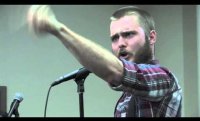
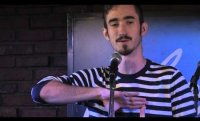
Poet Benjamin Barker performs his poem, “Rubik’s Cube,” at the 2013 National Poetry Slam in Salt Lake City, Utah.
Genre:
Jump to navigation Skip to content
Poet Benjamin Barker performs his poem, “Rubik’s Cube,” at the 2013 National Poetry Slam in Salt Lake City, Utah.
“She was the first beautiful thing I ever got stuck on.” Poet Neil Hilborn performs his poem, “OCD,” at the 2013 Rustbelt Regional Poetry Slam.
Tanyia Johnson and Stephen Gros are literary event producers with the Houston-based organization Make.Play.Speak. They team up to create unique events, such as Kerouacfest: Go!Go!Go! and the upcoming Word Around Town Tour, both supported by P&W. Together, Johnson and Gros answered our questions about the work they do.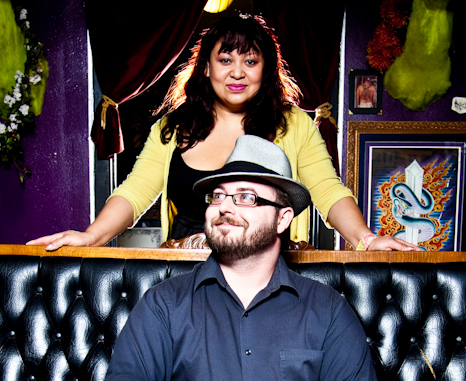 What makes your programs unique?
Johnson: We try to create events we would want to attend. My experience with performance is from theater, and Stephen is an active poet and performer, so our programming takes an all-inclusive approach. We want to create events that can be experienced on different levels—visual, auditory, and kinesthetic—and try to incorporate these models throughout our programming.
What recent project have you been especially proud of?
Gros and Johnson: Our recent project was KerouacFest: Go!Go!Go! March 9, 2013, an all-day event dedicated to legendary Beat writer Jack Kerouac. The event was held at the Orange Show Monument. The Orange Show was built by Houston mail carrier Jeff McKissack between 1959 and 1979. It was McKissack’s opus to the orange, his favorite fruit. This space is an amazing folk art environment filled with mosaics, found objects, and has an unusual layout design, so it was perfect for our event.
With a venue that has multiple performance areas and so much character, we had to develop programming that would feel right for the space. We included a mini biographical exhibit, a panel discussion, a crowd-sourced aggregate poem using Twitter, a DJ playing records from the Beat era, a variety of food trucks, poetry buskers banging out spontaneous poems, plus two incredible jazz bands, and live screen printing. All of that before we even add in the youth slam performance by Meta-Four, well-known Houston writers reading from Kerouac’s On The Road, or the incredibly talented P&W-supported poets—Marie Brown, Salvador Macias, BGK, Chris Wise, and Seth Walker—performing their own work.
We chose poets who weren’t necessarily writing in the style of Kerouac, but would evoke performances that reflected the jazz culture Kerouac desired to embody in his work. Overall, the event was very successful and rumors are already circulating of a follow-up festival next year.
How do you find and invite readers?
Gros: For the Word Around Town Tour we’ve recently instituted a Poet Draft. The Word Around Town Tour is an annual weeklong poetry marathon held at a different venue every night for seven days each summer since 2006, and it’s grown every year since it started. The current lineup consists of 21 poets plus seven veteran features. At that size, it can be tough to keep it fresh and find new talent. The Draft solves this problem. It’s essentially a big open mic where poets get ranked by the organizers and the winners get a spot in the lineup for the tour.
How do you cultivate an audience?
Johnson: At events, we encourage attendees to sign-up on MailChimp or find us on Facebook. Stephen has hosted and produced shows for many years, so he’s built up a network of followers. Houston has a pretty active poetry community. We also make a big effort to access people who usually aren’t attending these events. We try to get exposure through different media—radio, print, and online—to highlight the events we organize.
Can you speak to the value and challenges of collaboration?
Gros: For me, collaborating is a way to stay fresh. Having a different perspective brought to your vision can make the event become something remarkable. Specifically, Tanyia brings a knowledge and experience of event management and stage production, along with an endless stream of inspiring ideas, which makes her an asset on any team. Couple that with her unflappable dependability and professionalism, and it’s clear that she is the perfect collaborator.
Johnson: Collaboration is definitely a necessity for me because I am not a writer or a performance poet. I seek to collaborate with folks to create an artistic experience with a literary focus. My personal artwork has always been mixed-media, so I view this as an extension of mixed-media. The biggest challenge for me is scheduling. When you have more than two people collaborating, it’s tough to get everyone together at the same time.
How has literary presenting informed your own writing and/or life?
Gros and Johnson: Literary presenting has informed and influenced every aspect of our lives. We take vacations around the many annual events we produce. We’re more likely to buy new microphone equipment than new clothes. The list goes on. We live and breathe interdisciplinary art and literature events.
What do you consider to be the value of literary programs for your community?
Gros: Without literature, a community has no soul. Literary programs and live events inform and educate in an active, intellectually challenging way that other activities simply can’t compete against. Literary events provide knowledge of our shared literary heritage, while at the same time increasing awareness of cultural values, history, sociology, psychology, and almost every other branch of study. Reading, writing, and sharing with others are some of the most important things a community can do together.
Photo: Tanyia Johnson and Stephen Gros. Credit: Eric Kayne.
Support for Readings/Workshops events in Houston is provided by an endowment established with generous contributions from the Poets & Writers Board of Directors and others. Additional support comes from the Friends of Poets & Writers.
“Poetry gave me something that school didn’t,” says CJ Suitt, one of three subjects in this documentary, directed by Garret Warner, that follows spoken word poets from North Carolina. In front of live audiences they search for what is personal and universal, what Maya Angelou called “a brave and startling truth.”
Jade Foster is the founder of the salon styled poetry tour THE REVIVAL, which has connected over two thousand women across the United States and abroad. The third annual tour in 2012, funded via a successful Kickstarter campaign and supported in part by P&W, featured a troupe of queer women artists in D.C., Toronto, Detroit, Chicago, Cleveland, Atlanta, and Durham. Foster continues to use poetry as a tool in redefining American arts. To stay informed visit Cereus Arts. Her own literary work has been published in magazines, including online at Clutch Magazine and Elixher. 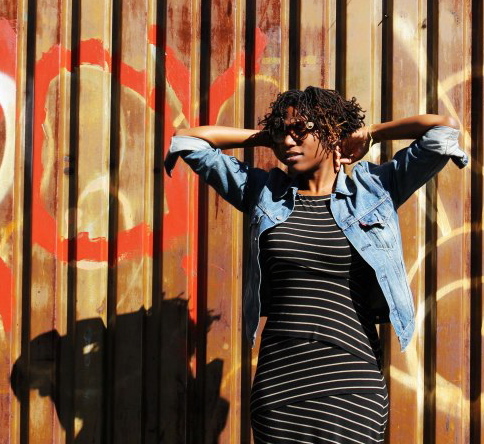 What are your reading dos?
I teach poetry to high school students, and we were just discussing what to do when you have a feature. First things first: Be prepared. Look like something. And definitely have options when it comes to your poems because you never know how large, small, or diverse your audience is going to be.
...and don’ts?
Never leave a reading early, or after you read. With the queer-women-led poetry tour THE REVIVAL, I share my work, but I also do a lot of the planning and set up, so I'm the last to leave. It's important to stay because you never know who you may meet or what kind of feedback you'll get on your process.
How do you prepare for a reading?
On the 2012 tour, we took the time to check in with each other and dedicated our performances to our ancestors at each and every show. It was the first time we did this, but I believe it really made a difference in our delivery, and helped us focus on our purpose as poets and conduits for the word.
What’s your crowd-pleaser, and why does it work?
I don't want to please a crowd. Never! I want someone to get upset, to get outraged, to feel challenged to do more. There's so much we can do just by taking a small step toward our own selves.
What’s the inspiration behind THE REVIVAL poetry tour?
THE REVIVAL started because I didn't fit in. I'm not a slam poet, I'm not an academic poet, and the open mics were boring me. Luckily, there were a few other women poets who felt the same way. A poem isn't finished until it's heard, so we all pooled our resources, reached out to friends and family to open their homes, and made it happen.
What do you consider to be the value of literary programs in the community?
We're in a peculiar place, on our own cliff...
I say it's time to jump. If folks are reading on Kindles, let's follow suit. If publishing houses are printing less, then let's print or come together to distribute our own work. Poetry is low-key in a vacuum right now—in a MFA middle-of-nowhere vacuum—and that's dangerous. It belongs to the people. THE REVIVAL is taking that jump and, like The Road Runner in those old cartoons, we hit the ground running.
Photo: Jade Foster. Credit: Anna Barsan.
Support for Readings/Workshops events in Washington, D.C., is provided by an endowment established with generous contributions from the Poets & Writers Board of Directors and others. Additional support comes from the Friends of Poets & Writers.
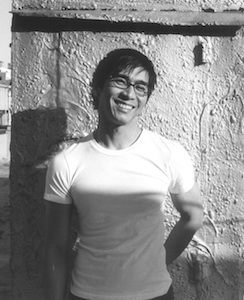
Poet Joseph O. Legaspi cofounded Kundiman, a nonprofit organization that serves Asian American poets. He blogs about curating P&W–supported Kundiman & Verlaine, a New York City–based reading series that has been running for ten years. The author of Imago (CavanKerry Press) and the forthcoming chapbook Subways (Thrush Press), he lives in Queens, New York, and works at Columbia University.
 It started with an experiment. Before the poet Sarah Gambito and I fully conceived of Kundiman, the nonprofit we founded to serve Asian American poetry, there were the poems. At the time, in 2003, we were interested in the idea of poems as physical objects, as solid and tangible art pieces. We were also regulars imbibing lychee martinis at Verlaine, a bar on the lower east side of Manhattan where we befriended Gary Weingarten, a photographer and one of the owners of Verlaine. Presented with our idea, he provided us with the blank canvases: the walls inside Verlaine onto which we hung blown-up prints of poems. Words against a sheer white backdrop loomed large: our poems, as well as others by Prageeta Sharma and Li-Young Lee. Like a gallery, we hosted an opening with an amazing turnout.
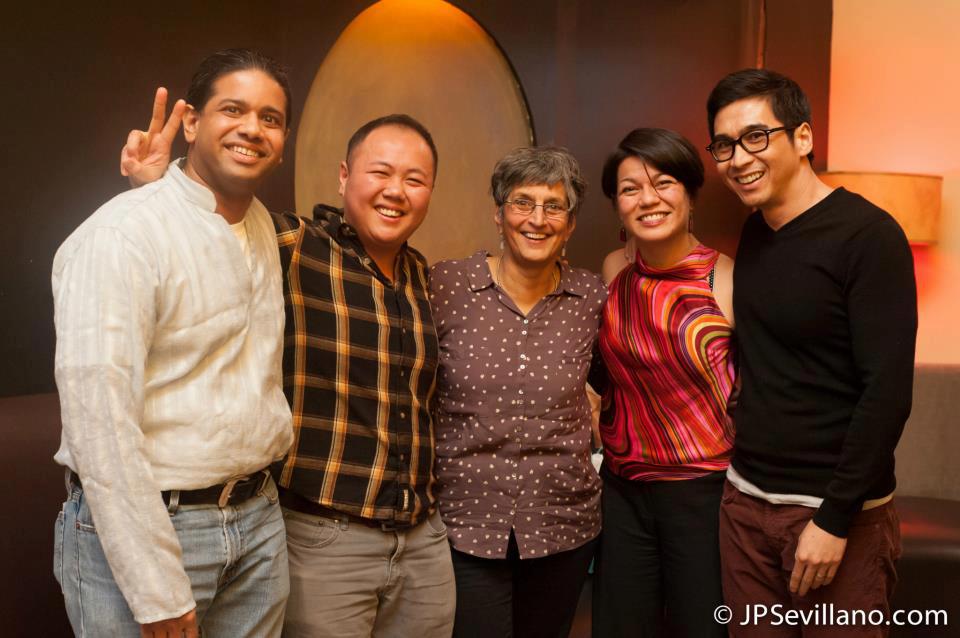
When such a partnership presents itself, you run with it. The March 17, 2013, P&W–supported reading marked the tenth year of Kundiman & Verlaine, the only reading series that highlights Asian American poets. Over 130 readers have graced our stage, among them luminaries like Mei-mei Berssenbrugge, John Yau, Kimiko Hahn, Vijay Seshadri, Patrick Rosal, and Cathy Park Hong, along with emerging Asian American talents. In the spirit of community building, we have also invited poets from other literary circles like Cave Canem, LouderArts, and Acentos. Through the years, the series has exemplified the multiplicity and vitality of voices within the Asian American (and greater) literary community. At the March reading alone, for instance, were the following participants: Mandy Gor, a poet, painter, seamstress, and banker raised in Texas; Seni Seneviratne, a Sri Lankan living in England; and Kit Yan, a transgender spoken word phenomenon. The audience, from seemingly divergent backgrounds, were brought together by poetry. The Kundiman & Verlaine reading series embodies this spirit: big-hearted and celebratory. The lounge atmosphere helps, as well as the hour-long open bar before each reading.
 The bottom line is that for a literary series to thrive, much generosity is needed: a place for gathering, a co-host/co-sponsor who shares your vision, an open-minded audience, and kind readers. Recently, another act of generosity: Poets & Writers, through its Readings/Workshops Program, has been able to provide honoraria to qualified readers. How lovely it’s been to compensate poets for their time and craft. Kundiman believes in paying poets, but because of our limited funds, we’ve been unable to do so—beyond the gift bags we give to readers as a token of our appreciation. Because of such patronage and generosity, the Kundiman & Verlaine reading series continues to be a welcoming, warm environment, full of heart.
Photo: (Top) Joseph O. Legaspi. Credit: Emmy Cateral. (Bottom, from left to right) Vikas Menon, Kit Yan, Seni Seneviratne, Mandy Gor, and Joseph O. Legaspi. Credit: JP Sevillano
Support for Readings/Workshops in New York City is provided, in part, by public funds from the New York State Council on the Arts and the New York City Department of Cultural Affairs, with additional support from the Louis & Anne Abrons Foundation, the Axe-Houghton Foundation, The Cowles Charitable Trust, the Abbey K. Starr Charitable Trust, and the Friends of Poets & Writers.
P&W-funded Regie Cabico blogs about his latest readings and workshops. He is the coeditor, with poet and novelist Brittany Fonte, of the recently published anthology of queer poetry and spoken word, Flicker and Spark (Lowbrow Press). His own work has appeared in over thirty anthologies, including Aloud: Voices from the Nuyorican Poets Café, Spoken Word Revolution, and Chorus & The Outlaw Bible of American Poetry. He received the 2006 Writers for Writers Award from Poets & Writers for his work teaching at-risk youth at Bellevue Hospital in New York City. He is a former Artist in Residence at NYU's Asian Pacific American Studies Program and has served as faculty at Banff's Spoken Word Program. He resides in Washington, D.C.
March had me climbing from The University of Northern Alabama conducting poetry and performance workshops with Andy Thigpen and Chelsea Root, the codirectors of Boxcar Voices: a Poetry and Storytelling Series in Florence, Alabama. I would know nothing of the south if it weren't for JT Bullock, a slam poet and registered nurse who grew up performing poetry and organizing poetry readings with heralded slam poets. The workshops I conducted drew twenty students and the performance drew a hundred or so enthusiastic audience members. JT and I are a two-person poetry group called Dirty Rice. The name reflects my Asian and JT's Southern Roots. The “dirty” stands for our lascivious poems and stories of political gay identity.
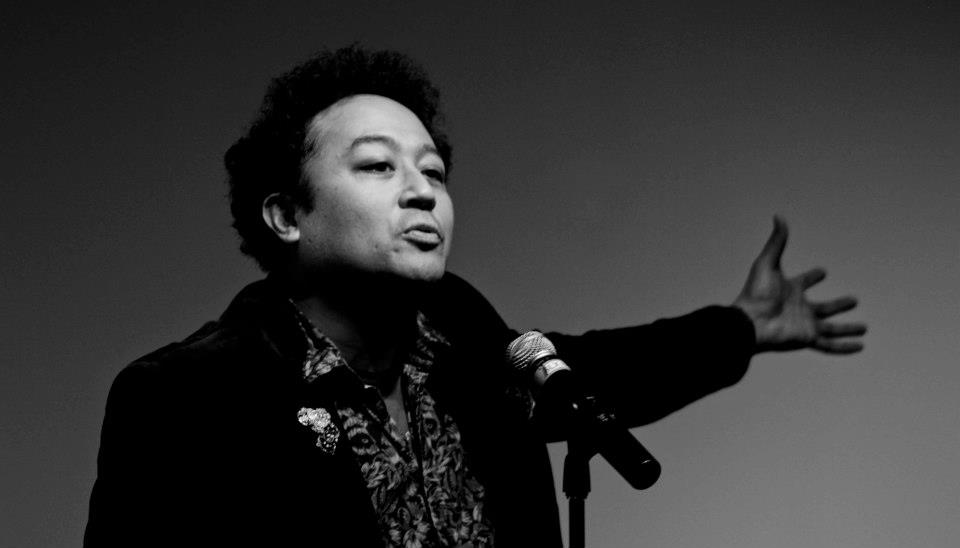 Florence is magical: the people, the shrimp and grits and muffins. I left wanting to curate a queer arts festival this year. Why? Because I'm insane. But also because the community is so friendly and warm and I know that the impact of a queer spoken word gathering would forever affect the 40,000-person population of Florence. Thigpen is a born and bred resident of Florence; he loves words, is an incredible writer, and his running of series in a small town creates an incredible impact. Chelsea Root is an up-and-coming writer with an intense delivery and shares Thigpen's enthusiasm for the word.
The open mic is its own church and community. The Sparkle Series (which occurs on the fourth Wednesday of each month at Busboys and Poets at 5th & K) is my way of combating homophobia and misogyny in the Washington, D.C. open mic scene. In its five-year history, Danielle Evennou and I have brought emerging and established queer poets to D.C. to share their work. Denise Jolly, recently ranked number five in the 2013 Women of the World Slam, graced us with her newer work. Jolly was joined by Spencer Retelle, a new voice in D.C. Along with Busboys and Poets, Sparkle and Split This Rock will apply for Poets & Writers funding through the Readings/Workshops Program for my performance in mid-June.
Finally, I am writing my last blog in Montreal, the gayest city in North America. I am with JT Bullock again and participating in The Mile End Poetry Festival. I conducted a workshop sponsored by the Montreal Slam Team and performed with Jane Gabriels, a poet and theater artist from New York City and Montreal, and other avant garde artists. My work is only made possible by those who have visions of bringing voices together. Ian Ferrier, who curated The Mile End Poetry Festival, is a literary activist galvanizing the best literary talents. Sheri-D Wilson of Calgary, David Bateman from Toronto, and Moe Clark and Kaie Kellough of Montreal inspire me. On the second night of the festival, I participated in the first ever Word Race contest—a competition where people read words as fast as they can, battling each other through speed and acuracy. I came in second place and won a Norwegian Arts Guide Book. C Command, the individual representative for the Canadian Indie Competition, won. He received an American Slang Dictionary. Oh, shucks. I wouldn't have been able to carry it in my bag anyway.
Photo: Regie Cabico. Credit: Carlos Rodriguez.
Support for Readings/Workshops events in Washington, D.C., is provided by an endowment established with generous contributions from the Poets & Writers Board of Directors and others. Additional support comes from the Friends of Poets & Writers.
Poet Shane Koyczan delivers a performance of "To This Day," his spoken-word poem about bullying that went viral as a video project with eighty different animators earlier this year.
P&W-funded Regie Cabico blogs about a whirlwind week of readings and workshops. He is the coeditor, with poet and novelist Brittany Fonte, of the recently published anthology of queer poetry and spoken word, Flicker and Spark (Lowbrow Press). His own work has appeared in over thirty anthologies, including Aloud: Voices from the Nuyorican Poets Café, Spoken Word Revolution, and Chorus & The Outlaw Bible of American Poetry. He received the 2006 Writers for Writers Award from Poets & Writers for his work teaching at-risk youth at Bellevue Hospital in New York. He is a former Artist in Residence at NYU's Asian Pacific American Studies Program and has served as faculty at Banff's Spoken Word Program. He resides in Washington, D.C.
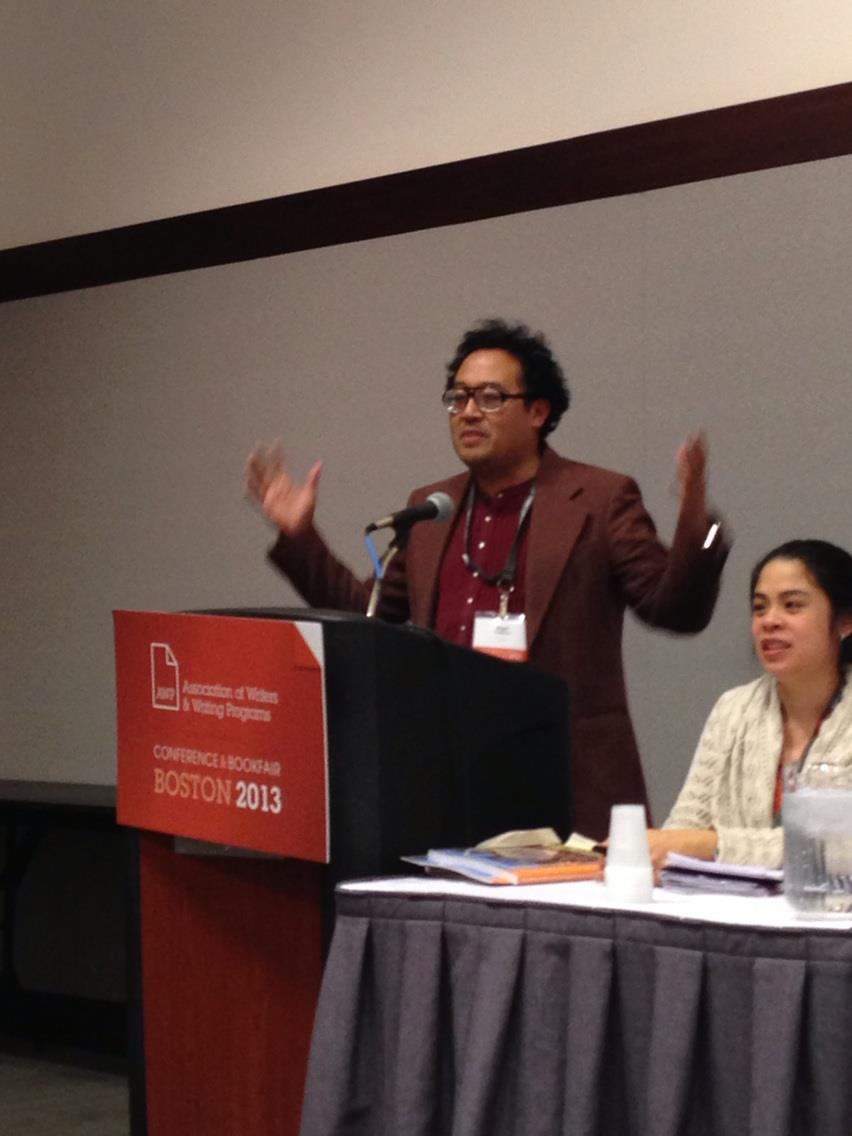
P&W-funded Kundiman, an organization that supports Asian American poets, has been an important resource for me as a teaching mentor, and the co-founders Sarah Gambito and Joseph Legaspi have been long-time supporters of my performance work. If I don’t make it to the 2013 AWP Conference in Boston to attend their ten-year anniversary panel and party, it’ll be like missing a wedding.
On the plane from D.C. to Boston, as we are about to take off, the pilot tells us that all flights in and out of Boston's Logan airport have been suspended. An hour later, they have to clean the ice on the wings. After watching JetBlue’s History Channel entire program on vikings, we finally lift off.
My first reading starts at 7:30 PM. I arrive in Boston at 8 PM. My coeditor Brittany Fonte texts me, HURRY! and I finally get to the reading at 8:30 PM. I read two poems: Baruch Porras Hernandez’ “Pursuit of Taconess” and J Mase the III’s “Neighbor”—both hysterical pieces with serious messages about immigration and transphobia. It’s a hit. Afterward, Nathaniel Siegel takes me out to a gay bar, where I sing “I Am What I Am” really badly.
On Thursday at 1:30 PM is the Flicker & Spark book signing. I spend thirty dollars on beverages and snacks at Trader Joe’s. Three poets show up: Nathaniel Siegel, Dorothea Smartt from London, and Lenelle Moise. Brittany Fonte and I were hoping to find the other poets in the book and thank them.
On Thursday night, Kundiman had a very emotional intimate celebration at the Pucker Gallery. The room exploded with Prosecco, sushi, impromptu massages, and poetry whispered in our ears. Afterward, I take it easy and watch Project Runway with Kim Roberts, a poet and my housemate.
On Friday, I pray that my f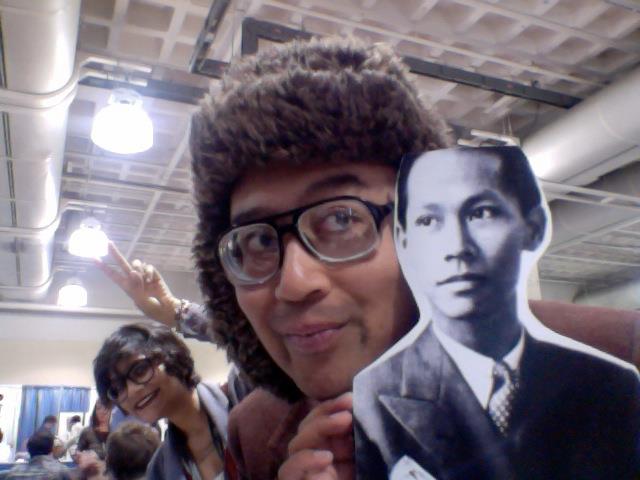 light to Madison will be on time. I am scheduled to perform at the Midwest Filipino Students Association. I am to give a workshop and a performance in the evening. I bring my bags to Friday morning's Kundiman panel. Myung Mi Kim, Paisley Rekdal, and I read poems and talk about pedagogy.
I leave Boston and its icy wind velocities. At the airport, I see Michael Cirelli, executive director of P&W-funded Urban Word. He confirms my hosting the slam finals on April 20 at The Apollo with rapper MC Lyte.
I can only think about getting to Madison. I get in at midnight. The next morning, my workshop has twenty students and my performance in the evening is a huge hit.
On Sunday, I am eating brunch with the students and comedian Rex Navarette. I insist that we all have a wholesome Wisconsin brunch with organic eggs and cheese. I get to my house at midnight. I will have a Poetry Out Loud workshop to do the next day along with an open mic feature for the Northern Virginia Gay Health Center at Busboys & Poets, and then I will host my weekly spoken word and cabaret show La-Ti-Do.
Once at home, I reflect back on my week. I have too many business cards that need to be sorted. I am totally drained, and it is not even National Poetry Month yet. But I am happy I saw Bonnie Rose Marcus, the director of Poets & Writers' Readings/Workshops (East), who reminded me to apply for D.C. funds while there was some money left. Through Poets & Writers' Readings/Workshops program, I've been paid for doing my community work.
Photos: (Top, from left to right:) Regie Cabico, Sarah Gambito. Credit: Oliver de la Paz. (Bottom, from left to right:) Soham Patel, Regie Cabico, and Regie's patron poet Carlos Bulosan.
Support for Readings/Workshops events in Washington, D.C., is provided by an endowment established with generous contributions from the Poets & Writers Board of Directors and others. Additional support comes from the Friends of Poets & Writers.
P&W-funded Regie Cabico is the coeditor, with poet and novelist Brittany Fonte, of the recently published anthology of queer poetry and spoken word, Flicker and Spark (Lowbrow Press). His own work has appeared in over thirty anthologies, including Aloud: Voices from the Nuyorican Poets Café, Spoken Word Revolution, and Chorus & The Outlaw Bible of American Poetry. He received the 2006 Writers for Writers Award from Poets & Writers for his work teaching at-risk youth at Bellevue Hospital in New York. He is a former Artist in Residence at NYU's Asian Pacific American Studies Program and has served as faculty at Banff's Spoken Word Program. He resides in Washington, D.C.
 For the last three years, I have been working with the D.C. Commission for the Arts on Poetry Out Loud, A National Poetry Recitation Competition. This year, I have worked primarily with McKinley Technological High School and Latin Public Charter School. My job is to help students find their unique interpretations of poetry selected by Poetry Out Loud. The competition goes from local high school, to the state level, and then to the national competition.
I am amazed by the students’ choices of poems: What lures a teen poet to John Keats or Anne Bradstreet? Students in the state and national competitions must memorize three poems and one of the poems has to be from the nineteenth century. For a long time, I resisted Poetry Out Loud as a contest that was removed from the poetry slam. I thought that the required poems were antiquated and out of touch with the students' racial and/or economic backgrounds.
For decades, I taught at-risk teens at Bellevue hospital with Tina Jacobson. I know that young people can write and perform poetry that is closer to their experience and also ends up giving voice to unrepresented and marginalized youth. I am inspired by the librarian Sarah Elwell, who is a magnet for students. Ms. Elwell tirelessly brings speakers and artists to the library to inspire them. Lisa Pegram is a teacher with whom I have worked as D.C. youth slam coach. Ms. Pegram aka Lady Pcoq is a musician, poet, and playwright who gets to engage her students in artistic explorations through the Poetry Out Loud program.
Ms. Pegram and I have students record themselves on their iPhones, create broadsides of their poems, and categorize each word of their poems by noun and verb so that they are able to understand every word they're memorizing. With Ms. Elwell, I have turned the library into a literary and performance playground. The goal is to get students to live the poem and dive into the world of the images they are reciting. I have to get them to engage in the musicality of the text and also create a story for them to fall into.
On March 5, 2013, I prepped students at McKinley High School. The Daughters of the American Revolution, the D.C. Public Library, and the Washington Teachers Union were represented as judges. Fifteen students competed, and the poems moved quickly because poems were short, unlike a slam where there is a three minute limit.
Then, it moved from fifteen to six poets. I had worked with all of the six poets but one. Students got up and forgot lines, but the student body was supportive. In the end, Tshala Pajibo, an eleventh grader, won. She was not the most polished performer, but Ms. Pajibo exhibited focus and made a physical stomp and her vocal strength, as well as her dynamic performance choices, made the audience jump. She performed Maya Angelou's poem, "I Know Why The Caged Bird Sings." When I worked with Ms. Pajibo, I asked her to "visualize" the bird and tell the story of the bird.
Ultimately, there is a value to taking something that you did not write and interpreting and finding a story in it. There is value in memorizing Emily Dickinson or William Blake in order to move through history and time. It brings a lineage to a slam poet's performance. It encourages them to write outside of the box, and it provides another set of diction for the artists to use. One of the categories in the individual poetry slam competition is the “One Minute Poem.” Poetry Out Loud is full of poems twenty-five lines and under. I hope poets who are working on their one-minute poems will take a look at these poems for inspiration. As a former musical theater major, I had to find songs that I could perform well for auditions. I have as much joy finding poems that suit me. I would love to perform the work of Robert Creeley, Stuart Dybek, and Henry Wadsworth Longfellow. Who knew? I am grateful to Carlyn Madden at the D.C. Commission for the Arts who brings so much care to arts in education in Washington D.C.
Photo: Regie Cabico. Credit: Carlos Rodriguez.
Support for Readings/Workshops events in Washington, D.C., is provided by an endowment established with generous contributions from the Poets & Writers Board of Directors and others. Additional support comes from the Friends of Poets & Writers.