Sholeh Wolpé
Caption:
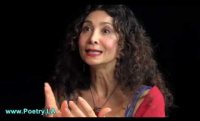
"Poetry is condensed language with an internal music." Poet, artist, and literary translator Sholeh Wolpé speaks about how growing up and living within different cultures has influenced her writing.
Genre:
Jump to navigation Skip to content
"Poetry is condensed language with an internal music." Poet, artist, and literary translator Sholeh Wolpé speaks about how growing up and living within different cultures has influenced her writing.
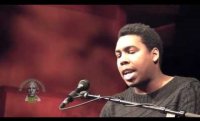
Saeed Jones recites a poem from his poetry collection, Prelude to Bruise (Coffee House Press, 2014), at the Dodge Poetry Festival in October. Jones is one of the debut poets featured in "Breaking Into the Silence" in the January/February issue of Poets & Writers Magazine.
With help from the Lannan Foundation, one of America’s most prestigious poetry prizes has survived the threat of shutting its doors, instead increasing its monetary award tenfold.
Since appearing in our annual Debut Poets roundup, a number of the one hundred and twelve poets we’ve highlighted have gone on to create a wealth of interesting and important work. The following list includes each poet we’ve featured in the past ten years, his or her debut collection, and the many full-length books that followed.
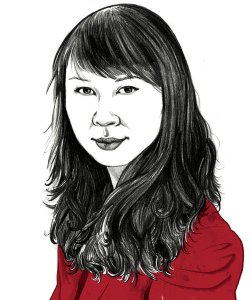
In our tenth annual look at debut poets, we’ve asked the more than one hundred poets previously included in this feature to nominate their favorite debut collections of 2014. From that longlist of outstanding work, we’ve selected ten poets to feature here, who share their inspirations and influences, how their books began, and advice to those hoping to get their own books out into the world.
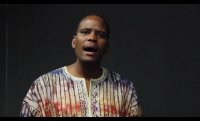
"Don't shy away from using words, words are a very, very important form of expression... in whichever language." Keith Phetlhe, a poet from Botswana, speaks about how poetry has been an influential part of his life and culture, and performs Shakespeare's Sonnet 18 in Tswana.
As the weather turns colder and the days grow shorter, it may be a nice time to gather some friends and write together. This week, try writing a renga, or “linked poem.” The first poet begins by writing a stanza that is three lines long and contains seventeen syllables. The next poet adds the second stanza, a couplet with seven syllables per line. The third stanza repeats the structure of the first, and the fourth mimics the second, and so on, until the poem comes to an end. To make sure the poem has a narrative arc, each poet writes his or her new stanza by referring to the stanza immediately preceding it.
Culled from our Writers Recommend series, the music and movies that inspire authors to keep writing, with recommendations from Sandra Beasley, Chloe Caldwell, Scott Cheshire, Joshua Henkin, and others.
This week, write a whimsical, nonsensical poem about a creature you’ve dreamt up. Try to let go of the meanings associated with the words you use every day when describing this creature. Instead, use words as springboards for weird associations, as colors in a vast mural. Let your mind run wild and hang on for the ride. For inspiration, read Lewis Carroll’s “Jabberwocky.”
"I feel like it's my personal mission to keep those stories as present as I am possibly able to keep them present." Claudia Rankine appeared on PBS NewsHour last week to discuss the recent upheaval involving unarmed black men and white police officers, and how these events influenced her book Citizen: An American Lyric (Graywolf Press, 2014).