Genre: Poetry

2016 Maureen Egen Writers Exchange Winner in Poetry: Key to New York City

Kimo Armitage is the author of over twenty children's books, and his first novel, The Healers, was published by the University of Hawaii Press in April 2016. He is currently looking for a publisher for his first collection of poetry, These Shackles Fit Perfectly.
My writing group tells me to submit to the Maureen Egen Writers Exchange Award for poetry. I am hesitant. I am not ready for New York City and my inner voice tells me that I might never be ready.

Luckily, my writing group is there for me. We meet monthly and workshop our work. After I receive positive feedback for the poems, I decide to listen to them and send in my collection of poems. These poems are inspired by the traumatic and joyous histories of people in the Pacific who have been affected by colonization, nuclear weapon detonation, immigration, foreign military occupation, and other events. Hawaiʻi is another world compared to New York City and I do not know how I—a Hawaiian, Chinese, Maori, English, and Portuguese Pacific Islander raised by my mother’s parents—will be received. My worry is that my voice and my stories will be dismissed. I am shocked when I am told that I have won.
Now, I am in New York City. I am excited and terrified. I have just arrived on the red-eye into JFK. Alicia Upano, a fabulous writer and the WEX winner for fiction, arrived the day before and we are meeting for brunch at a famous NYC dim sum eatery. She is also from Hawaiʻi and we are friends. My first task is to drop my luggage off at the hotel—included in an all-expenses-paid trip to the city to meet with agents, authors, publishers, and others in the literary community, as well as the opportunity to participate at a one-month residency at the Jentel Artist Residency Program in Wyoming.

I hail a cab to get into the city. My suitcase is filled with gifts for the people that I will meet. There are boxes of chocolate-covered macadamia nuts and aromatic coffee from Hawaiʻi. I have also brought along copies of my completed poetry manuscript, These Shackles Fit Perfectly.

Alicia meets me at the hotel. We cab to Chinatown and eat an amazing lunch. We sightsee before heading back to the hotel for our initial meeting with Bonnie Rose Marcus and Wo Chan, who work in the Readings & Workshops (East) department at Poets & Writers.

The week is an amazing mix of meetings, information, and being genuinely starstruck. We discuss literature and topics in Uptown offices, trendy restaurants, private homes, and modest workspaces. Each person listens and offers advice. These resonated with me:

Send your poetry out to different publishers. It will get your name and work out until you find the right publisher.

You have to write. Period.

Storyline is just as important as character (and vice versa).

There is a difference between writing and editing. You need both.

There is no single path. All writers have their own journey.

It is the last advice that cinches it for me. The New York literary scene is intimidating and frustrating and worthwhile at the same time. I am beyond grateful for being chosen to see how it works. But the greatest takeaway for me is that there is no right way to get here. Never pass up an opportunity; it might be the key that lets you in.
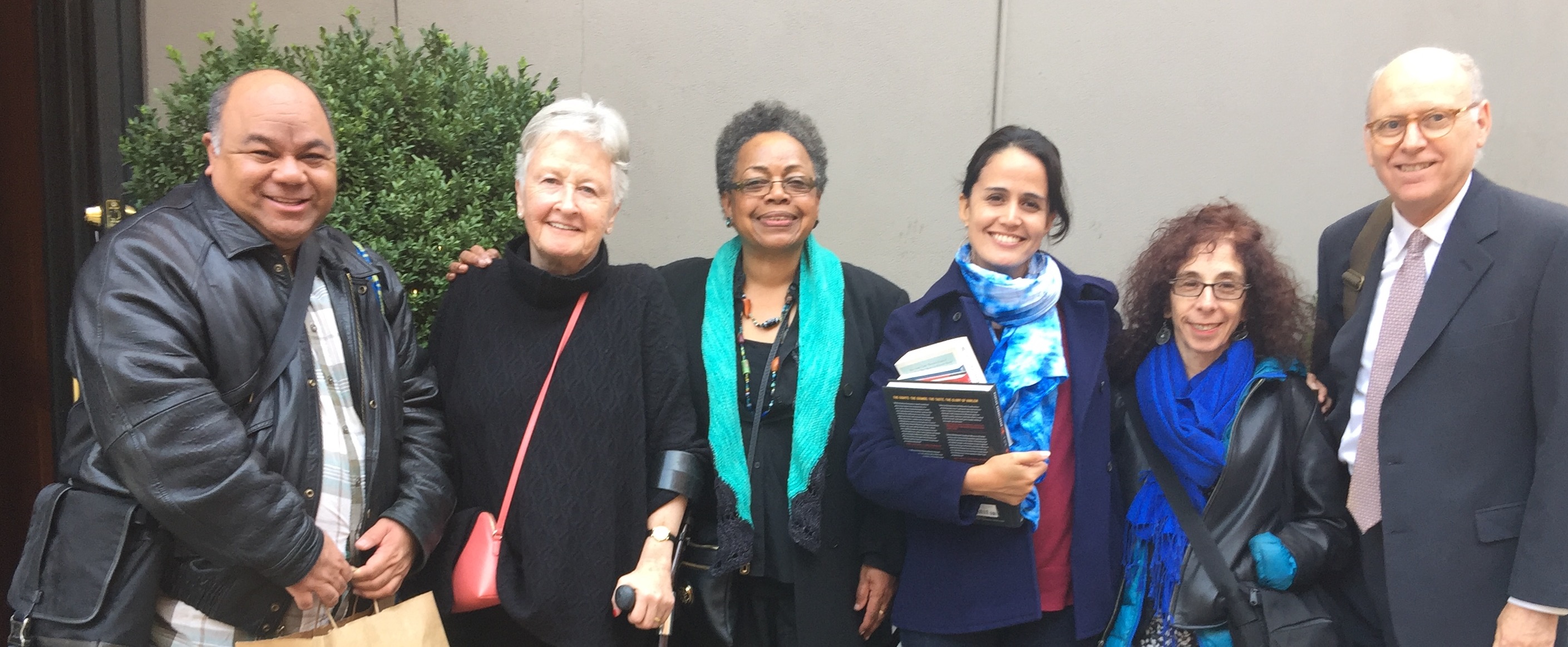
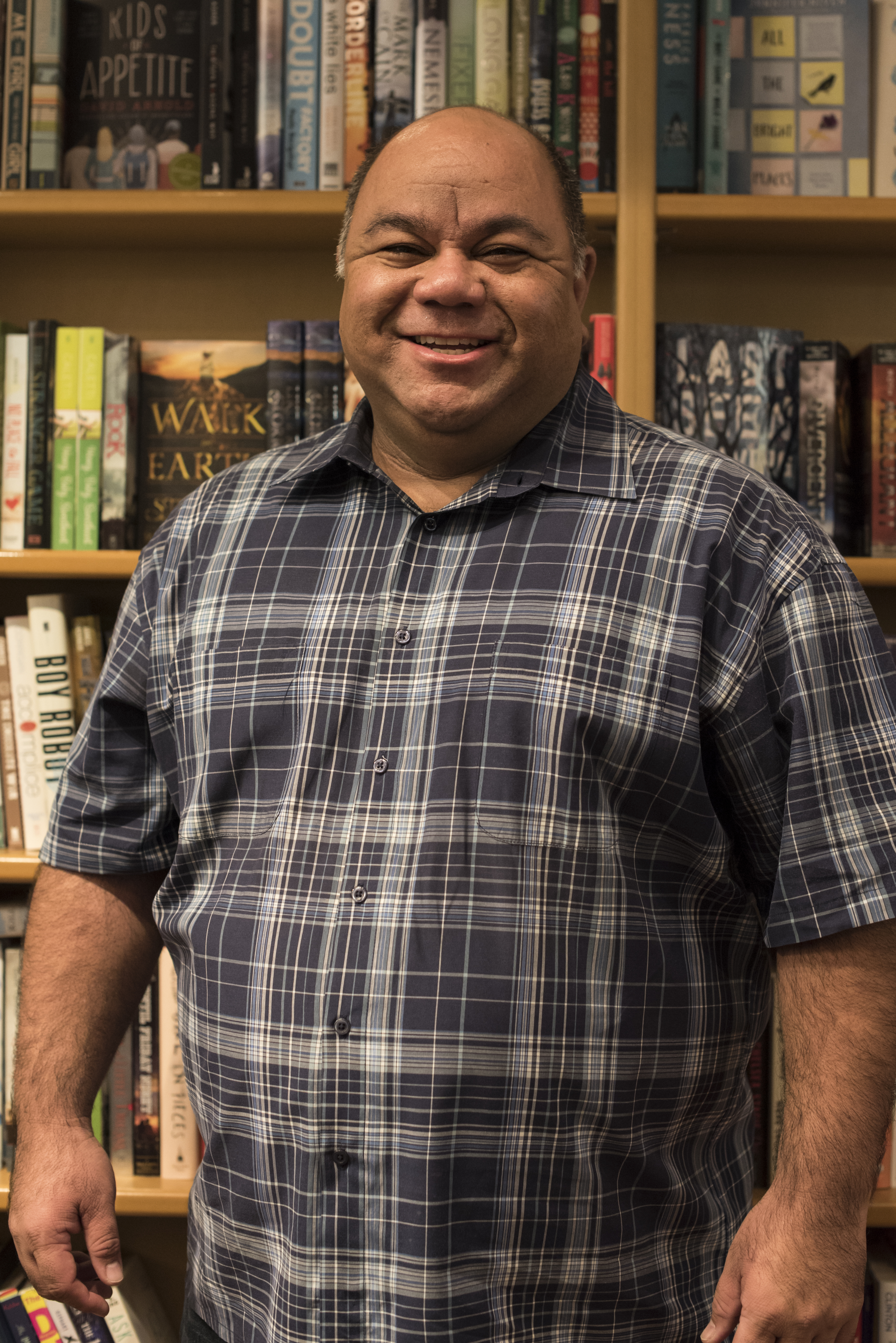
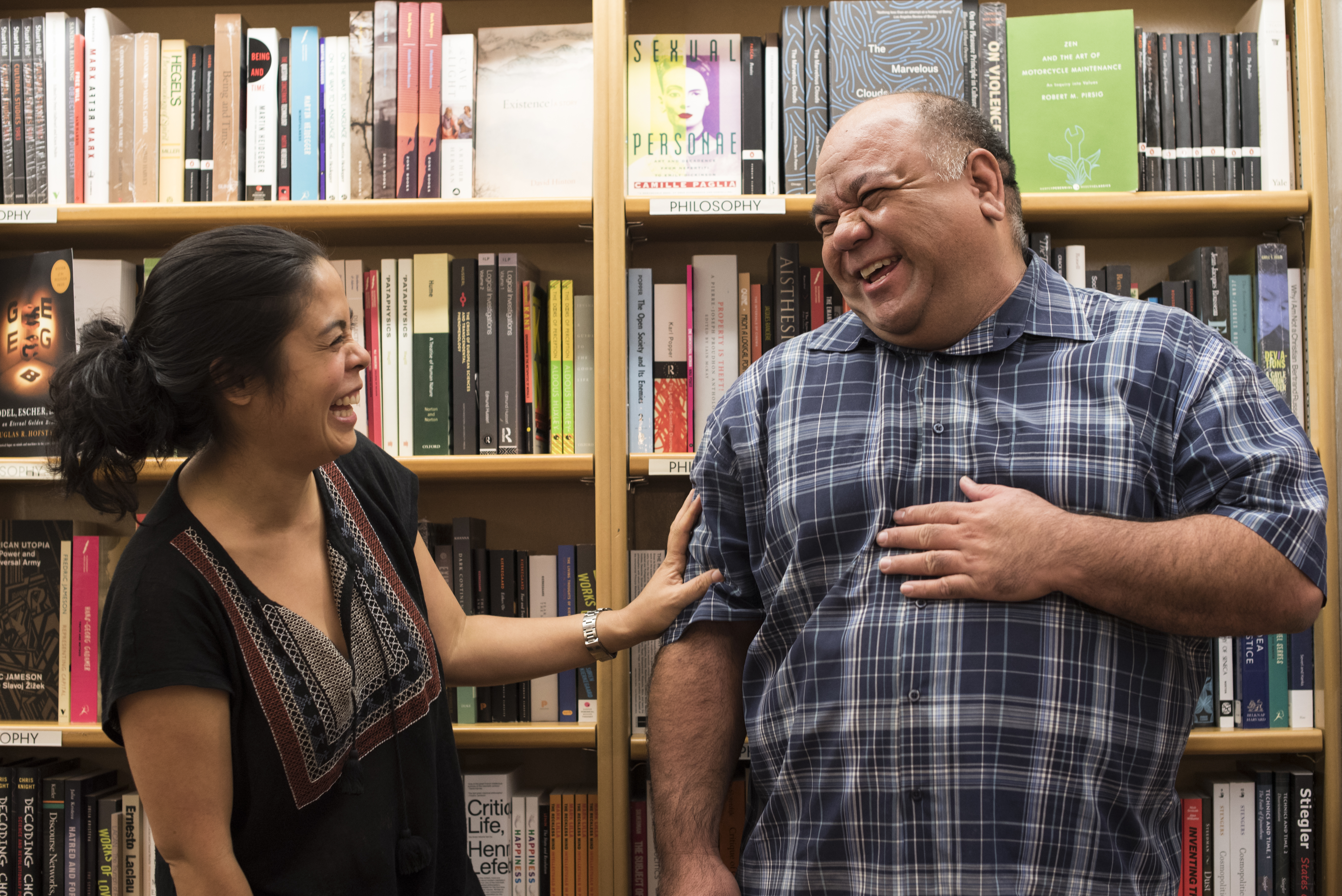
Photos (top): Kimo Armitage, (middle) Kimo Armitage and Sarah Gambito, Kimo Armitage and Alicia Upano. Photo credit: Alycia Kravitz. Photo (bottom, left to right): Kimo Armitage, Maureen Egen, Marie Brown, Alicia Upano, Bonnie Rose Marcus, Elliot Figman. Photo credit: Anonymous.

The Maureen Egen Writers Exchange Award is generously supported by Maureen Egen, a member of the Poets & Writers Board of Directors.

 

Jeff Shotts on Rejection

Caption: 

“The vitality of poetry right now, I think, is at a high pitch.” Jeff Shotts, executive editor of Graywolf Press, speaks with PBS NewsHour’s Jeffery Brown about the independent press’s success, poetry submissions and rejections, and why there’s never been a better time than now for poetry publishing. 

Genre: 

An Interview With Jennifer Patterson

Jennifer Patterson is a grief worker who uses words, threads, and plants to explore survivorhood, body(ies) and healing. She is the editor of Queering Sexual Violence: Radical Voices From Within the Anti-Violence Movement (Riverdale Avenue Books, 2016), facilitates trauma-focused writing and embroidery workshops, and has had writing published in places like OCHO: A Journal of Queer Arts, the Establishment, HandJob, and the Feminist Wire. She is also the creative nonfiction editor of Hematopoiesis Press, which has their first issue out this month. A queer and trans affirming, trauma-informed herbalist, Patterson offers sliding scale care as a practitioner with the Breathe Network as well as through her own practice Corpus Ritual Apothecary. Recently, she finished a graduate program with a thesis focused on translating embodied traumatic experience through somatic practices and critical and creative nonfiction. You can find out more at ofthebody.net.

What makes your workshops unique?
The workshops I offer are multi-dimensional. They’re grounded in writing through, with and about trauma (however people define that for themselves), and in reading other people’s writing about trauma and violence. There’s a somatic approach so we attend to the wisdom in our bodies that we sometimes forget, which might look like lying on the ground and breathing deeply. We hold space for each other in a way that feels really loving, expansive, and honestly, these days, it feels necessary and transformative. I’ve offered them in LGBTQ centers, at harm reduction clinics, in veterans hospitals, and universities. We’re living in a burning world and a lot of us have always felt that singe so it helps to unpack it on the page and turn it into something. I mean, trauma is always on the page but centering it in this way, I think, gives people permission to do the work they have been wanting and needing to do.

What techniques do you employ to help shy writers open up?
First, I thank people for showing up. Showing up is the hardest part especially when you’re inviting people to show up and write about their hardest experiences. I try to let go of demands and expectations and I let people know that they never have to share out loud if they don’t want to. (And actually, more times than not, most, if not all people share out loud.) We build a shared altar. I bring a freshly brewed herbal tea to calm nervousness and support the heart. I remind everyone that wherever they are and whatever comes out of the pen, for that moment, is just right. There’s plenty of time for editing—these workshops are for digging inside and generating.

What has been your most rewarding experience as a teacher?
Mostly just hearing from people that they felt more connected to their writing practice and, in turn, to themselves. That they feel heard and understood. That they felt something in their body soften or move around just a little.

What affect has this work had on your life and/or your art?
I recently finished a thesis (and soon to be manuscript) on trauma, somatic writing and embroidery—using stitch as a metaphor for making and remaking the wound—and it was incredibly difficult work so I’ve been taking a little breather. Some weeks the only time I write is in the workshop, which feels a bit funny to admit. But I also get to remember how writing supports me feeling more in my own life, more alive.

As someone who has been digging into my own history of trauma as well as collective trauma for years, it feels nice to be connected to other people doing similar work. As a younger writer, I felt so ashamed about the directions my writing took, particularly in wanting to write about violence I had experienced, so I feel really alive when I get to shape these spaces and invite other writers into them. I’m also just incredibly inspired by the quality of writing that I get to experience in these workshops literally every week. I get to remember how many incredible writers there are out there just looking for a room to write in.

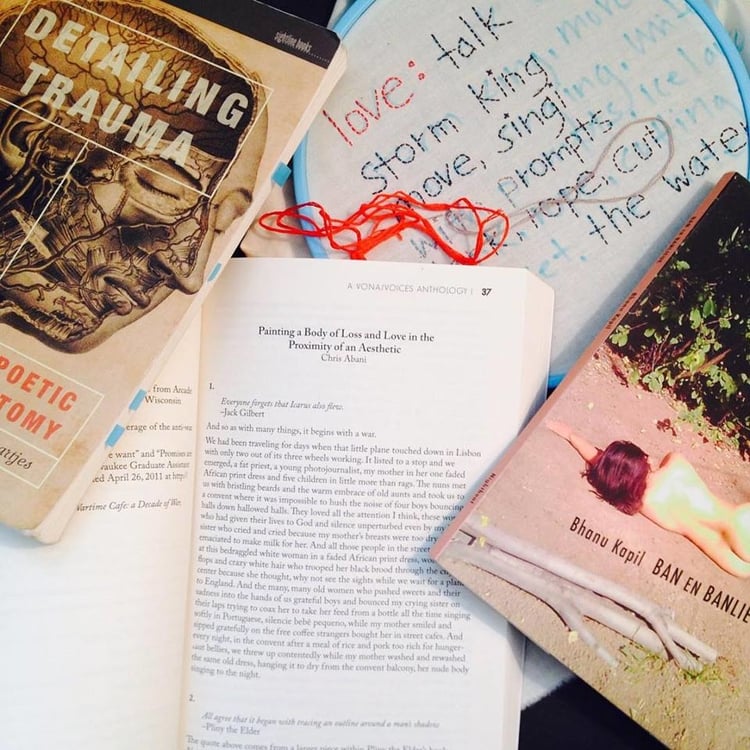
Photo: Jennifer Patterson (top). Class materials (bottom). Photo credit: Jennifer Patterson.


Support for the Readings & Workshops Program in New York City is provided, in part, by public funds from the New York State Council on the Arts, and the New York City Department of Cultural Affairs, with additional support from the Louis and Anne Abrons Foundation, the Axe-Houghton Foundation, the A.K. Starr Charitable Trust, and Friends of Poets & Writers.

Finalists for Tufts Poetry Awards Announced

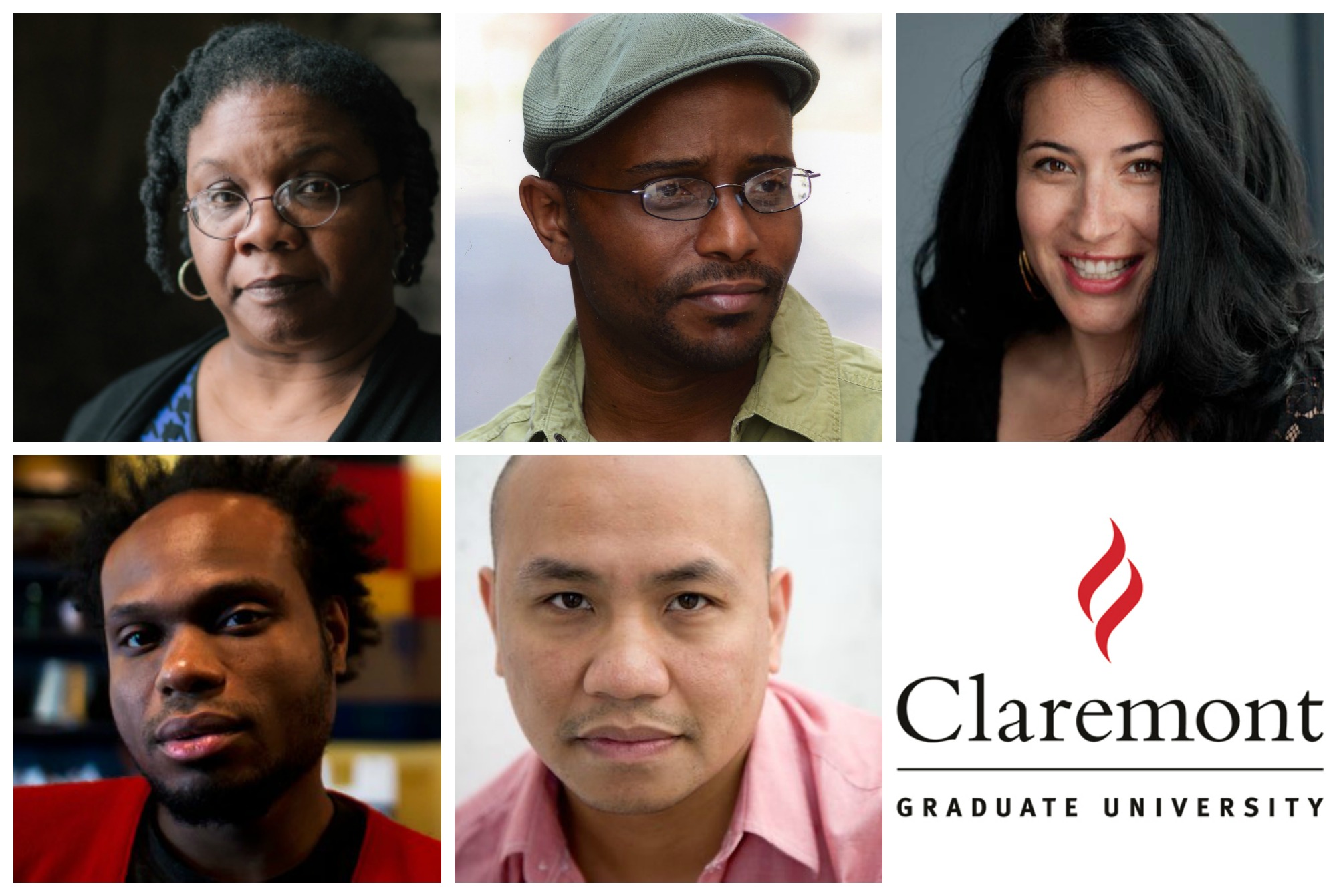
Claremont Graduate University has announced the finalists for the Kingsley Tufts Poetry Award and Kate Tufts Discovery Award. Both awards are given for poetry collections published in the previous year; the $100,000 Kingsley Tufts Poetry Award is given to a midcareer poet and the $10,000 Kate Tufts Discovery Award is given for a debut poetry collection.

The finalists for the Kingsley Tufts Poetry Award are Vievee Francis for Forest Primeval (Northwestern University Press), Tyehimba Jess for Olio (Wave Books), Ada Limón for Bright Dead Things (Milkweed Editions), Jamaal May for The Big Book of Exit Strategies (Alice James Books), and Patrick Rosal for Brooklyn Antediluvian (Persea Books).

The finalists for the Kate Tufts Discovery Award are Derrick Austin for Trouble the Water (BOA Editions), Rickey Laurentiis for Boy With Thorn (University of Pittsburgh Press), Jordan Rice for Constellarium (Orison Books), Ocean Vuong for Night Sky With Exit Wounds (Copper Canyon Press), and Phillip B. Williams for Thief in the Interior (Alice James Books).

“Poetry has the power to remind us of what is truly significant, worthy, and lasting in our culture,” said Lori Anne Ferrell, the director of the Tufts Poetry Awards. “This year marks the twenty-fifth anniversary of the Kingsley and Kate Tufts Poetry Awards at Claremont Graduate University, and once again we honor the careers of talented poets, both new and midcareer, who are finalists for these distinguished awards. Their voices—diverse, compassionate, challenging—represent America at its best.”

The judges for both prizes are Don Share, Elena Karina Byrne, Terrance Hayes, Meghan O’Rourke, and Brian Kim Stefans. The winners will be announced in February and honored at a ceremony in April in Los Angeles.

Established in the early 1990s, the Tufts Poetry Awards honor the memory of Kingsley Tufts. Recent winners of the Kingsley Tufts Award include Ross Gay, Angie Estes, and Afaa Michael Weaver. Recent winners of the Kate Tufts Discovery Award include Danez Smith, Brandon Som, and Yona Harvey.

Photos (clockwise from top left): Francis, Jess, Limón, Rosal, May.

Who Are You?

“I’m Nobody! Who are you? / Are you – Nobody – too?” wrote Emily Dickinson in one of her most popular poems, published in 1891. Have you ever jotted down a memo to nobody in particular? Ever sent out to sea a message in a bottle? Left a note on a wall or a park bench to someone, anyone, who might happen upon it? All these types of missives have in common a sense of mystery surrounding the identity of the recipient, and an uncertainty about the intended recipient ever receiving the communication. Write a series of short poems addressed to an unknown person. How does removing the certainty of an addressee place more emphasis on other external factors, like geography and physical distance, and your own current preoccupations and state of mind? As you engage in a conversation with Nobody, what insights are revealed?

Shara McCallum

Caption: 

“City of my birth— / if I forget thee, who will I be, singing the Lord’s song in this strange land?” Shara McCallum reads her poem “Psalm for Kingston” at the 2014 Dodge Poetry Festival. McCallum's latest collection, Madwoman (Alice James Books, 2017), is featured in Page One in the January/February issue of Poets & Writers Magazine.

Genre: 

Deadline Approaches for Bayou Magazine Contests

Submissions are open for the annual Bayou Magazine Kay Murphy Prize for Poetry and James Knudsen Prize for Fiction. The winners will each receive $1,000 and publication in Bayou Magazine. The deadline is January 1.

Using the online submission system, submit up to three poems for the Kay Murphy Prize or a story or novel excerpt of up to 7,500 words for the James Knudsen Prize by January 1. The entry fee is $20, which includes a one-year subscription to Bayou Magazine. All entries will be considered for publication. Visit the website for complete guidelines.

Myung Mi Kim will judge the Kay Murphy Prize for Poetry. Kim has written several poetry collections, most recently Penury (Omnidawn Publishing, 2009).

Anne Raeff will judge the James Knudsen Prize for Fiction. Raeff has published a novel, Clara Mondschein’s Melancholia (MacAdam/Cage, 2002), and most recently the story collection The Jungle Around Us (University of Georgia Press, 2016). Read Raeff’s interview with Bayou Magazine in which she talks about her work as a teacher, as well as how her writing reckons with family history and the effects of war and violence on individual lives.

Recent winners of the Kay Murphy Prize for Poetry include Seann Weir for “Plans to Disembark,” Marco Maisto for “The Loneliness of the Middle Distance Transmissions Aggregator,” and Madeline Vardell for “Nude to Pink.” Recent winners of the James Knudsen Prize for Fiction include Barrett Bowlin for “Hands Like Birds on Strings,” Michael Chin for “Practical Men,” and Michael Gerhard Martin for “Shit Weasel Is Late for Class.”

Established in 2002, Bayou Magazine is housed at the University of New Orleans and published twice a year. The magazine publishes poetry, fiction, and nonfiction.

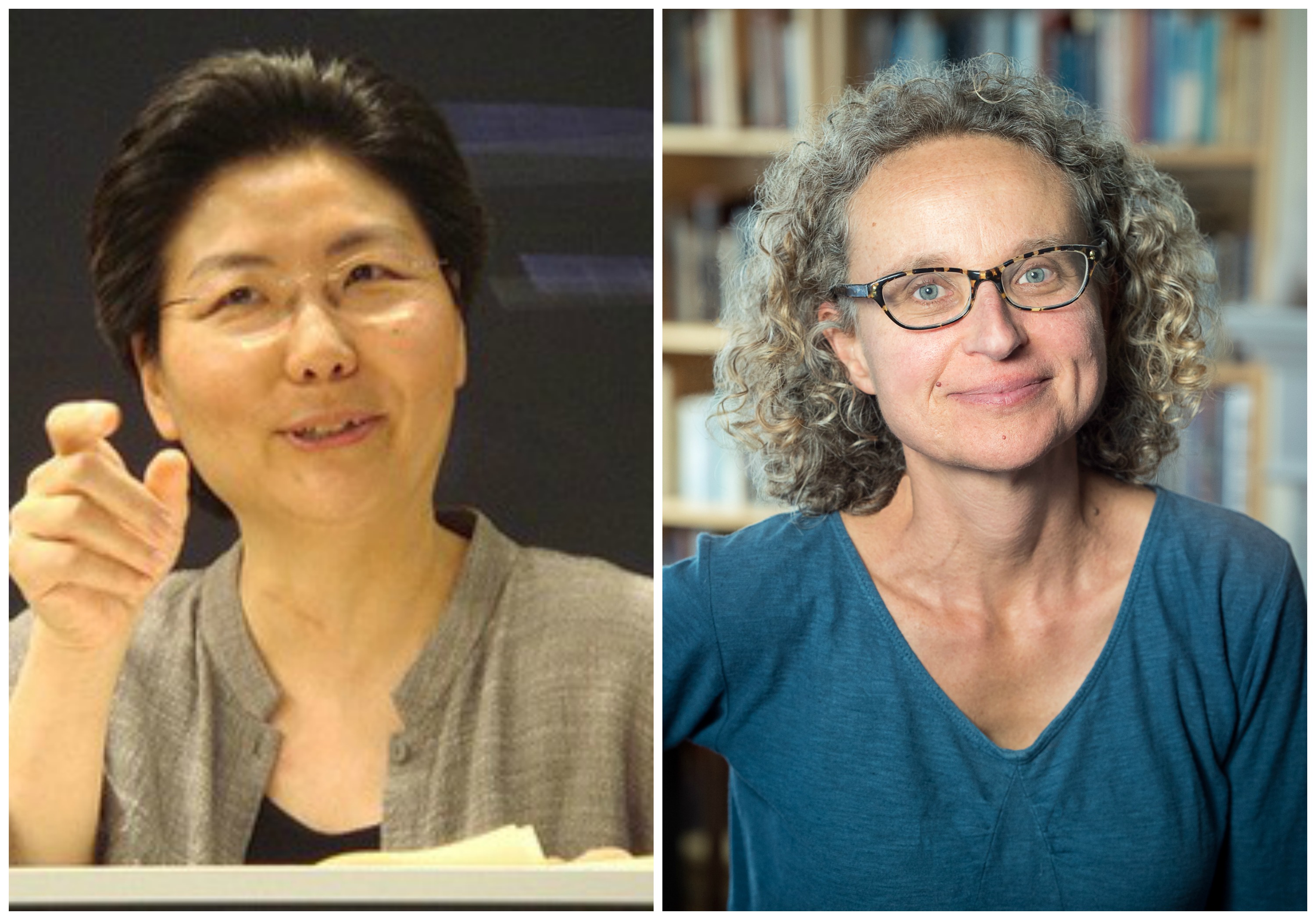
Photos: Myung Mi Kim, Anne Raeff

Paint It Red

12.27.16

“In the red room there is a sky which is painted over in red / but is not red and was, once, the sky. / This is how I live. / A red table in a red room filled with air.” Using these lines from Rachel Zucker’s “Letter [Persephone to Demeter]” as inspiration, write a poem where everything in the environment is red, as though the speaker is looking through red glass. How might color affect the way the speaker feels about an object, animal, or person? How might it affect tone?

Carolina Ebeid

Caption: 

“In lieu of flowers send a map of your city...” Carolina Ebeid, author of You Ask Me to Talk About the Interior (Noemi Press, 2016), reads “In Lieu of Flowers” for 32 Poems in Chicago. Ebeid is featured in “Shadows of Words: Our Twelfth Annual Look at Debut Poets” in the January/February issue of Poets & Writers Magazine.

Genre: 

Pages

Subscribe to Poetry