Genre: Poetry

Poetic Constraints

1.24.17

Starting a new year often means an attempt at challenging resolutions or constraints, but in poetry, constraint can seem natural and even fun. For example, in Oulipo, formulas and frameworks (some more complicated than others) are applied to the lines and words of a poem. Try this exercise in constraint: Write a poem in which all of the words contain a vowel of your choice. For inspiration, read “Ballad in A” by Cathy Park Hong.

Deadline Approaches for Autumn House Press Contest

Submissions are open for the 2017 Autumn House Press Rising Writer Contest, given annually for a debut poetry collection by a poet who is thirty-three years old or younger. The winner will receive $1,000 and publication by Autumn House Press. Ada Limón will judge.

Using the online submission system, submit a poetry manuscript of 50 to 80 pages with a $25 entry fee by Tuesday, January 31. All entries will be considered for publication. Visit the website for complete guidelines.

Judge Ada Limón is the author of four poetry collections, most recently Bright Dead Things (Milkweed Editions, 2015), which was a finalist for both the National Book Award and National Book Critics Circle Award. Her first collection, Lucky Wreck, was published by Autumn House Press in 2006 as the winner of the press’s poetry prize.

Established in 1998, Pittsburgh-based Autumn House Press publishes poetry, fiction, and nonfiction. The press has published authors such as poets Danusha Laméris, Ed Ochester, Martha Rhodes, and Gerald Stern; fiction writers Sarah Gerkensmeyer and Matthew Pitt; and nonfiction writers Jill Kandel and Sheryl St. Germain.

Teens, Truth, and Poetry

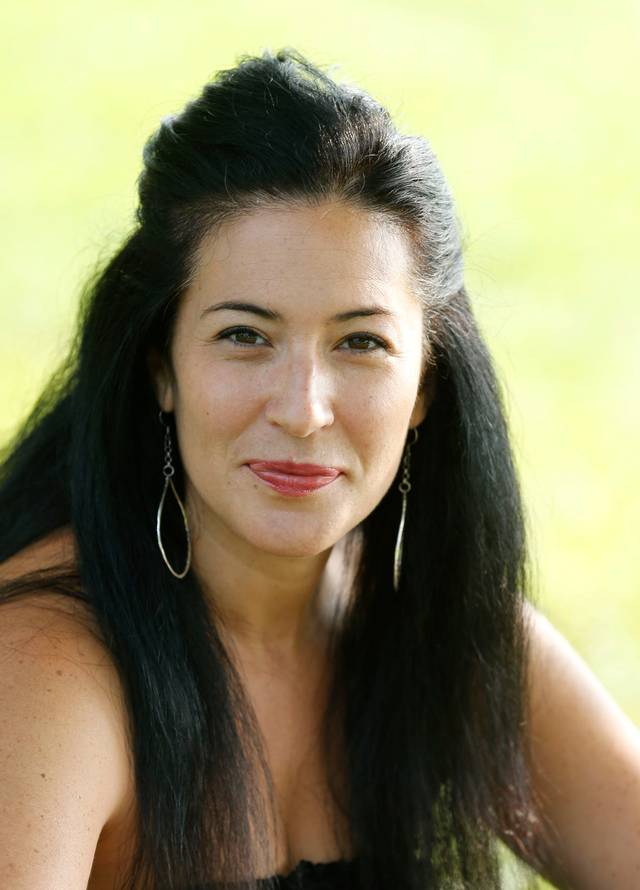
Ana Ramana has published three books of poetry and two novels, most recently her semi-autobiographical novel, Girl on Fire: An Uncommon Love Story (Wild Rose Press, 2016). She received an award from the Academy of American Poets and is the recipient of a William Stafford Fellowship. Originally from Ireland, she now lives in Mount Shasta, California, where she has been leading P&W–supported creative writing workshops for high school students.

In the winter of 2016, my life changed. With a generous grant from Poets & Writers, our local mountain town library sent me into our high schools, singing the praises of poetry. I visited classes in public and charter schools, sharing with students my love of poetry and how it saved my life. I read poems and invited them to join me for weekly sessions to write poems together. An overwhelming number of students signed up and a dedicated, talented, inspiring group met with me for several hours each week.

I have taught creative writing for over twenty years and can honestly say that my time with these high school students has been one of my absolute favorites. These teens were bright and blossoming into adulthood with great courage and openheartedness, yet each had endured difficulties that both humbled and inspired me. From brain cancer in childhood to escaping a cult to returning to the familiarity of an abusive stepfather, these young writers have looked headlong into some of life’s toughest hardships. Each one of them wrote about these obstacles with passion and ferocity.

Last spring, these poets gave a reading of their work at the library. The room was hushed as they read. The audience alternated between tears and laughter. In one assignment, I asked each poet to choose a song that they felt most represented their life and personality. One young man shared a song called, “I Have Made Mistakes.” He stood in front of the large audience and shared how he has learned that it’s not important that mistakes are made, but that we learn from them. This level of maturity was present, time and again, in each student.

Over the months, more young writers joined us, adding their diverse personalities, attitudes, and backgrounds. We’ve been busy compiling a collection of poems from these workshops, complete with photos, which will be published soon. And we will give another reading, this time, from our very own books. It continues to be a true pleasure—and a constant humbling—to serve as their literary midwife.

Photo: Ana Ramana. Photo credit: Michael Veys.

Major support for Readings & Workshops in California is provided by the James Irvine Foundation and the Hearst Foundations. Additional support comes from the Friends of Poets & Writers.

Finalists Announced for 2017 PEN Awards

PEN America announced on Wednesday the finalists for the 2017 PEN Awards. The annual awards are given for books of poetry, fiction, nonfiction, and translation published in the previous year. This year PEN America will award nearly $315,000 to writers, including the inaugural $75,000 PEN/Jean Stein Book Award, given for a “book of extraordinary originality and lasting influence.”

The finalists are:

PEN/Jean Stein Book Award: A prize of $75,000 given annually to recognize a book-length work in any genre for its originality, merit, and impact.

Known and Strange Things (Random House) by Teju Cole   
Olio (Wave Books) by Tyehimba Jess
The Return: Fathers, Sons and the Land in Between (Random House), Hisham Matar
Dark Money (Doubleday) by Jane Mayer
The Underground Railroad (Doubleday) by Colson Whitehead

PEN/Robert W. Bingham Prize for Debut Fiction: A prize of $25,000 given annually to an author whose debut work—a first novel or collection of short stories published in the previous year—represents distinguished literary achievement and suggests great promise of a second work of literary fiction.

Insurrections (University Press of Kentucky) by Rion Amilcar Scott
We Show What We Have Learned (Lookout Books) by Clare Beams
The Mothers (Riverhead Books) by Brit Bennett
Homegoing (Knopf) by Yaa Gyasi
Hurt People (Farrar, Straus & Giroux) by Cote Smith

PEN/Diamonstein-Spielvogel Award for the Art of the Essay: A prize of $10,000 is given annually for a book of essays published in the previous year that exemplifies the dignity and esteem that the essay form imparts to literature.

The Art of Waiting: On Fertility, Medicine, and Motherhood (Graywolf Press) by Belle Boggs
Known and Strange Things (Random House) by Teju Cole
A Woman Looking at Men Looking at Women: Essays on Art, Sex, and The Mind (Simon & Schuster) by Siri Hustvedt
The Girls in My Town (University of New Mexico Press) by Angela Morales
Becoming Earth (Red Hen Press) by Eva Saulitis

PEN/John Kenneth Galbraith Award for Nonfiction: A prize of $10,000 is given biennially to an author of a distinguished book of general nonfiction published in the previous two years, possessing notable literary merit and critical perspective and illuminating important contemporary issues.

Evicted: Poverty and Profit in the American City (Crown) by Matthew Desmond
The Blood at the Root: A Racial Cleansing in America (Norton) by Patrick Phillips
Dreamland: The True Tale of America’s Opiate Epidemic (Bloomsbury Press) by Sam Quinones
Children of Paradise: The Struggle for the Soul of Iran (Riverhead Books) by Laura Secor
Bad News: Last Journalists in a Dictatorship (Doubleday), Anjan Sundaram

PEN Open Book Award: A prize of $5,000 is given annually for an exceptional book-length work of literature by an author of color published in the previous year.

The Book of Memory (Farrar, Straus & Giroux) by Petina Gappah
The Big Book of Exit Strategies (Alice James Books) by Jamaal May
What Is Not Yours Is Not Yours (Riverhead Books) by Helen Oyeyemi
Look (Graywolf Press) by Solmaz Sharif
Blackacre (Graywolf Press) by Monica Youn

Visit the website for a complete list of finalists, including those for the PEN Awards in biography, translation, poetry in translation, and literary sports writing. The winners of the 2017 awards will be announced on February 22 in New York City.

Established in 1963, the PEN America Literary Awards have honored hundreds of writers including Chimamanda Ngozi Adichie, Richard Blanco, Katherine Boo, Ta-Nehisi Coates, Cynthia Ozick, Marilynne Robinson, and Claudia Rankine.


Nikki Giovanni in Nashville

Caption: 

“I'm a native Tennessean. I know what it is / to be free. I am singing the country blues. I / am whittling a wooden doll. I am / underground mining coal.” Nikki Giovanni reads a selection of her poems and speaks about her book Chasing Utopia: A Hybrid (HarperCollins, 2013) for the Salon@615 series at the Nashville Public Library.

Poetry in Many Languages: Ganbaro!

Robin Lampman is a published poet and an educator with thirty-five years of experience teaching in universities, high schools, and elementary schools. She received a master’s degree in Bilingual Education and has taught literature in two languages in public schools in New Mexico, Texas, and New York, as well as at the University of Monterrey in Mexico and the American School of Madrid in Spain. Lampman published a volume of poetry by eighth graders in Harlem, which was made possible by the National Endowment for the Arts’ NEA Big Read grant. For the last several years she has been teaching writing classes for the Noble Maritime Collection including adult classes on poetic forms and food literature. Cooking the Books, an anthology which includes recipes, poetry, essays, and memories relived by her students is available at the Noble Maritime Museum. Lampman is the literary chairperson for the Staten Island Creative Community and organizes their Second Sunday Spoken Word events, and publishes the Staten Island Creative Community Journal of Literature and Art.
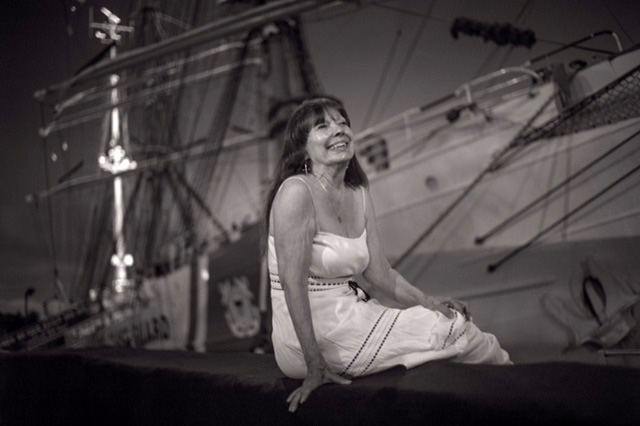
As a poet and educator who has been teaching literature and promoting poetry at schools and museums in New York and New Mexico, as well as in Mexico and Spain, I have always been on the lookout for ways to give poets a voice. Several years ago, I began serving as the Literary Chairperson for the Staten Island Creative Community and organizing Second Sunday Spoken Word events in Staten Island, New York.
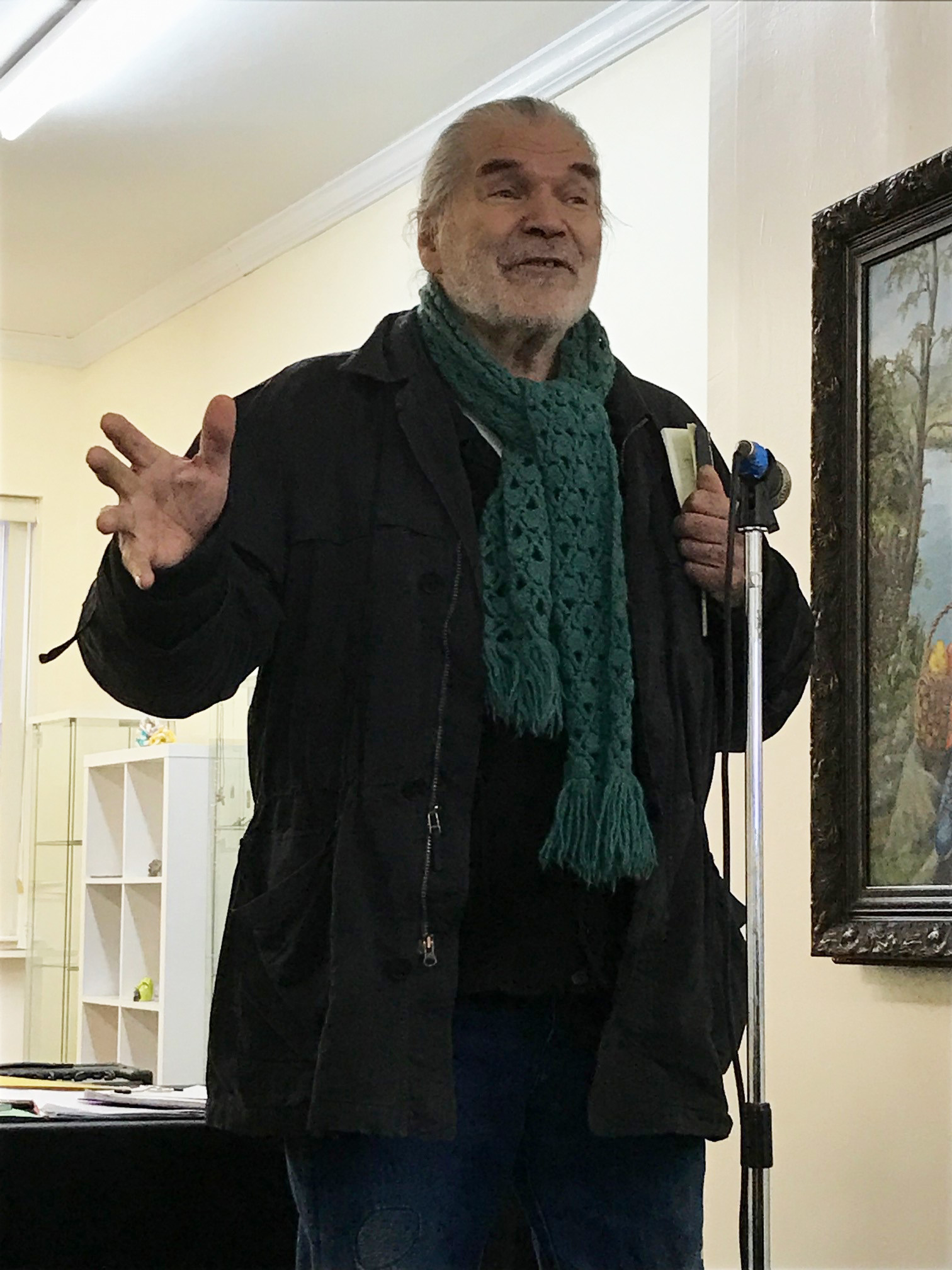
In June of 2015, the event was attended by ten poets, and we were each other’s audience. In February 2016, we received the first of four Readings & Workshops grants. Since then we have been able to fund a poet who once lived in Staten Island but now lives in Manhattan, a poet who writes in both English and Spanish, and a poet who writes in both Japanese and English. Our audience as well as our pool of writers has grown.

We have hosted readings at the Makers Space, the Hub, the St. George Day Festival, and the National Lighthouse Museum. We will be reading at the Brooklyn Waterfront Artists Coalition in the spring. But to fully understand the impact that Poets & Writers has had on us, you must let me describe our last event to you.

On the eighth of January, the day after the first snowstorm of 2017, Second Sunday Spoken Word was scheduled to present “Poetry in Many Languages.” Though the snow had subsided, the streets were still white and the temperature was frigid. We wondered who would brave the streets to read a poem. We wondered if anyone would come out in the cold to listen to poetry, much less poetry read bilingually.
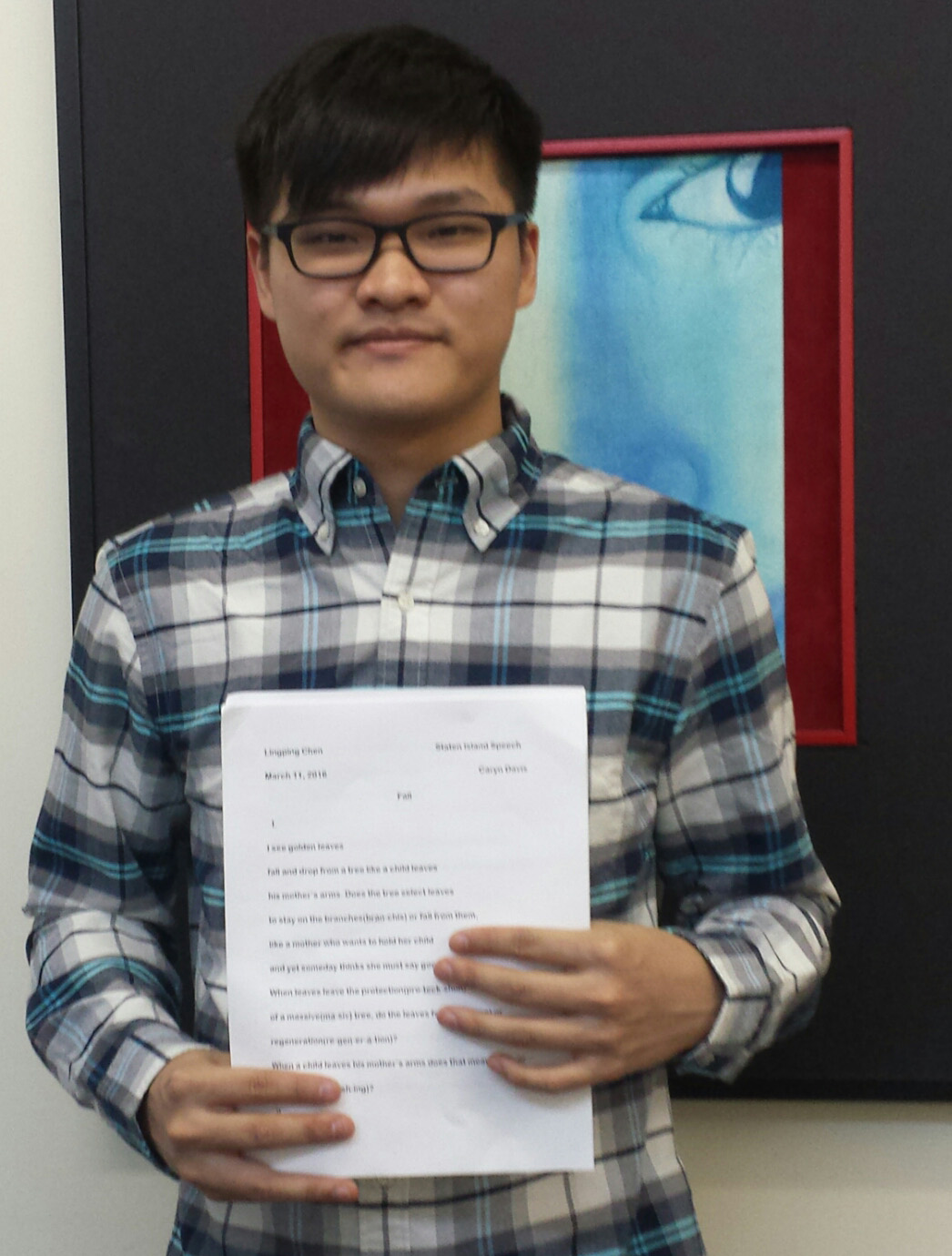
At 2:00 PM the gallery was empty. We shoveled the sidewalk and salted the ramp. An hour later, the gallery was full. Marilyn Kiss read in Spanish, Kevyn Fairchild in Hungarian, Malachi McCormick in Irish, Dominic Ambrose in Italian, Lorenzo Hail in French, and Lingping Chen, who had come in on the ferry, read in Chinese.

Henry Van Campen, recipient of the R&W grant for this event, read from his new book, Internal Externals, in both Japanese and English. Hiroki Otani concluded the event singing original lyrics in Japanese. We all sang along. “Ganbaro,” we sang. “Hello, goodbye, and take courage.”

Who braves the storm to read a poem? Who braves the storm to hear poetry in many languages? It is a testament not only to the strength that support from Poets & Writers has given Second Sunday Spoken Word in Staten Island, but to the strength inherent in the diversity of New York City. It is a testament to the power of poetry.

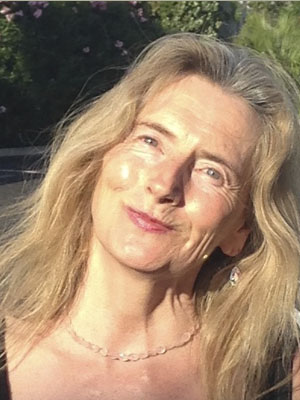
Photo: (top) Robin Lampman at the National Lighthouse Museum. Photo credit: Michael McQueeny. (middle) Malachi McCormick recites his poems in Irish. (bottom) Lingping Chen reading in Chinese. Photo credit: Robin Lampman.

Support for the Readings & Workshops Program in New York City is provided, in part, by public funds from the New York State Council on the Arts, and the New York City Department of Cultural Affairs, with additional support from the Louis and Anne Abrons Foundation, the Axe-Houghton Foundation, the A.K. Starr Charitable Trust, and Friends of Poets & Writers.


Poetry as Survival

1.17.17

“I began writing poetry as an act of survival,” writes Safiya Sinclair in “Shadows of Words: Our Twelfth Annual Look at Debut Poets” in the January/February 2017 issue of Poets & Writers Magazine. Think about how you might look at your own writing as an act of survival: What are the most troublesome issues and sources of conflict in your everyday life, whether small and tangible or large and amorphous? How might the practice of putting pen to paper and giving words to emotions be integral to your encounter with these obstacles? Write a poem that helps you think through and voice your troubles.

Juan Felipe Herrera

Caption: 

"Dinky planet on a skateboard of dynamite / Oh, what to do..." Juan Felipe Herrera, who has been appointed a second term as poet laureate of the United States, speaks about meeting young poets and reads from his most recent collection, Notes on the Assemblage (City Lights Publishers, 2015), at the 2016 AWP conference and book fair in Los Angeles. 

Genre: 

Cento

1.10.17

The cento, whose name is derived from a Latin term meaning “patchwork,” is a form of fragmented poetry originating in the third century consisting of lines taken from poems written by other poets. Contemporary centos often offer a humorous juxtaposition of contrasting images, ideas, and tones. Read centos written by John Ashbery and Simone Muench, and then try writing your own, sampling verses from diverse time periods, styles, and subject matter, and citing your sources at the end.

Pages

Subscribe to Poetry