Find details about every creative writing competition—including poetry contests, short story competitions, essay contests, awards for novels, grants for translators, and more—that we’ve published in the Grants & Awards section of Poets & Writers Magazine during the past year. We carefully review the practices and policies of each contest before including it in the Writing Contests database, the most trusted resource for legitimate writing contests available anywhere.
Find a home for your poems, stories, essays, and reviews by researching the publications vetted by our editorial staff. In the Literary Magazines database you’ll find editorial policies, submission guidelines, contact information—everything you need to know before submitting your work to the publications that share your vision for your work.
Whether you’re pursuing the publication of your first book or your fifth, use the Small Presses database to research potential publishers, including submission guidelines, tips from the editors, contact information, and more.
Research more than one hundred agents who represent poets, fiction writers, and creative nonfiction writers, plus details about the kinds of books they’re interested in representing, their clients, and the best way to contact them.
Find publishers ready to read your work now with our Open Reading Periods page, a continually updated resource listing all the literary magazines and small presses currently open for submissions.
Since our founding in 1970, Poets & Writers has served as an information clearinghouse of all matters related to writing. While the range of inquiries has been broad, common themes have emerged over time. Our Top Topics for Writers addresses the most popular and pressing issues, including literary agents, copyright, MFA programs, and self-publishing.
Our series of subject-based handbooks (PDF format; $4.99 each) provide information and advice from authors, literary agents, editors, and publishers. Now available: The Poets & Writers Guide to Publicity and Promotion, The Poets & Writers Guide to the Book Deal, The Poets & Writers Guide to Literary Agents, The Poets & Writers Guide to MFA Programs, and The Poets & Writers Guide to Writing Contests.
Poets & Writers lists readings and other literary events held online and in person. Whether you are an author on a book tour or the curator of a reading series, the Literary Events Calendar can help you find your audience.
Research newspapers, magazines, websites, and other publications that consistently publish book reviews using the Review Outlets database, which includes information about publishing schedules, submission guidelines, fees, and more.
Well over ten thousand poets and writers maintain listings in this essential resource for writers interested in connecting with their peers, as well as editors, agents, and reading series coordinators looking for authors. Apply today to join the growing community of writers who stay in touch and informed using the Poets & Writers Directory.
Since our founding in 1970, Poets & Writers has served as an information clearinghouse of all matters related to writing. While the range of inquiries has been broad, common themes have emerged over time. Our Top Topics for Writers addresses the most popular and pressing issues, including literary agents, copyright, MFA programs, and self-publishing.
Find a writers group to join or create your own with Poets & Writers Groups. Everything you need to connect, communicate, and collaborate with other poets and writers—all in one place.
Well over ten thousand poets and writers maintain listings in this essential resource for writers interested in connecting with their peers, as well as editors, agents, and reading series coordinators looking for authors. Apply today to join the growing community of writers who stay in touch and informed using the Poets & Writers Directory.
Find information about more than two hundred full- and low-residency programs in creative writing in our MFA Programs database, which includes details about deadlines, funding, class size, core faculty, and more. Also included is information about more than fifty MA and PhD programs.
Whether you are looking to meet up with fellow writers, agents, and editors, or trying to find the perfect environment to fuel your writing practice, the Conferences & Residencies is the essential resource for information about well over three hundred writing conferences, writers residencies, and literary festivals around the world.
Poets & Writers lists readings and other literary events held online and in person. Whether you are an author on a book tour or the curator of a reading series, the Literary Events Calendar can help you find your audience.
Discover historical sites, independent bookstores, literary archives, writing centers, and writers spaces in cities across the country using the Literary Places database—the best starting point for any literary journey, whether it’s for research or inspiration.
Establish new connections and enjoy the company of your peers using our searchable databases of MFA programs and writers retreats, apply to be included in our directory of writers, and more.
Each year the Readings & Workshops program provides support to hundreds of writers participating in literary readings and conducting writing workshops. Learn more about this program, our special events, projects, and supporters, and how to contact us.
The Maureen Egen Writers Exchange Award introduces emerging writers to the New York City literary community, providing them with a network for professional advancement.
Find information about how Poets & Writers provides support to hundreds of writers participating in literary readings and conducting writing workshops.
Bring the literary world to your door—at half the newsstand price. Available in print and digital editions, Poets & Writers Magazine is a must-have for writers who are serious about their craft.
View the covers and contents of every issue of Poets & Writers Magazine, from the current edition all the way back to the first black-and-white issue in 1987.
Find details about every creative writing competition—including poetry contests, short story competitions, essay contests, awards for novels, grants for translators, and more—that we’ve published in the Grants & Awards section of Poets & Writers Magazine during the past year. We carefully review the practices and policies of each contest before including it in the Writing Contests database, the most trusted resource for legitimate writing contests available anywhere.
Every day the editors of Poets & Writers Magazine scan the headlines—publishing reports, literary dispatches, academic announcements, and more—for all the news that creative writers need to know.
In our weekly series of craft essays, some of the best and brightest minds in contemporary literature explore their craft in compact form, articulating their thoughts about creative obsessions and curiosities in a working notebook of lessons about the art of writing.
The Time Is Now offers weekly writing prompts in poetry, fiction, and creative nonfiction to help you stay committed to your writing practice throughout the year. Sign up to get The Time Is Now, as well as a weekly book recommendation for guidance and inspiration, delivered to your inbox.
Ads in Poets & Writers Magazine and on pw.org are the best ways to reach a readership of serious poets and literary prose writers. Our audience trusts our editorial content and looks to it, and to relevant advertising, for information and guidance.
Start, renew, or give a subscription to Poets & Writers Magazine; change your address; check your account; pay your bill;
report a missed issue; contact us.
Poets & Writers is pleased to provide free subscriptions to Poets & Writers Magazine to award-winning young writers and to high school creative writing teachers for use in their classrooms.
Read select articles from the award-winning magazine and consult the most comprehensive listing of literary grants and awards, deadlines, and prizewinners available in print.
Record the slogans you see on billboards and in other advertising as you go about your daily routine—Prescription Drug Misuse Is a Growing Trend; Forever Engagements; Truth & Honesty: That's the Manfredi Way! Choose one from the list you've gathered and use it as the opening line for a story.
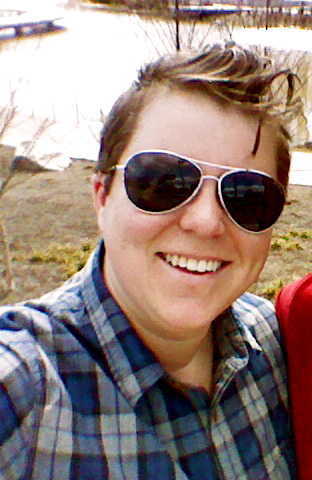
Elizabeth Anderson is the program director at P&W–supported Charis Books and More and Charis Circle, a unique for-profit independent feminist bookstore and 501(c)(3) social justice literary nonprofit hybrid located in Atlanta, Georgia. She is also a writing coach and fiction writer at work on her first novel, "Paradise Park."
What makes your reading series unique? Charis Books is turning thirty-eight this year. With bookstores continuously closing, we will be the oldest feminist bookstore in North America and the primary LGBT-focused bookstore in Atlanta. Our events have always reflected the old feminist axiom, "the personal is political." We believe that fiction has the power to change the world and that reading can be a revolutionary act. We maintain a deep investment in helping to center voices traditionally at the literary margins.
What recent program have you been especially proud of? The P&W–sponsored evening with Sassafras Lowrey, editor of Kicked Out, an anthology of work by homeless LGBTQ youth. Sassafras shared her own story of homelessness and talked about receiving one teen's story via text message because the kid didn't have access to traditional modes of journalistic communication. Sassafras opted to publish it in the book with a standard English translation. That anecdote spoke to me about the value of telling our story despite the obstacles.
What’s the craziest thing that’s happened at an event you’ve hosted? The life of a bookseller is a crazy one. We hear more confessions than priests and doctors. People share. A LOT. Folks come to a reading about how to turn a front lawn into a food producing garden and end up talking about their grandmas who, as it turns out, were from the same small town. By the end of the night, you have complete strangers hugging and smiling and trading recipes and crying over long dead people. That is the wonder of a reading at Charis.
How do you cultivate an audience? It's about relationships. It's about remembering people's names and tastes. I call people on the phone. I invite people personally via e-mail and on Facebook. If someone buys an author's book, I remember. If that author is slated to read at our store six months later, I make sure to remind the customer. If the independent bookstore is to survive, it will be because of relationships.
How has literary presenting informed your own life? It has made me a better writing coach: I can tell you exactly the moment at which you will begin to bore your audience (seventeen minutes, don't ever read for more than seventeen minutes straight, I don't care if you sound like James Earl Jones and are the best looking person on the planet, people will start to glaze).
What do you consider to be the value of literary programs for your community? All writers and readers have the potential to be activists if they choose. Bookstores are gathering grounds. They are the places to come and recharge your batteries or lick your wounds or rebuild after a hard political battle. At Charis, we fight to keep the doors open for our community because we believe there is a kind of grace in the act of gathering around stories no other space in our culture can provide.
The New York Public Library has announced the five finalists for its twelfth annual Young Lions Fiction Award, given to an emerging writer for a work published in in the previous year. The winner of the honor, which carries a prize of ten thousand dollars, will be announced on May 14.
The 2012 finalists are Teju Cole for Open City (Random House), Benjamin Hale for The Evolution of Bruno Littlemore (Twelve), Ben Lerner for Leaving the Atocha Station (Coffee House Press), Karen Russell for Swamplandia! (Knopf), and Jesmyn Ward for Salvage the Bones(Bloomsbury). Salvage the Bones, Ward's second novel after her breakout, Where the Line Bleeds (Agate Publishing, 2008), won the National Book Award in fiction last fall. Cole's debut was a finalist for this year's National Book Critics Circle Award.
Recent winners of the NYPL's top honor for emerging writers are Adam Levin for The Instructions (McSweeney's Books, 2010), Wells Tower for Everything Ravaged, Everything Burned (Farrar, Straus and Giroux, 2009), andSalvatore Scibona for The End (Graywolf Press, 2008). The award is an program of the library's Young Lions, a group of donors in their twenties and thirties.
In the video below, finalist Teju Cole presents "a sneak peak" into his nascent nonfiction project at Franklin Park bar in Brooklyn, New York.
Choose an article from a magazine that profiles a person, such as a celebrity, a political figure, or a professional athlete. Using one of the settings in the article and a fictionalized version of the person as the main character, write a story in which it is revealed that the main character's greatest strength is also his or her greatest failing.
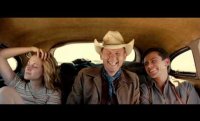
The highly anticipated film adaptation of Jack Kerouac's On the Road finally has a trailer. Set to premiere in the U.K. on September 21, director Walter Salles's movie stars Sam Riley as Sal Paradise, Garrett Hedlund as Dean Moriarity, and Kristen Stewart as Dean's wife Marylou. A release date for the U.S. has not been set.
In poetry, Laura Kasischke won for her collection Space, In Chains(Copper Canyon Press), which recently received the first Rilke Prize from the University of North Texas. Mira Bartók won in autobiography for her memoir, The Memory Palace (Free Press).
Awards were also given in criticism, to Geoff Dyer for Otherwise Known as the Human Condition: Selected Essays and Reviews (Graywolf Press); in biography, to John Lewis Gaddis for George F. Kennan: An American Life (Penguin Press); and in general nonfiction, to Maya Jasanoff for Liberty’s Exiles: American Loyalists in the Revolutionary World (Knopf).
Awards were also given to reviewer Kathryn Schulz, who received the Nona Balakian Citation for Excellence in Reviewing, and Roberts B. Silvers of the New York Review of Books, who won this year's Ivan Sandrof Lifetime Achievement Award.
In the video below, Pearlman reads from her winning collection.
Fill in the generalities with details and use the following to begin a scene for a story: CHARACTER NAME sits at his/her desk in his/her office above Guiliani's Pizza on STREET NAME in CITY NAME. He/she leans down and removes his/her shoes, placing them neatly by the bookcase, then picks up the phone.
Her Majesty's Secret Players present "Pulp Shakespeare," an Elizabethan take on Quentin Tarantino's 1994 movie, now playing at Theatre Asylum on Santa Monica Boulevard in Los Angeles.
The Believer, the monthly whose mission, in part, is to "focus on writers and books we like," has named its finalists for the 2011 Believer Book Award for fiction. Of the five books selected by the magazine's editors as the "strongest and most underappreciated of the year," four are published by small, independent presses.
The shortlisted titles are Jesse Ball's third novel, The Curfew (Vintage), which the Believer's editors describe as "a tortuous snake of a story" that winds up resembling "an ouroboros swallowing its own tail"; Lightning Rods by Helen DeWitt (New Directions), a novel "preoccupied with the question of what genius looks like"; Lars Iyer's novel debut, Spurious (Melville House), whose pleasures are evocative of Beckett; Widow (Bellevue Literary Press), the first short story collection from novelist Michelle Latiolais, whose "narrators navigate familiar landscapes rendered nearly impassable by grief"; and Ben Lerner, who has previously published three poetry collections, for his first novel, Leaving the Atocha Station (Coffee House Press).
The winner of the Believer Book Award will be announced in the May 2012 issue. Readers' nominations for best books of 2011 will appear alongside prize announcement.
In the video below, the Center for Fiction and n+1 magazine present a dramatic reading from DeWitt's shortlisted third novel (the second segment of the two-part reading is here).





 What makes your reading series unique?