In Praise of Comic Novels, Juan Felipe Herrera on Play in Poetry, and More
James Comey on his new political memoir; U.K. author goes undercover at an Amazon warehouse; Scott Rudin countersues Harper Lee estate over Broadway play; and other news.
Jump to navigation Skip to content
James Comey on his new political memoir; U.K. author goes undercover at an Amazon warehouse; Scott Rudin countersues Harper Lee estate over Broadway play; and other news.
The novelist talks about his first essay collection, How to Write An Autobiographical Novel; how to keep working during bouts of self-doubt; and more.
Today at Columbia University in New York City, the winners of the 102nd annual Pulitzer Prizes were announced. Seven prizes in letters are awarded annually for works of literature published in the previous year. Each winner receives $15,000.
Frank Bidart won the prize in poetry for Half-Light: Collected Poems 1965–2016 (Farrar, Straus and Giroux). The finalists were Evie Shockley’s semiautomatic (Wesleyan University Press) and Patricia Smith’s Incendiary Art (TriQuarterly Books).
Andrew Sean Greer won the prize in fiction for his novel Less (Lee Boudreaux Books). The finalists were Elif Baufman’s The Idiot (Penguin Press) and Hernan Diaz’s In the Distance (Coffee House Press).
Caroline Fraser won the prize in biography for Prairie Fires: The American Dreams of Laura Ingalls Wilder (Metropolitan Books). The finalists were John A. Farrell’s Richard Nixon: The Life (Doubleday) and the Kay Redfield Jamison’s Robert Lowell, Setting the River on Fire: A Study of Genius, Mania, and Character (Knopf)
Visit the Pulitzer Prize website for a complete list of winners and finalists in each of the twenty-one categories, including general nonfiction, journalism, history, drama, and music.
Hungarian-American newspaper publisher and journalist Joseph Pulitzer established the Pulitzer Prizes in 1911, and the first prize was awarded in 1917. The 2017 winners included poet Tyehimba Jess and fiction writer Colson Whitehead.
Read an interview with Frank Bidart from the May/June 2013 issue of Poets & Writers Magazine, and listen to an excerpt of Andrew Sean Greer’s third novel, The Story of a Marriage.
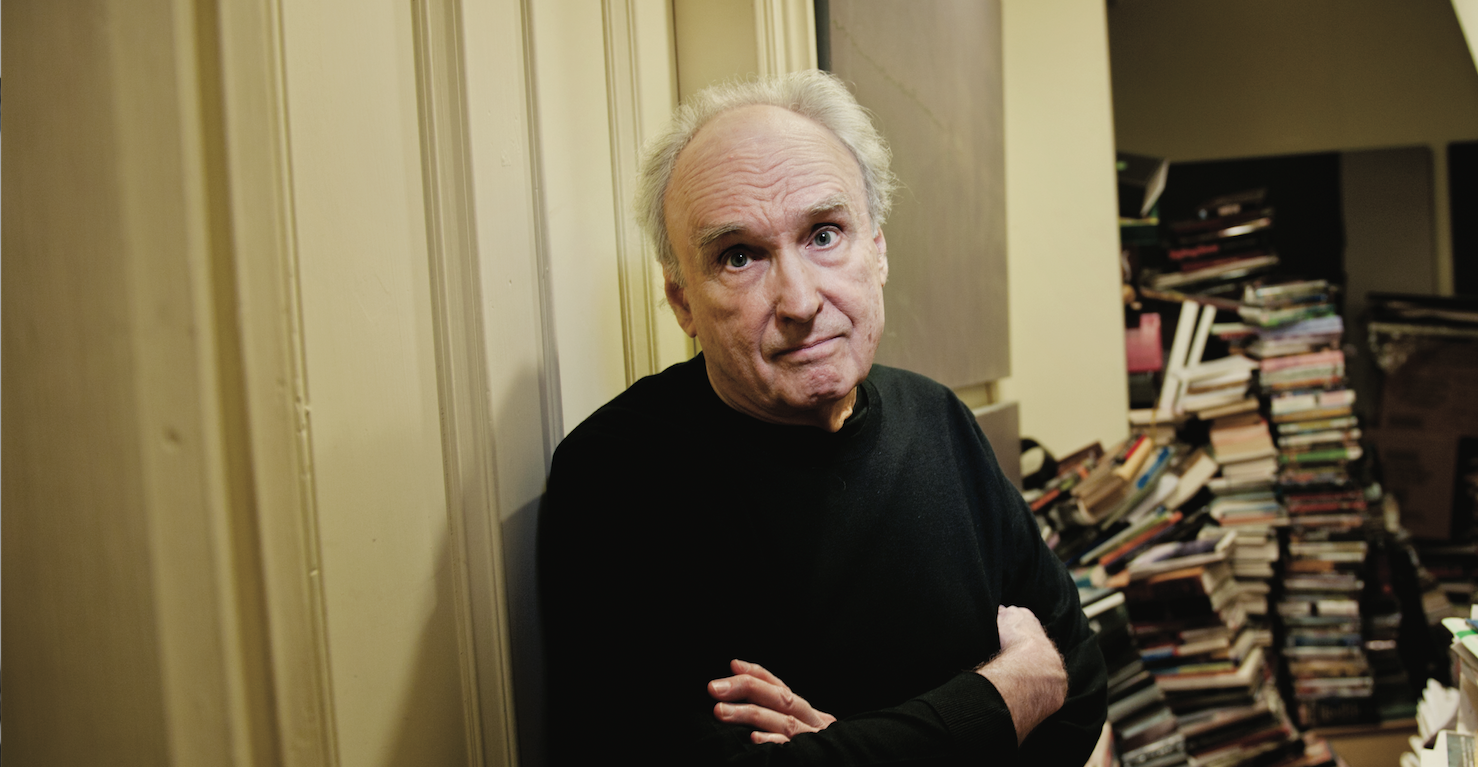
(Photo: Frank Bidart; Credit: Webb Chappell)
“My life is kind of like a novel in interconnected stories.” Sloane Crosley recounts the different jobs she’s had that have shaped her storytelling for Xerox’s Set the Page Free series. Her third essay collection, Look Alive Out There (MCD, 2018), is featured in Page One in the May/June issue of Poets & Writers Magazine.
Edward Albee burst onto the theater scene with his first play, The Zoo Story, a one-act play about two strangers on a bench in New York City’s Central Park. In 2004, nearly fifty years later, Albee added a first act to the play titled Homelife and the two plays are now performed together, as a diptych. Although The Zoo Story was complete in its own right and widely considered a success, Homelife served to deepen the characters and complicate the meaning of the narrative. This week, try writing a prequel to an essay you have already written, and possibly published, even if it was years ago. Is there a first act to add that fleshes out the narrator or a narrative that has more to say now?

The vice president and editorial director of Riverhead Books on the art of editing.

The Pulitzer Prize–winning poet talks about his new book, Air Traffic: A Memoir or Ambition and Manhood in America.
“Reading really saved my life in a way that people probably will never be able to understand.” Anthony Ray Hinton, author of the memoir, The Sun Does Shine: How I Found Life and Freedom on Death Row (St. Martin’s Press, 2018), speaks about starting the only known book club on death row and the power of reading.
Leadership changes at Penguin Random House; Khadija Abdalla Bajaber wins inaugural Graywolf Press Africa Prize; an unconventional bookshop in a knitting factory; and other news.
The editor of Black Renaissance Noire on the importance of publishing new and emerging writers.