




Nancy Kline on Stories: Hurry Up and Tell Them
For the past seven years, Nancy Kline has been leading P&W–supported senior writing workshops at Queens Community House in New York City. Her short stories, essays, literary criticism, and translations have appeared widely. She is the author of the novel, The Faithful, and edited and contributed to the essay collection How Writers Teach Writing. She also reviews regularly for the New York Times Sunday Book Review. Kline generously shared with us reflections on her writing workshops with seniors.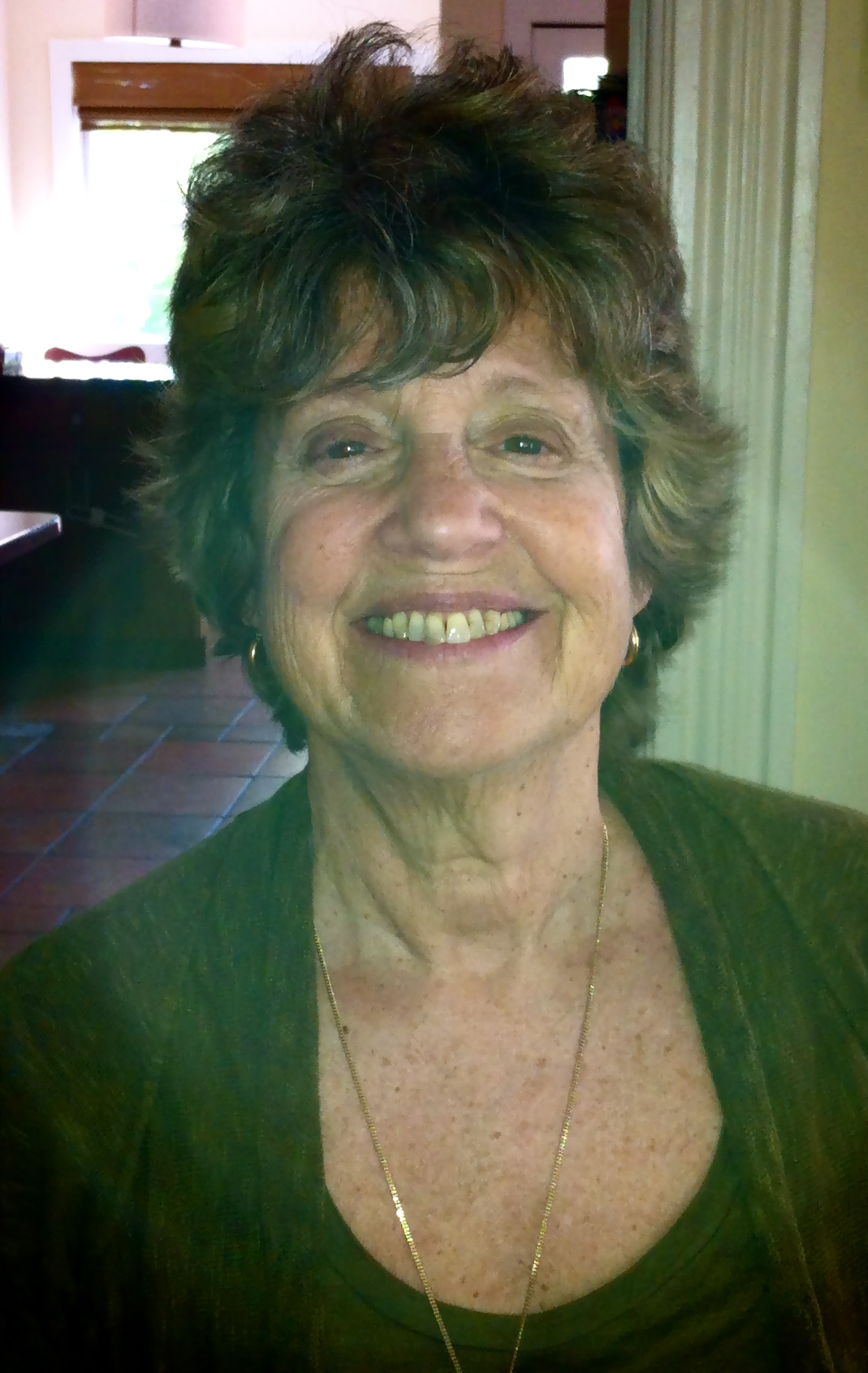 What makes your workshops unique?
It’s the students who make my workshops unique—their jokes, epiphanies, reticencies, and idiosyncrasies; their chemistry with each other, with me, and with words.
Could you share a few examples of stories written in your workshop recently?
In one workshop, we used pieces from Flash Fiction Forward as springboards into workshop participants’ own work.
Rick Moody’s “Drawer” inspired a hilarious description of the anarchic contents of one writer’s drawer and her increasing hysteria as she searched through it for some coveted item.
In response to the prompt "just like her mother," suggested by Pamela Painter's "Toasters," one workshop participant wrote about how, as a small child, she accompanied her mother to forage secretly for an apronful of grain with which to feed her starving family in decimated, post-World War II Germany.
Rob Carney's “Traveling Alone” inspired one eighty-six-year-old student's biblical monologue. When asked what she planned to write about next, having just done God, she replied: “Sex.” And so she did.
What techniques do you employ to help shy writers open up?
In my experience, all writers are shy, at least on some level. We are naked in the page. For this reason, I try to establish a respectful, attentive environment in my writing workshops. Laughter helps.
I try to teach students to listen to their readers’ comments, without defensiveness or undue docility, and to comment on other people’s work with rigor and charity; to write any written comments in pencil, rather than pen; and to try to phrase their comments as questions, rather than statements.
There’s a difference between asking a writer "Could you clarify this?" and stamping a text "Unclear." The former recognizes that the writer is in charge of her own words and has the power to change them. The latter suggests, to my ear, that the reader is in charge and the writer has failed.
What has been your most rewarding experience as a teacher?
It is always that moment when a student gets it, whatever it happens to be. Sometimes a writer who has been struggling with constricted prose suddenly writes in a text so lush and genuine that the workshop falls silent in admiration. Smaller epiphanies occur: During a recent session on comma use, one of the seniors exclaimed, “Commas actually communicate information! I never knew that!” This was thrilling.
What affect has this work had on you?
It is deeply moving to be in the presence of the accumulated wisdom, imagination, and courage of the women and men with whom I’m working. Four of my students have died since I began to offer these workshops. Their deaths have marked me and their colleagues, and have underlined the collective sense that each of us has many stories to tell, and that we had better hurry up and tell them.
Photo: Nancy Kline. Credit: Adam Piore.
Support for Readings/Workshops in New York City is provided, in part, by public funds from the New York State Council on the Arts, and the Department of Cultural Affairs, with additional support from the Louis & Anne Abrons Foundation, the Axe-Houghton Foundation, the A.K. Starr Charitable Trust, and Friends of Poets & Writers.
 Before the publication of my first poetry collection,The Definition of Place, the idea of performing my writing never crossed my mind. I'd been active in several poetry communities, but it wasn't until the book arrived and I held it in my hands that I realized the promotion of it would be a task to which I was not accustomed. It was the early grant support Poets & Writers gave me to go out and read my work that enabled me to introduce myself to a larger and varied audience—and to nurture relationships—especially on the East Coast, which is where I am based. I think it is important that beginning poets understand that the
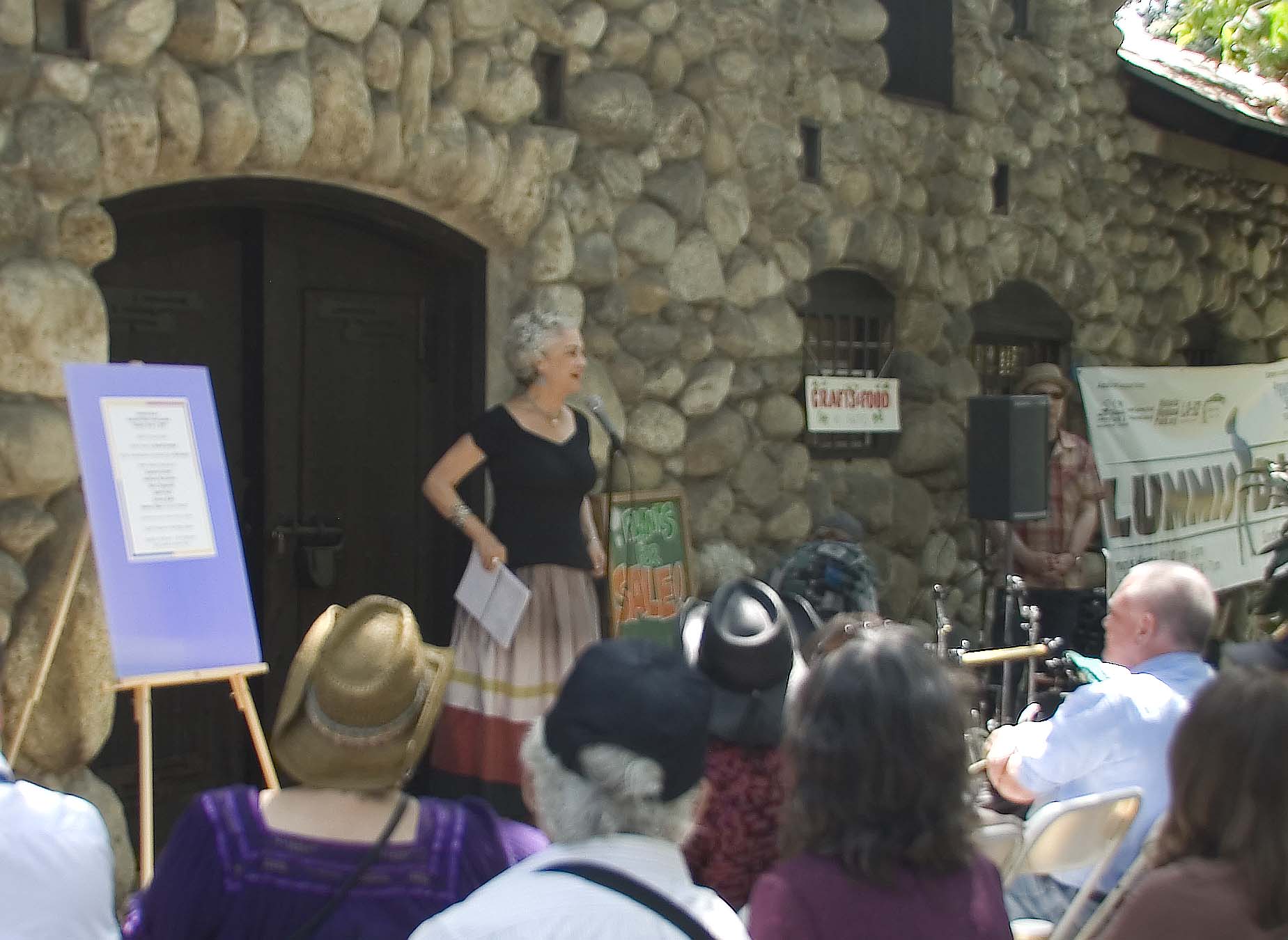 Mary Fitzpatrick elegantly flipped from ironic meditations on the innocence of young love to a scathing review of the social masks so normal to Angeleno life. Her poem “Pompeii” concluded with a question: Is our culture evolving, or are we as trapped in artifice as the civilization of Pompeii after the historic volcano eruption encased it in stone?
  The Maya Angelou Library on Stockton’s southeast side sits near a tired slab of old homes and pothole-ridden streets, but this is where my next workshop is, and I’m excited for it. By now I’ve learned that behind each workshop door are people whose stories and voices will stay with me for days, sometimes months after. Suzy Daveluy, librarian and my host, conveys her worry about the number of people in attendance. Before I can reply we are approached by two teenage girls, their younger brother, and their mother. The girls introduce themselves as Emilia and Yvette. Their brother is Jesus, and their mother is Gloria.*
 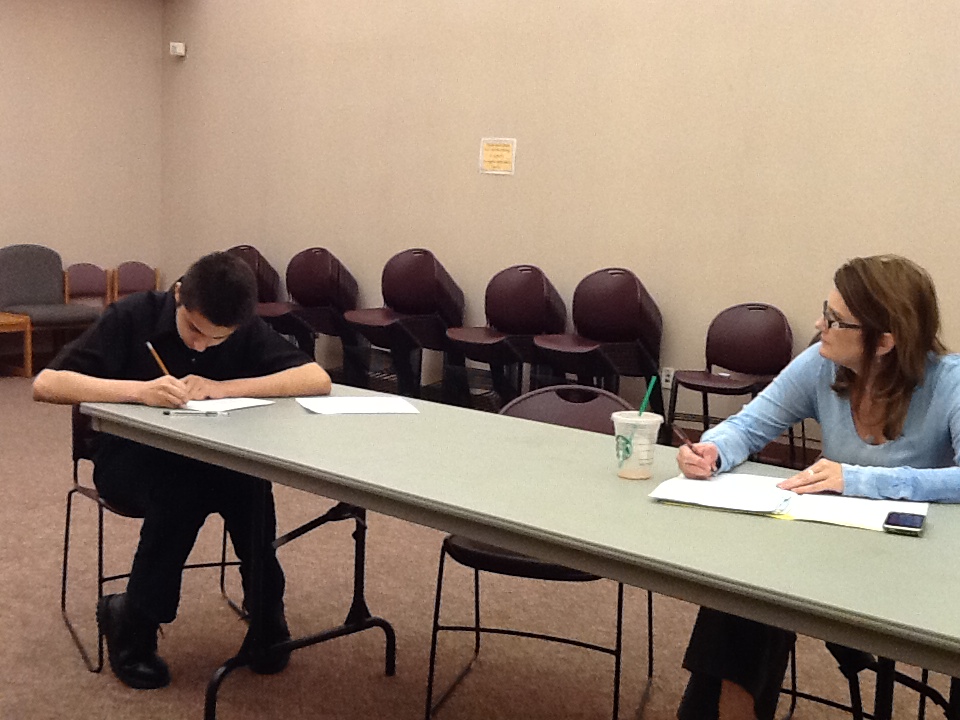 If I didn’t see him write those words out in front of me, I might have never believed he wrote it. His delivery is like a smooth Lenny Bruce, witty and sharp, confident. Suzy and I look at one another, and I know we’re thinking the same thing: We’ve found the future poet laureate of Stockton! Of California! Hell, of the United States!
  In that time we have covered such varied poets as Lu Chi, Rumi, Sappho, Amiri Baraka, Federico García Lorca, T.S. Eliot, Sonia Sanchez, EE Cummings, Audre Lorde, Muriel Rukeyser, LaTasha N. Nevada Diggs, Alice Notley, Gil Scott-Heron, and CA Conrad. The list is growing like the years. Dozens of men - maybe a hundred - have come to and through the class. Some on the outside are now proud graduates of Higher Education. On the inside, a few lifers have been there since my first day. I have seen many things happen in that classroom, but fostering the dissolution of preconceived notions of what can be called “poetry” under the influence of poems like Joan Retallack’s “A I D /I/ S A P P E A R A N C E” or Douglas Kearney’s page work is particularly gratifying. I’ve seen, like realizing blondes aren’t the only beauties, the canon explode in front of our faces, and I tell you that this is a very right thing to be happening inside.
 What recent project have you been especially proud of?
 Because of their participation in JFYAP, many of the students have graduated from post secondary colleges or apprenticeship training programs and have entered successful careers as health care providers, teachers, social workers, accountants, production assistants, entertainers, etc.
 We managed to fund the first two years of the series with modest support from our department budget. This year, thanks to funding from