




Sandra Beasley's Sense of Humor
Sandra Beasley is the author of the memoir Don’t Kill the Birthday Girl: Tales from an Allergic Life and the poetry collections I Was the Jukebox and Theories of Falling. She received the 2008 Poets & Writers Maureen Egen Writers Exchange Award for poetry and lives in Washington, D.C., where she's also been a P&W-supported writer. We asked her a few questions about her experience giving readings. 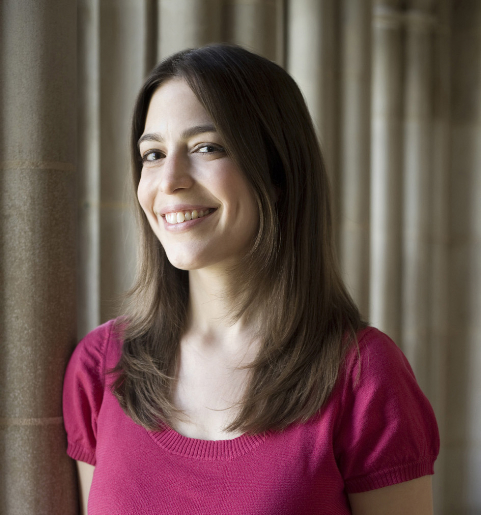 What are your reading dos?
Do make eye contact. Do pause between poems, both for your sake and that of the audience. Do crack a joke or two; this is poetry, not brain surgery. (And actually, I would want the brain surgeon who can crack a joke or two).
...and your reading don'ts?
All poets go through a phase of journeying—to New York, D.C., Los Angeles—to take part in line-ups where they are one of many. Don't try to shoehorn that extra poem in to make it "worth" your trip. You want to be remembered as the poet who left us wanting more, not the one who had us checking our watches.
How do you prepare for a reading?
I make my set list, which is usually about ten poems ordered for thematic flow (i.e., a trio of persona poems) and strategic timing (i.e., not assaulting anyone with two sestinas back to back). I clear my throat. I bounce up and down on the balls of my feet. It's a lot like being a musician, minus the groupies and the free beer.
What's the strangest comment you've received from an audience member?
"[My boyfriend] doesn't speak much English, but your facial expressions and hand gestures were so intense that he could follow along." Apparently I am a vivid performer, as evidenced by all the incredibly goofy snapshots taken of me mid-reading.
What's your crowd-pleaser?
There's one poem I love to read, so much so that I practically have it memorized, and that is "Vocation" from I Was the Jukebox. As poems go, it is short, has some humor, and is dedicated to anyone who (like me) has struggled to pay rent while doing the thing(s) we love to do. "Vocation" was also my first experiment in making video-poems for YouTube.
What did you spend your R/W grant check on?
For my P&W-supported reading, I shared the stage at the Arts Club of Washington with Sarah Browning. It was a quintessentially D.C. night, and I was so proud to read with Sarah, the director of Split This Rock and the author of Whiskey in the Garden of Eden, which I had helped edit when she published with The Word Works in 2007. Though my honorarium wasn't huge, it was an important reminder that our work is valued in this world. What did I spend it on? The usual: dinner with writer friends, a good martini, and more books.
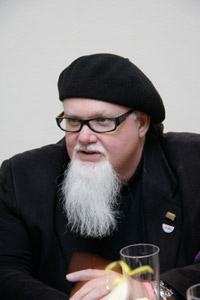
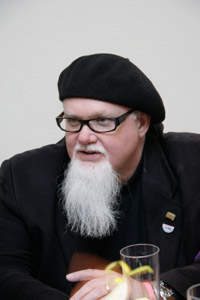
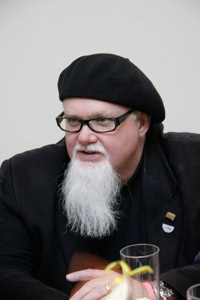
Photo: Sandra Beasley. Credit: Matthew Worden.
Support for Readings/Workshops events in Washington, D.C., is provided by an endowment established with generous contributions from the Poets & Writers Board of Directors and others. Additional support comes from the Friends of Poets & Writers.
 The New Orleans Chapter of
  Can't keep up with this literary buffet? No worries. Listen to
  One of the first assignments I gave was to write about a place where they felt safe and comfortable, an exercise that could be appropriate for anyone, but especially so for people who have experienced trauma. I will never forget what one woman wrote:
 Before the close of the event, Dr. Chandler turned the audience's attention to a black-and-white photo of a black woman, who was a domestic worker, on display in the auditorium. The photo was brought in by an audience member who wanted to bring his grandmother's spirit to the event. I believe she was there.
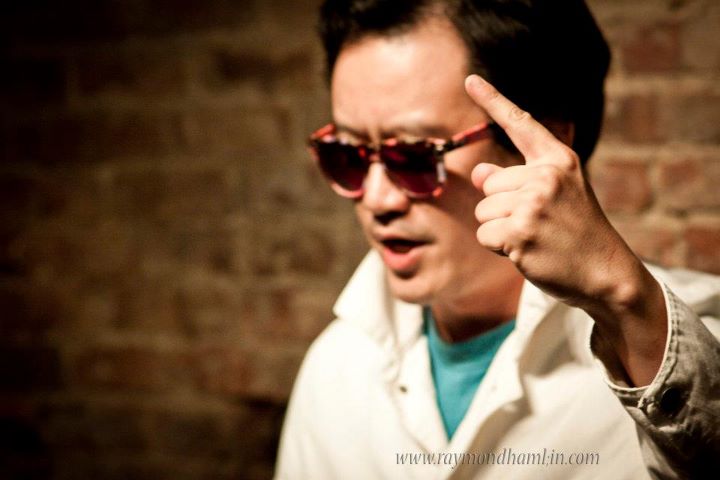 He went on to explain that he’d recently had a bad car accident, suffered whiplash, and now had “this brain-stem injury thing,” which meant a sudden jolt could send his world upside down. Which also meant that he had no choice other than to be desperately “low key." He apologized in advance for not being at his best.
  I would say 75 percent of the audience had never attended a poetry reading. The audience was made up of urban and suburban students and teachers, senior citizens, blue collar workers, labor activists, college deans, and others, all of whom came together to listen, enjoy, and join in the fun of poetry. It’s a beautiful thing to see the arts thrive in a city that has been hit very, very hard by the recession. Our community is clearly nourished by the arts, and this program was ample proof.
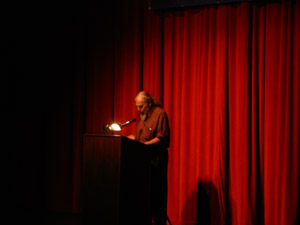
 This morning began with a poetry craft talk by Denise Duhamel, who stressed the need to bring the concrete experiences of life into poems to make them as real as possible for audiences. She used examples from great works by Pablo Neruda, Ezra Pound, and Etheridge Knight. Denise was followed by Ohio novelist and memoirist Robert Olmstead, who offered detailed fiction techniques that reached many of Detroit’s fiction writers.
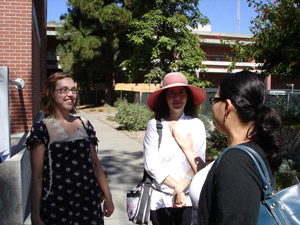 Mazza, reading from her novel Various Men Who Knew Us as Girls, was one of more than fifteen writers to present their work at the sixth annual San Diego City College International Book Fair, which took place on the community college campus. Though small compared to mega-festivals like the
  However, she admitted that she didn’t have any illusions about the power of fiction to stop what government and law enforcement haven’t been able to.
 Though temperatures may be dropping, Detroit's literary scene is just warming up. On September 16, Detroit kicked off another full season of literary activities with our annual
 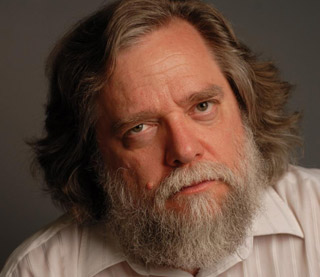 For some, like Janet Martin from Trinidad, poetry has long been a lifeline. Poetry sustains her through tragedy and anchors her as she embraces those struggling around her. In her poem, "Ju Ju Girl, Island Gal," she speaks of solace wrought from her island self:
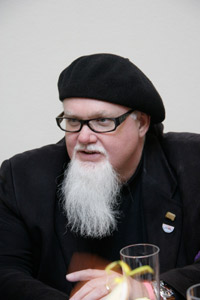 I love these folks. I have met monthly with them as a small way of giving back to the community where I was raised and still proudly live. In fact, I live in the same house that my wife grew up in, and where I walked to every night while dating her when we were fifteen-year-olds.
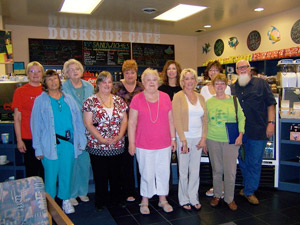 The evening concluded with another moving poem from one of our newer regulars, an eight-six-year-old widower who never wrote a poem in his life until he joined our group. He wrote about frequently waking up thinking there were “a lot of people in [his] house,” only to realize that he was alone.
 What techniques do you employ to help writers open up?
 The Detroit poetry scene started to gain recognition among nontraditional audiences in 1987. Shortly thereafter, P&W expanded to the city to further stimulate the funding culture and help local arts organizations such as the National Writer’s Voice Project, Terry Blackhawk’s school-aged
 We plunge into our topic: "Telling the Stories of our Lives: Writing the Personal Memoir." After some discussion, we start an exercise. Following the guided visualization, everyone is asked to write from a childhood memory. As we’re beginning, a woman and her twelve-year-old daughter join us, apologizing for their lateness. I initiate introductions, settle the latecomers into chairs, bring them briefly up to speed, then encourage them both to start writing. The mother goes ahead, but the girl just sits, looking scared and confused. We’d advertised the workshop to all ages, but she's the only youngster. Her mother said she loves to write, but right now I know exactly how she’s feeling, afraid of embarrassing herself, of doing it "wrong."
 It's a poet’s world. Making connections with other poets and writers, though, isn't easy. Without the kinds of venues more urban areas can sustain, this loose collection of hamlets, villages, townships, and two small cities, Auburn and Geneva, has had no central clearinghouse for writers.