



Introducing the Teachable Lit Mag
The new Lit Mag Adoption Program is designed to introduce journals into creative writing course curricula and engage student writers as readers and members of a national literary community.
Tags:
Jump to navigation Skip to content
Articles from Poet & Writers Magazine include material from the print edition plus exclusive online-only material.
The new Lit Mag Adoption Program is designed to introduce journals into creative writing course curricula and engage student writers as readers and members of a national literary community.
Small Press Points highlights the happenings of the small press players. This issue features Sidebrow, the San Francisco–based independent press that publishes "works by multiple authors who aren’t timid about crossing genre boundaries."
A look at the retro text editors and Web applications that more and more writers are using to roll back the reach of new media.
With so many good books being published every month, some literary titles worth exploring can get lost in the stacks. Page One offers the first lines of a dozen recently released books, including Leslie Marmon Silko's The Turquoise Ledge and Julia Franck's The Blindness of the Heart, as the starting point for a closer look at these new and noteworthy titles.
The Virginia Quarterly Review was rocked by the July 30 suicide of its managing editor, Kevin Morrissey, leaving the award-winning magazine’s future in doubt, as well as that of its editor.
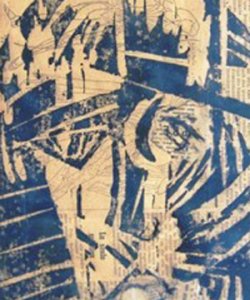
Portraits of Henry Miller “as a demon” and Guillaume Apollinaire, two of the thirty pieces featured in Beyond the Words: Author Portraits by Carl Köhler, currently on exhibit at the University of Chicago’s Joseph Regenstein Library.
In response to the Deep-water Horizon oil spill, writers Heidi Lynn Staples and Amy King created Poets for Living Waters, an online poetry forum featuring works written in response to the disaster, spurring a host of nationwide events that give poets not only an opportunity to take action against the catastrophe but also to speak out in support of our natural environment.
Small Press Points highlights the happenings of the small press players. This issue features the new independent poetry press Birds, LLC, whose editors say an integral part of their mission is to build close relationships with authors and their work.
Despite the financial challenges of their vocation, writers have long found accessible, inventive ways to get work into the world. Among the benefit readings and bake sales, a new fund-raising option allows writers to tap into the fertile social networking landscape to find individuals who may be willing to donate the cost of a cupcake to give a project a boost.
Literary MagNet chronicles the start-ups and closures, successes and failures, anniversaries and accolades, changes of editorship and special issues—in short, the news and trends—of literary magazines in America. This issue's MagNet features Upstreet, the Iowa Review, Fogged Clarity, jubilat, Granta, and Cellpoems.
In this regular feature, we offer a few suggestions for podcasts, smartphone apps, Web tools, newsletters, museum shows, and gallery openings: a medley of literary curiosities that you might enjoy.
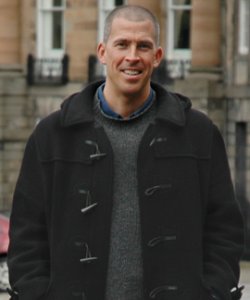
American novelist Thomas Legendre, who has worked with British poet Matthew Welton to develop a new creative writing program at the University of Nottingham, speaks about what makes study in England unique and what writers can gain from attending the new graduate program.
In June the San Francisco–based nonprofit Internet Archive partnered with several libraries across the country to allow e-book lending, taking the next step toward creating a one-stop online portal for digital reading and offering a hint of the new role libraries may play as the screen displaces the printed page.

A still from Howl, a new film centered on the drama of the obscenity trial brought against Lawrence Ferlinghetti of City Lights for publishing Allen Ginsberg's controversial poem, which is slated for release in New York City and Los Angeles on September 24.
With so many good books being published every month, some literary titles worth exploring can get lost in the stacks. Page One offers the first lines of a dozen recently released books, including Paul Murray's Skippy Dies and Ai's No Surrender, as the starting point for a closer look at these new and noteworthy titles.
The Rumpus Book Club, launched in May by Stephen Elliott, offers a compelling twist on the traditional model of online book clubs. Members pay for two things: advance copies of new books, which they’ll receive a month before the official publication date, and access to the people who’ve written them.
On the fifth anniversary of Hurricane Katrina, several local and national arts organizations, including the Pirate’s Alley Faulkner Society and the Poetry Society of America, are presenting readings in New Orleans to commemorate all that was lost—the lives, homes, businesses, and communities—and to celebrate a flourishing of the literary arts in the area since the storm.

Race car driver Alex Grabau has customized his car with a decal of a poem by Jim Daniels. From July 9 to 11, Grabau will compete in Giants Despair, an uphill race in Laurel Run, Pennsylvania. He will race again at the Duryea Hillclimb in Reading, Pennsylvania, from August 20 to 22.
In this regular feature, we offer a few suggestions for podcasts, smartphone apps, Web tools, newsletters, museum shows, and gallery openings: a medley of literary curiosities that you might enjoy.
Literary MagNet chronicles the start-ups and closures, successes and failures, anniversaries and accolades, changes of editorship and special issues—in short, the news and trends—of literary magazines in America. This issue's MagNet features Isotope, Gigantic, Bombay Gin, Ploughshares, the Harvard Review, and Prairie Schooner.
Apple’s entry into the e-book market has given publishers the leverage they needed to force a marketwide shift from a wholesale to an “agency” model of e-book retailing, but the long-term impact of the move—for both publishers and authors—remains unclear.

On the thirtieth anniversary of the launch of the National Poetry Series, Halpern speaks about both its history and its future.
The Federal Writers' Project was established seventy-five years ago, and according to one author and documentary filmmaker, it was a watershed event, if not a turning point, in the history of American literature. Employing up to 7,500 people annually during its four-year run, the Writers’ Project nurtured a generation of authors who otherwise might have been forced into nonliterary careers.
With so many good books being published every month, some literary titles worth exploring can get lost in the stacks. Page One offers the first lines of a dozen recently released books, including Aimee Bender's The Particular Sadness of Lemon Cake and Joshua Mohr's Termite Parade, as the starting point for a closer look at these new and noteworthy titles.
The Rolex Mentor and Protégé Arts Initiative recently announced that this year’s mentor in literature, German writer Hans Magnus Enzensberger, has chosen as his protégée American poet Tracy K. Smith. This is the fifth year a mentorship has been awarded to a writer, and the first time the winning writer has hailed from the United States.