Define the Times

12.4.13

“I still maintain that the times get precisely the literature that they deserve, and that if the writing of this period is gloomy the gloom is not so much inherent in the literature as in the times.” This quote from author William Styron, who died in 2006 at age eighty-one, addresses the role of tone in fiction. People are the products of their times; they are influenced by the economic, political, and cultural climate that surrounds them. Write five hundred words that bring to life the mood of the society your characters inhabit. A bloody sunset, a tarnished silver fork, or a character’s stoic posture can make vital intangible forces accessible to your readers.

Focus on Family

12.3.13

Like snowflakes, every family is unique. From quirky aunts and greedy uncles to gracious moms and despicable cousins, every family is peculiar in some meaningful way. Write a poem about your family. Focus on the people who create the love, the pain, and the dynamics that define your family. Be honest. Be courageous. Be open.

Fourteen Hills Launches Stacy Doris Poetry Award

The Stacy Doris Memorial Poetry Award, a new prize established by the San Francisco State University–based Fourteen Hills Press, will be given for a poem with a “truly inventive spirit.” The winner will receive five hundred dollars and publication in Fourteen Hills. The deadline is January 1.

Using the online submission system, poets may submit one poem of up to ten pages in length. The winning poem will be published in the Spring 2014 issue of Fourteen Hills: The SFSU Review. Students currently enrolled at San Francisco State University are ineligible. All entries will be considered for publication. There is no entry fee.

The award was founded in honor of poet and translator Stacy Doris, who died in 2012 after a battle with cancer, and whose “inventive spirit is legendary,” the Fourteen Hills editors write. “Every book she wrote created a new poetic world with unexpected poetics.” The award will be given for a poem that posseses Doris’s “spirit of creative invention and inventive creation; engaging wit and ingenious playfulness; discovery in construction; and radical appropriations based on classical forms.” Chet Wiener will judge. 

Established in 1994, Fourteen Hills Press publishes two volumes of its literary journal each year, as well as the annual winner of the Michael Rubin Book Award, a first-book prize given each year in alternating genres. General journal submissions of poetry, fiction, and art are open until January 1.

Jo Scott-Coe on Making Room for Voices

P&W-funded Jo Scott-Coe is an associate professor of English and creative writing at Riverside City College in Southern California. Her memoir in essays, Teacher at Point Blank (Aunt Lute), was listed as a “Great Read” by Ms. Magazine. In 2009, she won the NCTE Donald Murray Prize for writing about teaching. Her nonfiction and interviews have appeared in many publications, including Salon, the Los Angeles Times, and Narrative. She is currently at work on a collection of lyric meditations about American public performances of violence since the UT Austin shooting in 1966.
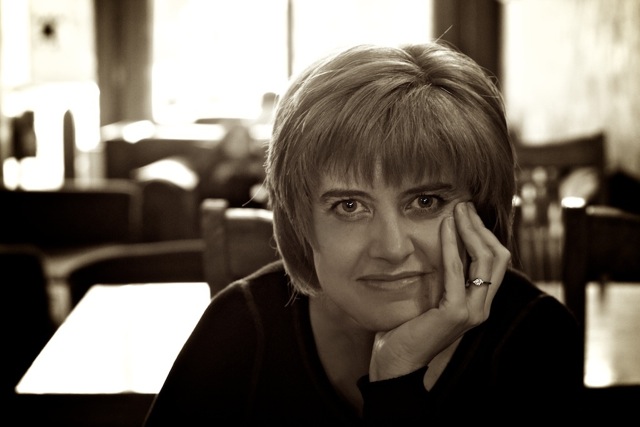
Jo Scott-Coe

During this season of gratitude, it’s important to acknowledge the different kinds of generosity that make writing communities spark and thrive. Experienced writers also learn the generosity that requires us to pay our respects when opportunities come to an end.

This fall, Emeryville-based Memoir Journal published its thirteenth (and final) issue. Its editors not only produced a beautiful publication but also started The (In)Visible Memoirs Project, which gave people from underserved populations in California the chance to bring their stories to life on the page. The goal, in the words of Rachel Reynolds, Program Director, was “to hold space for a multitude of storytellers.”

I had the pleasure of facilitating two project workshops this past fall and spring in Riverside. All across California—in places such as Fresno, Yolo, Modoc, and Banning—workshop leaders set up small communities to mentor and encourage writers who might not have room in their lives to write, whether due to professional detours, geographical isolation, financial hardship, or private demons. Some workshops, like Ruth Nolan’s in Palm Desert, are organized around marginalized topics, such as dealing with suicide.

During its lifespan, the (In)Visible Memoir Project published two fantastic anthologies, I Speak from My Palms and Lionhearted, each over 250 pages, collecting the best submissions from each workshop. The two volumes demonstrate the energy that can emerge from writing that finds its initial home in small gatherings of people—around a table, in a living room, or at a library—where listening is the first gift.

I saw trust emerge, gradually, between participants in my women’s workshop. Women wrote about childhood heroines, their recollections of lost relatives and friends, their apprehensions in parenting and marriage, their perceptions of heritage. Some worked with artifacts and primary documents from their family histories. Each took risks not only in sharing private subject matter, but also experimenting with structures and voices sometimes considered “off limits” for memoir, or for women writing in that genre. After the official conclusion, a core group decided to keep meeting, helping each other move further forward with their stories, poems, and essays. Some are in the middle of books now. One just had a piece published in The Los Angeles Times.

As we say farewell and thank you to Memoir Journal, and as its (In)Visible Memoir Project comes to bittersweet end, it’s also a fitting time to consider how we each can appreciate the energy, financial resources, visible and invisible labor invested in creative spaces that sustain us, for as long as we have them.

We can make our gratitude visible through continued acts of writing and by making room for new voices.

Photo: Jo Scott-Coe. Photo Credit: Wes Kriesel.

Major support for Readings/Workshops in California is provided by the James Irvine Foundation. Additional support comes from the Friends of Poets & Writers.

A Child's Thanksgiving Day

11.28.13

Writing about life from a child’s perspective is challenging. We remember the feelings, thoughts, and concerns we experienced as children, but as writers of creative nonfiction, we must recreate that world and make it accessible to adult readers. Use Thanksgiving Day as a source of inspiration. Watch how the children in your family interact with one another, the adults, the food, and other holiday activities. Write five hundred words that describe Thanksgiving Day from a child's unique point of view.

Face Time

11.27.13

Details are critical to character development, especially when describing a character’s face. A glass eye, a crooked nose, or thin lips can convey more meaning than exposition or action. Describe the face of your protagonist, and then describe the face of your antagonist. What qualities do they share? How are they different? Write so that a comparison of the characters’ faces provides both symmetry and juxtaposition that symbolizes the nature of their relationship.

Pages

Subscribe to Poets & Writers RSS