John Fox is the author of Poetic Medicine: The Healing Art of Poem-Making (TarcherPerigee, 1997) and Finding What You Didn’t Lose: Expressing Your Truth and Creativity Through Poem-Making (TarcherPerigee, 1995), and his work is featured in the PBS documentary Healing Words: Poetry and Medicine. In 2005, he founded the Institute for Poetic Medicine and his chapbook, The Only Gift to Bring (Seasonings Press, 2015), is available through the institute. Fox blogs about his experience leading writing workshops for Project Avary, an organization in San Rafael, California offering long-term support, resources, guidance, and training for children with incarcerated parents.
 In the spring of 2016, Zach Whelan of Project Avary called the office of the Institute for Poetic Medicine to ask if I was available to bring poetry to the teens they served. This residency would occur during a mid-June, two-week summer camp.
Zach and I spoke for over an hour. I was impressed with three things: 1. The seasoned care the Project Avary staff holds for teens with a parent or parents in prison. 2. The solid and proven program Project Avary has built, which includes a commitment of ten years to a child from the age of eight through their teen years. 3. Zach’s openness to not only poetry writing, but my focus on poetry-as-healer.
By the end of our talk and in subsequent meetings, we agreed to collaborate in an ongoing, mutual process that would bring poetry into the lives of Avary participants.
I would learn about the acute challenges faced by these teens—their sense of loss and abandonment, the societal stigma attached to having a parent in prison, as well as their capacity for resilience and how much they could teach us. I needed to learn and understand that reality to better know what my optimum role could be in joining this team. This process helped me in the selection of relevant poems that could serve as catalysts for writing.
In turn, Avary would learn from me how poetry can make a direct impact on the teens and their ability to dive into their issues of concern. Through the durable capacity of a poem, using the tools of poem-making, and by the natural strength of a supportive community, we could create a safe and generative way to explore and express. This mutual, encompassing collaboration becomes particularly important because the time to nurture and tend to their creative voices does not end with our limited time together—it actually begins!
What I can report to you is that Project Avary has incorporated poetry writing workshops into the core of their curriculum.
The conclusion of my two-year summer camp residency (with forty new campers joining each year) included a two-hour evening program where all participants shared their poems (also songs, skits, magic tricks, etc.) with the entire community. Avary calls this “The Untalent Show” with the emphasis on making it an open invitation to everyone—especially those who might feel they have nothing worthy to offer.
When a poem was read, there was a palpable quieting of a mostly young and happily raucous group at summer camp, which included dozens of young counselors and other staff. The people listening were less “audience” and more like family member, sensitive to their brothers and sisters, and cheering them on.
But what about the poetry? With their permission, I’m able to share some of the poetry by these young Project Avary participants.
LOVE
I didn’t want love.
Love is like dead tissue that won’t fall off.
I thought i didn’t need Love
but everyone wanted Love.
Did i need love.
What was the point of Love.
Did i want Love, did i need Love.
Would love make me happy.
The truth was i wanted love.
But would love want me.
—Monique Cook, age 13
UNTITLED
She was pure in a world not ready for her.
A rose born without thorns.
A body of water with no ripples.
A mirror with no cracks.
She was content in every sense of the word.
But she was born in a world with no intention
of keeping her that way.
—Malayah, age 16
TO ANGER
As you grip my mind
& sway my heart
spark dark flames
in the night of day
you keep notorious thoughts
tenaciously raising
barriers, levels
depleting every second
every month, every hour
contemplating my next act,
my next task & past actions;
forgetting present endeavors,
forgetting my loving nature,
forgetting the roots of my life,
forgetting me.
—Joseph Gladney, age 18
Support for this event was provided, in part, by Poets & Writers, thanks to a gift from Diana Raab. Additional support for Readings & Workshops in California is provided by the California Arts Council, a state agency, the National Endowment for the Arts, a federal agency, and by the Friends of Poets & Writers.
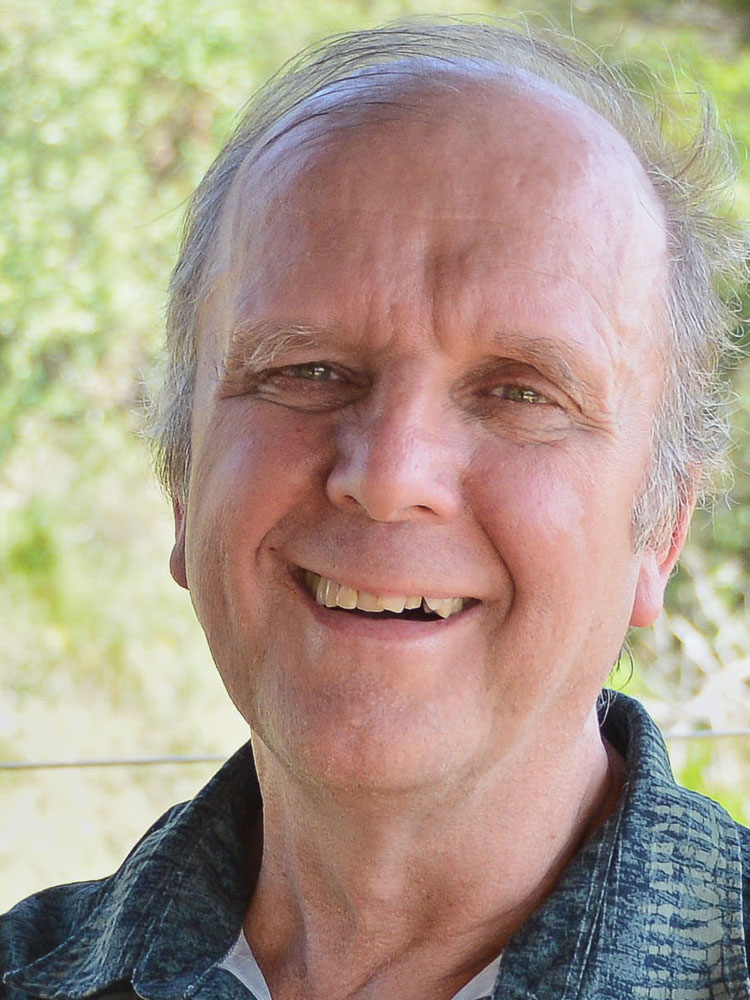
Photo: John Fox (Credit: Valerie Knight).