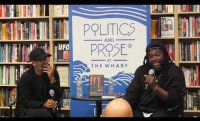
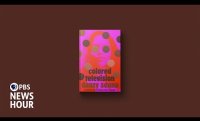
Rumaan Alam on Entitlement

Caption: 

In this Politics and Prose Bookstore event, Rumaan Alam reads from his fourth novel, Entitlement (Riverhead Books, 2024), and discusses how writing about race, class, and age encourages readers to interrogate these identities in a conversation with Jason Reynolds. Entitlement is featured in Page One in the September/October issue of Poets & Writers Magazine.

Genre: 
Falling

10.8.24

“One by one, like leaves from a tree, / All my faiths have forsaken me; / But the stars above my head / Burn in white and delicate red, / And beneath my feet the earth / Brings the sturdy grass to birth,” begins Sara Teasdale’s 1915 poem “Leaves.” Write a poem that uses rhythm and meter to evoke the feeling of the autumn season and describes the sights and sounds of the natural environment drying and withering, beginning the descent to decomposition. You might use this as an opportunity to ruminate on the larger themes of slowing down, and cycles of renewal and decay. Pay particular attention to consonance, short and long vowel sounds, and the length of your words and lines to create the desired tone of your poem.

The New Nonfiction 2024 Virtual Reading

Caption: 

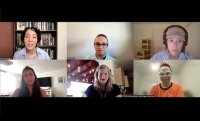
In this virtual reading and conversation, Poets & Writers Magazine features editor India Lena González introduces the five debut authors featured in “The New Nonfiction 2024” in the September/October issue: David Martinez, author of Bones Worth Breaking (MCD, 2024); Wei Tchou, author of Little Seed (A Strange Object, 2024); Zara Chowdhary, author of The Lucky Ones (Crown, 2024); Lydia Paar, author of The Exit Is the Entrance: Essays on Escape (University of Georgia Press, 2024); and Neesha Powell-Ingabire, author of Come by Here: A Memoir in Essays From Georgia’s Geechee Coast (Hub City Press, 2024).

Showing Up

10.3.24

In the 2022 film Showing Up directed and cowritten by Kelly Reichardt, a sculptor who works as an administrative assistant at her alma mater art school in Oregon prepares for her art show opening while contending with troubles and complications of varying degrees involving her landlord neighbor, and artist rival, as well as her mother, father, brother, pet cat, and a feral pigeon. When asked about the meaning of the film’s title in an interview published in Slant Magazine, Reichardt prefers to leave it up to interpretation, but mentions it can mean, “showing up to work. Showing up for your friends, your family. It’s all the ways.” Write a personal essay that revisits different examples from your past of “showing up.” How have you shown up for others and how have others shown up for you? In what ways do you show up for your own creative work?

Dionne Brand: Salvage

Caption: 

“It’s an ongoing interrogation of how we think about narrative. It’s my ongoing interrogation of history.” In this Toronto Public Library event, poet and novelist Dionne Brand speaks about how her new nonfiction book, Salvage: Readings From the Wreck (Farrar, Straus and Giroux, 2024), wrestles with the ways novels from the seventeenth to nineteenth centuries sustain and reproduce colonialism in a conversation with David Chariandy.

Homeward Bound

10.2.24

Earlier this summer, while on a camping trip in Yellowstone National Park with his owners, a two-year-old Siamese cat named Rayne Beau ran off into the Wyoming woods and went missing. After several days of searching the area, the owners returned to their California home devastated only to receive a phone call two months later that the cat had been spotted wandering around three hours north of their home, traversing more than eight hundred miles. Write a short story that imagines the trials and tribulations that a pet might experience embarking on a long journey home. You might decide to use multiple perspectives throughout the narrative, considering the people and terrain the animal encounters along the way.

Ode to Style

10.1.24

In a recent piece published on Literary Hub highlighting responses from writers and editors on their appreciation for The Chicago Manual of Style, book editor Barbara Clark muses on the poetry found within the guidebook. “When I looked up something in the manual, I saw poems in their purest form. Open to a page at random, and find a poem there,” says Clark. “Fused participles! Who can imagine such a thing?” Taking inspiration from grammar-related terms and phrases, compose a poem that plays with an open interpretation of the words involved, bringing these concepts beyond language usage and into a more personal or philosophical context. Can you locate a sort of soul or lyrical beauty within organization and categorization?

Pages

Subscribe to Poets & Writers RSS