Meat Me

12.4.24

Restaurants in Dhaka have begun serving human meat in the world of Bangladeshi author Mojaffor Hossain’s short story “Meet Human Meat,” translated from the Bengali by Mohammad Shafiqul Islam. The characters in the story discuss this new trend with matter-of-factness, talking about logistics like supply and demand, how it’s advertised on menus, where the humans are sourced, the various modes of preparation, and dish accompaniments. Hossain uses this satirical conceit to touch upon larger topics, such as the Rohingya refugee crisis with restaurants serving “the meat of Rohingyas.” Write a short story that hinges on an outrageous idea, using it as a conceit for larger themes you’re interested in exploring. You may find that setting your story in a universe in which something taboo is commonplace and unremarkable will allow you some unexpected creative freedom.

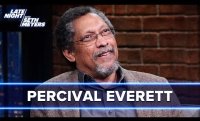
Percival Everett on Late Night

Caption: 

In this Late Night With Seth Meyers interview, Percival Everett talks about how Mark Twain, among others, influenced the sense of irony in his writing and how a game of tennis impacted the premise of his novel James (Doubleday, 2024), for which he won the 2024 National Book Award in fiction.

Genre: 

On a Winter’s Night

12.3.24

“You are about to begin reading Italo Calvino’s new novel, If on a winter’s night a traveler. Relax. Concentrate. Dispel every other thought. Let the world around you fade,” wrote Italo Calvino on the first page of his 1979 novel, translated from the Italian by William Weaver. Calvino’s postmodern structure comprises twenty-two sections, with each odd-numbered passage narrated by a second-person “you” (you, the reader; you, a character). Each even-numbered passage, in turn, is the start of a new work, a fictional book that the “you” character discovers and reads, only to find that it ends abruptly and picks up in the next even-numbered passage as an entirely different work. Taking a cue from this puzzle of an approach, compose a poem that alternates between two narratives united by a winter’s night. How might a second-person “you” character be utilized in your poem? Is there an emotional progression connected to the accumulation of images and themes?

After: Poetry Destroys Silence

Caption: 

Watch the trailer for After: Poetry Destroys Silence, a cinematic performance film directed by Richard Kroehling and starring Cornelius Eady, Edward Hirsch, Melissa Leo, Géza Röhrig, and a cast of celebrated award-winning poets who respond to the Holocaust and talk about the importance and necessity for poetry in a world that still grapples with genocide.

Genre: 

The Grasshopper and the Ant

11.28.24

In Aesop’s fable of the grasshopper and the ant, the grasshopper spends the summer playing music, singing, and dancing, while the ants spend all their time working to store up food for the winter. Traditionally, the moral of the story is about the importance of preparation and hard work, as once winter arrives, the grasshopper finds himself hungry and begs the ants for food. The children’s book The Ant or the Grasshopper? (Scribner, 2014) written by Toni Morrison and her son Slade Morrison complicates the conventional reading of the fable and questions the overlapping roles of art, labor, and value. The grasshopper Foxy G asks his ant friend Kid A, “How can you say I never worked a day? ART is WORK. It just looks like play.” Inspired by this spin, write an essay that reflects on how you see the role of the artist functioning in contemporary society. How do writers fit into our culture’s value systems?

Written in the Cards

11.27.24

Fools and lovers, emperors and empresses, devils and death, chariots and towers, moons and stars: The cards of a tarot deck are filled with scenes and images of a colorful assortment of characters, arcane symbols, flora and fauna, and celestial ephemera that can spark one’s imagination. In Chelsey Pippin Mizzi’s guidebook Tarot for Creativity: A Guide for Igniting Your Creative Practice (Chronicle Books, 2024), the symbols and archetypes on each of the seventy-eight cards are described in a way to fuel creativity and experimentation. Consider this creative connection to tarot and write a story in which one of your characters stumbles upon an errant tarot card at a crucial moment of indecision. Search online or through a book for a tarot card that resonates with the tone or theme of your narrative. What is depicted on the card and how does your character read into the imagery?

In the Life

11.26.24

Anne Sexton’s 1962 ekphrastic poem “The Starry Night,” inspired by Vincent van Gogh’s 1889 painting of the same name, begins with a snippet from a letter written by the painter to his brother: “That does not keep me from having a terrible need of—shall I say the word—religion. Then I go out at night to paint the stars.” Choose a favorite work of visual art by an artist for whom you can find a bit of personal information, whether it’s something they’ve written or details about their daily life, philosophies, thematic interests, or relationships with close ones. How can you connect what you learn about the artist with the artwork itself? Write an ekphrastic poem exploring the emotions and thoughts that come to the surface when you look at the artwork, allowing yourself to incorporate a creative synthesis of their biographical details.

Pages

Subscribe to Poets & Writers RSS