Poets Protest Guns in the Classroom
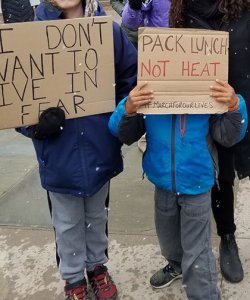
Poets and educators work to fight campus carry bills.
Tags:
Jump to navigation Skip to content
Poets and educators work to fight campus carry bills.
A new series of books and novels inspired by Stranger Things; Chimamanda Ngozi Adichie wins PEN Pinter Prize; NPR’s summer poll on horror books; and other news.
When you search for your name online, who else appears in the results? This week, write a poem inspired by your online doppelgänger. The poem could be a playful amalgamation of various characters, as in Mark Halliday’s poem “Google Me Soon,” or it could be an occasion for a more meditative address to an individual who shares your name, as in Jacques J. Rancourt’s poem “Hello My Name Is Also Jacques Rancourt.” How does it feel to imagine somebody else with the name you consider your own? If you can’t find someone else with your name, is that reassuring or disheartening?
Lionel Shriver accuses Penguin Random House of being “drunk on virtue”; Anthony Bourdain remembered; dictionaries take to social media; and other news.
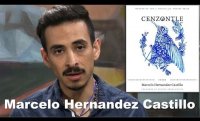
“Perhaps the butterflies are mute because / no one would believe their terrible stories.” In this interview for the Poetry.LA series, Marcelo Hernandez Castillo speaks about late night talk shows, immigration interviews, the PechaKucha format, and reads from his debut poetry collection, Cenzontle (BOA Editions, 2018), which won the 2017 A. Poulin, Jr. Poetry Prize.
Poetry readership is up; behind the New York Times best-seller lists; Books for Africa ships millions of books to Africa; and other news.
Knopf buys debut novel for seven figures; poet Victoria Chang on revision; the sidewalk bookseller who befriended Phillip Roth; and other news.
Poets, if you have a manuscript ready to submit, consider the following book contests with upcoming deadlines, each of which offers an award of at least $1,000 and publication.
Paz Prize for Poetry: An award of $2,000 and publication by Akashic Books is given biennially for a poetry collection originally written in Spanish by a U.S. resident. The winning manuscript will be translated into English and published in a bilingual edition. Rigoberto González will judge. No entry fee. Deadline: June 15.
University of Akron Press Akron Poetry Prize: A prize of $1,500 and publication by University of Akron Press is given annually for a poetry collection. Diane Seuss will judge. Entry fee: $25. Deadline: June 15.
Bitter Oleander Press Library of Poetry Book Award: A prize of $1,000 and publication by Bitter Oleander Press is given annually for a poetry collection. Entry fee: $28. Deadline: June 15.
Omnidawn Publishing First/Second Poetry Book Prize: A prize of $3,000, publication by Omnidawn Publishing, and 100 author copies is given annually for a first or second poetry collection. Srikanth Reddy will judge. Entry fee: $27. Deadline: June 18.
Barrow Street Press Book Prize: A prize of $1,500 and publication by Barrow Street Press is given annually for a poetry collection. Ada Limón will judge. Entry fee: $25. Deadline: June 30.
Bauhan Publishing May Sarton New Hampshire Poetry Prize: A prize of $1,000, publication by Bauhan Publishing, and 100 author copies is given annually for a poetry collection. David Blair will judge. Entry fee: $25. Deadline: June 30.
Parlor Press New Measure Poetry Prize: A prize of $1,000 and publication by Parlor Press in the Free Verse Editions series is given annually for a poetry collection. Jon Thompson will judge. Entry fee: $28. Deadline: June 30.
Visit the contest websites for complete guidelines, and check out the Grants & Awards database and Submission Calendar for more contests in poetry, fiction, and creative nonfiction.
Bill Gates book giveaway for recent college grads; race and the personal essay; Porochista Khakpour’s new memoir on illness; and other news.
McCrindle Foundation Readings & Workshops fellow Sreshtha Sen writes about Poets & Writers’ ninth annual Connecting Cultures Reading held at the Center for Book Arts in New York City.
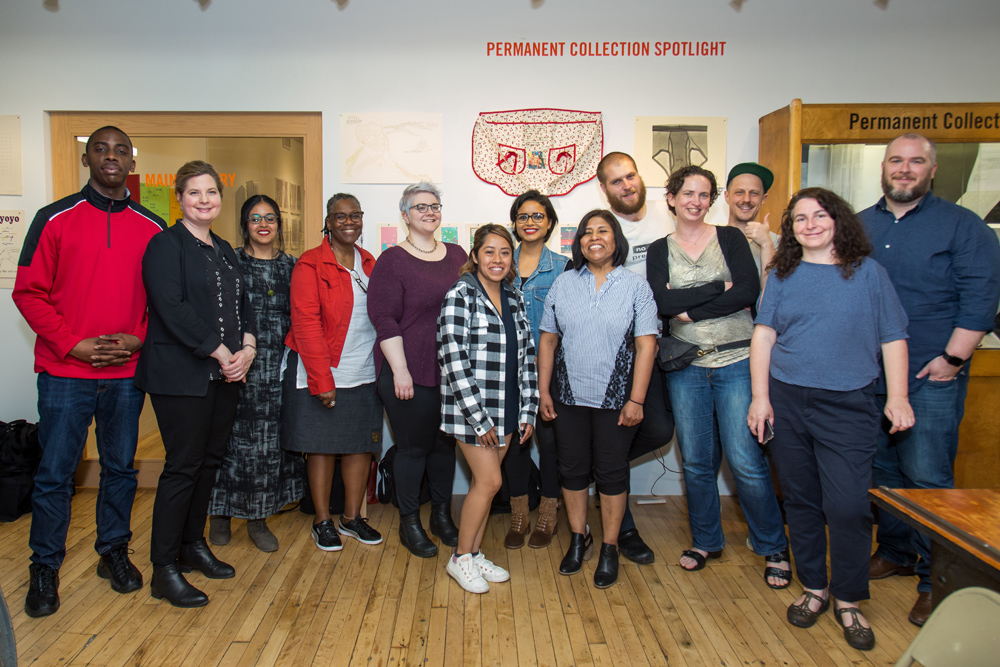
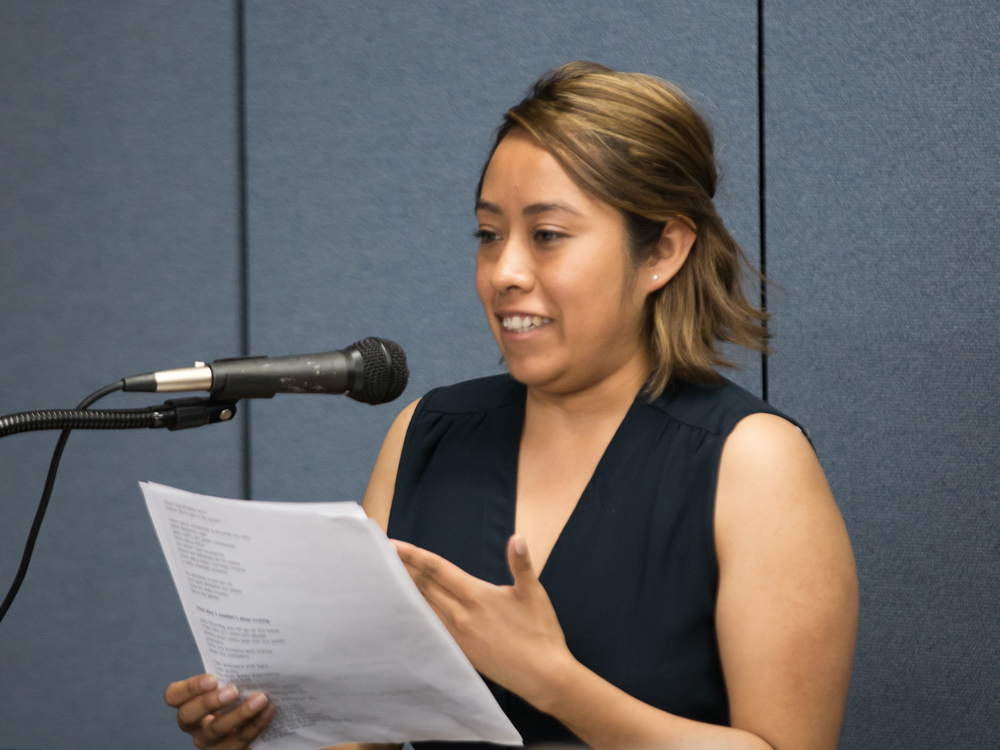 Now in its ninth year, the Connecting Cultures Reading, sponsored and organized by Poets & Writers, celebrates the diversity of our literary community by bringing together several groups who’ve been funded by the Readings & Workshops program. This year’s reading took place at the Center for Book Arts, and featured writers representing National Domestic Workers Alliance, the Newtown Literary Alliance, Leslie-Lohman Museum of Gay and Lesbian Art, Voices From War, and the What Would an HIV Doula Do? collective.
Each group was represented by two readers who were introduced by the organizer or workshop facilitator they’d worked with. During their introductions, the organizers and facilitators all spoke about the motives behind their reading or workshop series and the shared themes that begin to emerge when writers find the community they’re craving. Claudia Prado, the facilitator for a workshop series with the National Domestic Workers Alliance, spoke about the powerful lessons that emerged out of their workshop theme: Things I have learned. “To have a workshop in Spanish,” she added, “is a great opportunity for us immigrants living in New York City to have a space to write, and hear about the process of writing and others’ voices in the languages of our native country.” Timothy DuWhite, the workshop facilitator from the What Would an HIV Doula Do? collective elaborated on the solidarity, success, and safety that new and returning workshop participants felt as their program was supported and able to continue running.
As a nonprofit dedicated to both the contemporary and traditional practices of book making, the Center for Book Arts seemed a perfect fit for a cross-cultural reading that tackled struggles and victories from the past and the present. In a room surrounded by historically significant chapbooks, presses, and modern exhibits, the ten readers covered a range of themes from loss, violence, and power or the absence of it, to happiness as resistance, shared histories and love—familial or otherwise. Jack York, a writer representing the Queer Resistance Workshop at the Leslie-Lohman Museum, observed this when noting the range of each group and that having two readers from each group ensured that one story is not representative of everyone from a community or group, a struggle felt by almost everyone in the room.
The reading and the reception that followed allowed all the writers involved to connect and create new communities of their own. Nina Semczuk, the workshop facilitator for Voices From War, commented on how the opportunity to speak with other writers added to their workshop experience: “One of our readers left the evening newly inspired by how different readers expressed themselves. He had never encountered a reading like that and told me that he couldn’t wait to get to work on his writing and go deeper than he had allowed himself before.”
These five groups and their diverse, generous stories showcased the richness of artistic endeavors present throughout this city and served as a strong reminder of the reasons I applied to be a fellow for the Readings & Workshops program; it gave me a chance to see how programs like ours foster conversations amongst writers occupying different spaces, amplify voices we haven’t had a chance to hear yet, and work on making literature and art accessible to anyone who chooses to look for it. I’m grateful to all the featured readers and organizations, and the Center for Book Arts, especially Alex, Paul, and Emilie, for generously donating their space and time.
Support for the Readings & Workshops Program in New York City is provided, in part, by public funds from the New York State Council on the Arts, and the New York City Department of Cultural Affairs, with additional support from the Frances Abbey Endowment, the Cowles Charitable Trust, and the Friends of Poets & Writers.
Photos: (top) Silvina Reyes (Credit: Margarita Corporan). (bottom) Participants of the ninth annual Connecting Cultures reading (Credit: Margarita Corporan).