Genre: Creative Nonfiction

Mind Your Manners

The New York City culture and news website Gothamist recently asked New Yorkers about their thoughts on sidewalk etiquette in the crowded, bustling streets of their beloved city. What are the rules, who has the right-of-way, and who should yield? Respondents focused on always walking to the right of the sidewalk and to “move quickly and never stop.” One thoughtful respondent considered the cultural differences of sidewalks used for recreational strolls versus commuting. But the overall consensus was that among nine-to-fivers, tourists, parents with kids, dogwalkers, bicyclists, and groups, seniors deserve the right-of-way. Write an essay about the unwritten rules or etiquette you have observed in your daily surroundings. How have these common practices adapted to fit the needs of different people? Do they evolve over time as social norms change? Consider some of your own experiences with how public etiquette has helped or hindered harmonious community life.
In Response

4.25.24

In a recent interview with Aria Aber for the Yale Review, when asked his thoughts on the responsibility of the poet, Jackson Prize–winning poet Fady Joudah says, “I often think that the responsibility of the poet is to strive to become the memory that people may possess in the future about what it means to be human: an ever-changing constant. In poetry, the range of metaphors and topics is limited, predictable, but the styles are innumerable. Think how we read poetry from centuries ago and are no longer bothered by its outdated diction. All that remains of old poetry is the music of what it means to be human.” Write a creative nonfiction piece that presents your personal theory of the responsibility of a writer or an artist. To construct an expansive approach, you might use observations about how different creative disciplines overlap in their goals, or consider what has remained resonant as the arts make their mark throughout various eras.

Doing Less

4.18.24

More, please? Or, no more, please? In The Fast: The History, Science, Philosophy, and Promise of Doing Without (Avid Reader Press, 2024), John Oakes recounts his personal experience conducting a weeklong fast and examines the practice’s history and place within a wide range of religions and philosophies. The book also explores the act of self-deprivation and the potential transformative benefits of subtracting rather than adding to one’s life. “The act of fasting…won’t stop routine, but impedes it for a bit, signifying a shift and a determined unwillingness to follow standard operating procedure,” writes Oakes. Use this idea to consider your personal relationship with consumption—of food, conversation, media, clothes, space—and write a personal essay that reflects on what you might otherwise take for granted.

Rushdie on Censorship and Writing

Caption: 

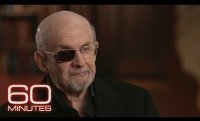
“My desire to be a writer was entirely to do with the love of the power of the imagination, imagining worlds, creating worlds for readers to inhabit.” In this 60 Minutes video, Salman Rushdie speaks about the dangers of censorship, how he would like to be remembered, and what inspires him to keep writing. 

Alma College

MFA Program
Poetry, Fiction, Creative Nonfiction
Alma, MI
Application Deadline: 
Mon, 11/30/2026
Application Fee: 
$0

With Certainty

4.11.24

In a 1789 letter, Benjamin Franklin wrote the phrase, “in this world nothing can be said to be certain, except death and taxes.” Franklin was reflecting on the establishment of the U.S. Constitution, which he said promised to be durable, as well as his own ailing health and mortality. This week write a personal essay that riffs off this proverb, reflecting on your own worldview about what can be certain. You might start off with the prompt: “In this world, nothing can be said to be certain, except death, taxes, and ______.” Tell the story of how you arrived at your own ideas about what you can always count on, whether good or bad. What past experiences, encounters, or memories seem to reinforce your belief?

Sonoma County Writers Camp

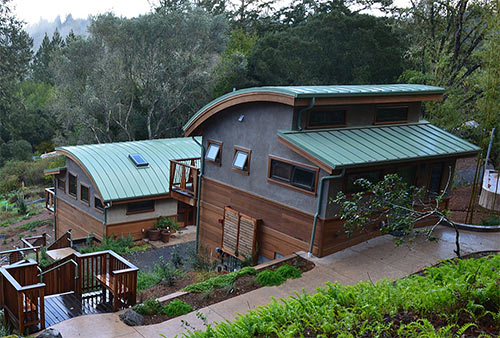
The Summer 2026 Sonoma County Writers Camp will be held from July 22 to July 26 at the Ratna Ling Retreat Center in Cazadero, California. The retreat features generative workshops and master classes in fiction and creative nonfiction, meditative dream writing, and student readings. The faculty includes fiction writer Ellen Sussman and fiction and nonfiction writer Elizabeth Stark. The cost of the retreat, which includes all meals, lodging in a single-occupancy room, and activities, is $2,495. Registration is first come, first served.

Type: 
RESIDENCY
Ignore Event Date Field?: 
no
Event Date: 
July 22, 2026
Rolling Admissions: 
yes
Application Deadline: 
June 15, 2026
Financial Aid?: 
yes
Financial Aid Application Deadline: 
May 1, 2026
Free Admission: 
no
Contact Information: 

Sonoma County Writers Camp, 1993 Burnside Road, Sebastopol, CA 95472. Ellen Sussman, Cofounder and Codirector.

Ellen Sussman
Cofounder and Codirector
Contact City: 
Cazadero
Contact State: 
CA
Country: 
US
Add Image: 
Sonoma County Writers Camp buildings

Ragdale

The Ragdale Foundation offered residencies of 18 days year-round to poets, fiction writers, and creative nonfiction writers on 38 acres of prairie in Lake Forest, Illinois, 30 miles north of Chicago. Residents were provided with a private room and bathroom, a shared kitchen, and meals. The cost of the residency ranged from $630 to $4,500 on an income-based sliding scale. A limited number of fully funded fellowships with stipends of $1,000 or more were available.

Type: 
RESIDENCY
Ignore Event Date Field?: 
yes
Event Date: 
June 15, 2026
Rolling Admissions: 
ignore
Application Deadline: 
June 15, 2026
Financial Aid?: 
no
Financial Aid Application Deadline: 
June 15, 2026
Free Admission: 
no
Contact Information: 

Ragdale, 1260 North Green Bay Road, Lake Forest, IL 60045. (847) 234-1063, ext. 23. Deanna Miera, Residency Manager.

Deanna Miera
Residency Manager
Contact City: 
Lake Forest
Contact State: 
IL
Contact Zip / Postal Code: 
60045
Country: 
US

Pages

Subscribe to Creative Nonfiction