




Page One: Where New and Noteworthy Books Begin
Page One features a sample of titles we think you'll want to explore. With this installment, we offer excerpts from Invisible Bride by Tony Tost and Coin of the Realm by Carl Phillips.
Jump to navigation Skip to content
Page One features a sample of titles we think you'll want to explore. With this installment, we offer excerpts from Invisible Bride by Tony Tost and Coin of the Realm by Carl Phillips.

When John Barr was named president of the Poetry Foundation six months ago, most poets in the country were asking themselves, “John who?” Although Barr has published six books of poetry and served on the board of directors of Yaddo as well as that of the Poetry Society of America, many poets had never heard of him. His long career as an investment banker on Wall Street hadn’t raised his literary profile either. The worlds of high finance and poetry are totally unrelated. Not anymore. In 2002, Ruth Lilly’s unprecedented financial gift—$100 million over the next 30 years—to the Poetry Foundation, formerly the Modern Poetry Association, changed all that. Suddenly poets are paying attention to what an investment banker has to say.
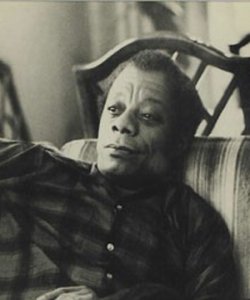
Notes of a Native Son, James Baldwin’s best-known book, was published in 1955 by Beacon Press. Baldwin’s editor then was Sol Stein, whom he’d known since high school. This essay is an excerpt from Stein’s Introduction to Native Sons by Baldwin and Stein, which will be published by One World, an imprint of Random House, next month. The book includes correspondence between Stein and Baldwin that produced Notes of a Native Son.
Literary MagNet chronicles the start-ups and closures, successes and failures, anniversaries and accolades, changes of editorship and special issues—in short, the news and trends—of literary magazines in America. This issue's MagNet features Midnight Mind Magazine, Small Spiral Notebook, Swink, Mot Juste, the Canary, Blackbird, Ducky, Parakeet, and Rhino.
In April the National Endowment for the Arts launched Operation Homecoming, a program of creative writing workshops for soldiers returning from combat in Iraq and Afghanistan.
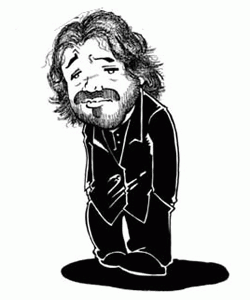
In this inaugural installment of our new column, The Contester, devoted to the news and trends of literary contests, we look at Neil Azevedo's Zoo Press, a press that despite being well known for its poetry books and prizes (the Kenyon Review Prize and the Paris Review Prize), hasn't had much luck in the fiction arena.
Thirty-five years after the author's death, the original manuscript of Jack Kerouac's most popular novel and other Kerouac memorabilia are back on the road. Two traveling exhibits—one of which is already under way, the other about to begin—aim to bring the Beat generation's most indelible icon to the masses.
Small Press Points highlights the happenings of the small press players. This issue features Contact Editions, Hours Press, Clear Cut Press, Gaspereau Press, and Luquer Street Press.
Page One features a sample of titles we think you'll want to explore. With this installment, we offer excerpts from Some Great Thing by Colin McAdam and You Remind Me of Me by Dan Chaon.
For some writers, community service comes naturally. But for those of us who are accustomed to guarding our precious writing time with our lives, the very thought of adding another activity—no matter how worthy—is daunting. We watch in awe as fellow writers teach, mentor, and travel to remote locations to give workshops to populations ranging from the incarcerated to the homeless to senior citizens. Why do they do it? How do they find the time and emotional energy? Is it possible to serve others without neglecting one's own work?
