




A Poet's Place: Ruminations at Fresno's P&W Roundtable
Poets & Writers Literary Roundtable meetings are great opportunities to connect with fellow presenters, presses, teachers, and writers. They bring together people from all aspects of the local literary community to share ideas, news, and resources, and possibly form partnerships. It's also a chance for members of the community to learn more about P&W and how its Readings & Workshops program might support their literary events. Brandi M. Spaethe, program assistant at P&W Readings & Workshops (West), blogs about a meeting in Fresno, California.
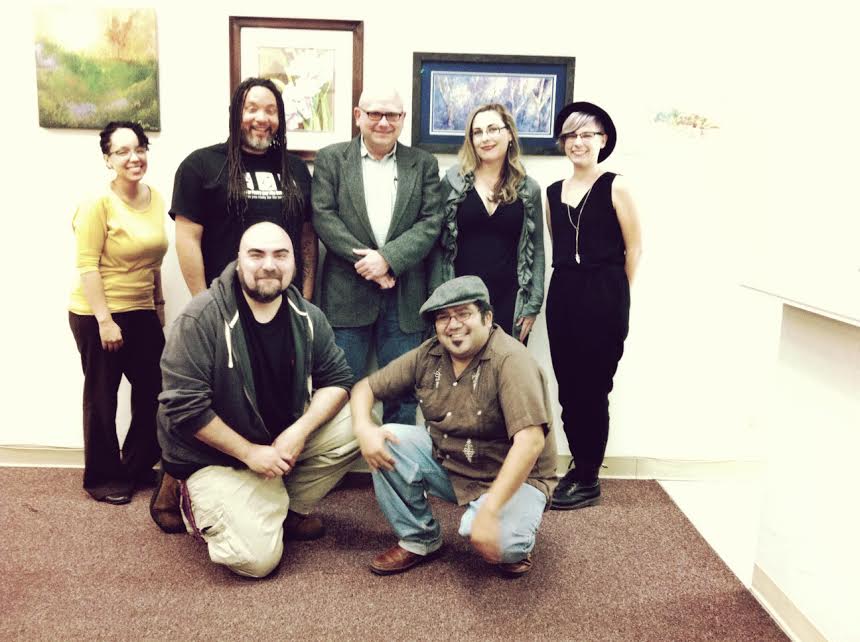
When I went to the Poets & Writers’ Fresno Roundtable meeting on March 27, I was excited to return to the place where I received my MFA in poetry last May. One thing I told Jamie Asaye FitzGerald, director of the Readings & Workshops Program (West), on the drive up was that not only does Fresno have a rich poetic history, but it also continues to be home to a strong and diverse literary community. It’s a place where inhabitants stick around because they are passionate about their projects and the city. Fresno is a place that wants to be loved.
In attendance was Fresno’s poet laureate, James Tyner, who runs a reading series at the Gillis Branch Public Library in Fresno. Tyner was elected Fresno’s first poet laureate in the fall of 2012. S. Bryan Medina came to discuss his new baby, the Inner Ear Poetry Jam, which features slam poets in the area. Medina told us that the slam community in Fresno has been alive for roughly twelve years, a fact not widely known. Michael Medrano, who was a P&W writer-in-residence for the Readings & Workshops blog in July 2013, has been an important member of the local literary scene with his Random Writers Workshop series that meets monthly in Fresno. Others in attendance included an agent, local literary enthusiasts, and a new member who had recently relocated.
One question we all wanted to explore: What drives Fresno's passion for the arts? What is it about Fresno that attracts writers? Well, it’s not a glamorous place. Fresno is very much a working-class city, they agreed, a place about work. Former United States Poet Laureate Philip Levine has spent a number of years teaching, writing, and living in Fresno and is well-known for writing about Detroit's working-class. This city is a realist city. Its faults are right on the surface and many of its citizens come from blue-collar backgrounds. A strong work ethic, a powerful drive, and sweat breaking over your back can remind you that you're human. That your body is capable of affecting and destroying and building again—if you spend enough time in Fresno you can see it. You can see it in the poetry.
The other thing that drives Fresnans is that they must fight for the arts. Cindy Wathen, treasurer at the Fresno Arts Council, shared with us that there’s just no budget for the arts, thus all efforts are grassroots. A few attendees spoke out about how fighting for your art creates a strong sense of identity, a sense of ownership and pride that comes with building your own establishment. As the largest Central Valley city, Fresno boasts a variety of agricultural communities, folks who have watched the land change and bear new fruit each year, some natives working directly to cultivate the crop. The arts, too, are nourished in this way.
One thing I noticed about my own time in Fresno is how separate the university and the locals were in their literary endeavors. Often the local writers would host events and some students would come, and vice versa with the MFA student events through Fresno State, but crossover was rare. There exists two camps: the nonacademic writer and the academic writer. "In what ways can the two come together?" we wondered. What are some events we'd like to see in Fresno that might bridge the gap? Some suggested a writers conference inclusive of non-academic writers, others mused that a retreat or publication would be a good addition to the scene. Annual show? Fringe festival? Excitement began to build in the room.
Fresno has been a poet’s place. It still is a poet’s place. Folks often forget about it, and the city itself has developed a reputation in the nation for being something that it’s not to the native. There’s a real sense of community there.
I am sitting at the dinner table, rolling a hot dog
into a corn tortilla, boiled beans and white rice,
the air growing smokey from the tri-tip barbequing
outside, my cousin bringing in a plate of pan fried
noodles from the place down the street.
I am home.
I am Fresno.
—James Tyner, "Fresno, California. 2013."
Photo: Fresno Roundtable Attendees Credit: Jamie Asaye FitzGerald
Major support for Readings & Workshops in California is provided by the James Irvine Foundation. Additional support comes from the Friends of Poets & Writers.
 What kind of impact has winning this prize had on your career?
  A $500 second-place prize and a $250 third-place prize will also be given; both awards include publication on the Writer website and tuition for a workshop. All three winners will also receive a subscription to the Writer.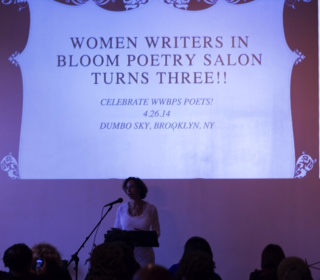
 Our monthly Salons have grown and can now accommodate between twenty-five to thirty participants. We have served over six hundred participants in the past three years and continue to expand opportunities for Salon members. This year I started a Spring Reading Series “Celebrating a Sacred Space for Women’s Voices: Women Writers in Bloom” at the Bowery Poetry Club, featuring dynamic and diverse Salon poets. This new Series, also funded by Poets & Writers, has its next installment on May 18, 2014, at 1 PM. We had our first out-of-state Seattle-based Salon during AWP at an off-site venue this year. I was recently awarded my very first Brooklyn Arts Council (BAC) Community Arts Fund Grant on behalf of the Salon. This grant allowed me to rent the gorgeous DUMBO Sky venue for our April celebration. Last month WWBPS was one of four literary organizations whose members were invited to participate in Poets & Writers' fifth annual Connecting Cultures Reading, which was a true honor for the Salon and our members.
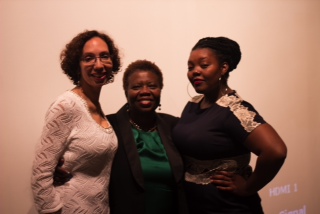
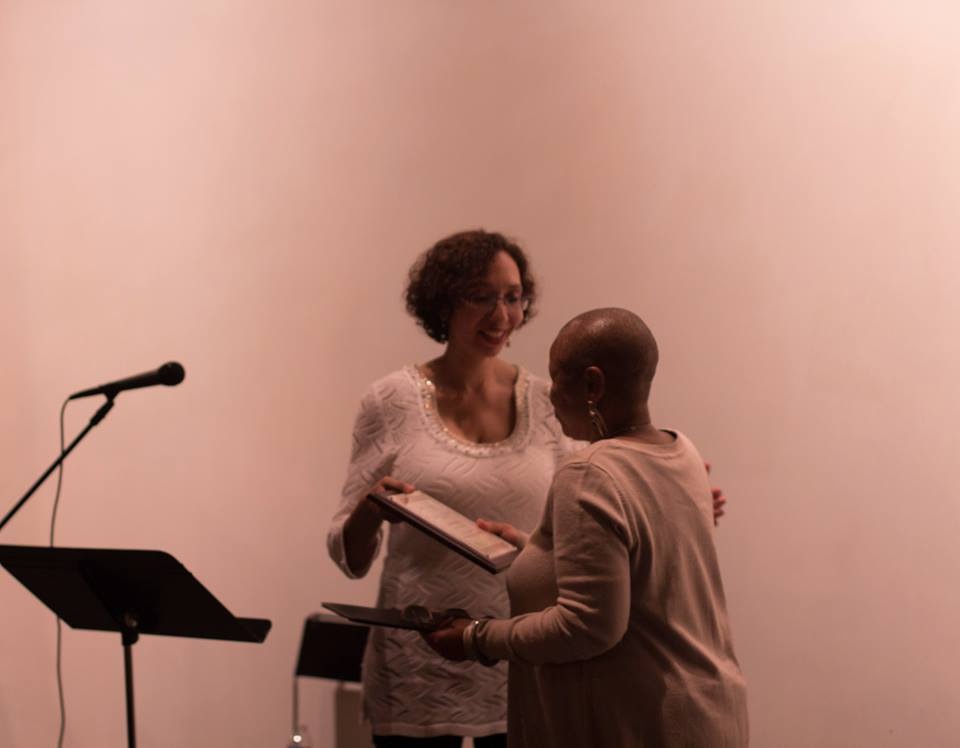 It has been an amazing feeling to watch the Salon blossom in both membership and outpouring of support. Our three-year anniversary celebration on Saturday, April 26, at DUMBO Sky was one of our largest, most successful events to date! We had nearly seventy guests in attendance. It was wonderful to have the support of Poets & Writers for this anniversary celebration. Our featured poet, phenomenal performer Mahogany L. Browne, performed an excerpt of her manuscript turned multi-media poetry production, #redbone, along with musical accompaniment by Mel Hsu. The performance was inspirational and mesmerizing. Since a large goal of the Salon is to support and nurture women writers, I also honored two long-time Salon members: dynamic poets Cheryl Boyce-Taylor, curator of the Calypso Muse Reading Series and the Glitter Pomegranate Performance Series, as well as Lorraine Currelley, founder and director of Poets Network and Exchange, were presented with certificates of appreciation in recognition of their outstanding dedication to our writing community. This event was spectacular! Salon members and volunteers donated tons of food, wine, beverages and gave freely and generously of their time. This was an event created for our community and was truly a success because of our community!
 What kind of impact has winning the Georgetown Review Poetry Prize had on your career?
 Poets may submit one to three poems totaling no more than three pages with a $15 entry fee. The deadline is May 15; poets may submit using the
  What kind of impact has winning the Cave Canem Poetry Prize had on your career?
 To apply, submit a description and sample of the work-in-progress totaling no more than 50 pages, a letter from the publisher confirming that the work is under contract, a brief letter of intent, and an optional sample of previous work totaling no more than 50 pages by May 1. All materials must be submitted electronically to
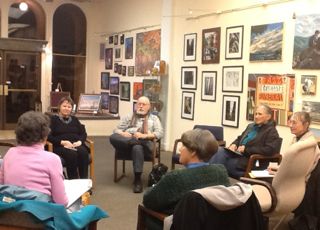
 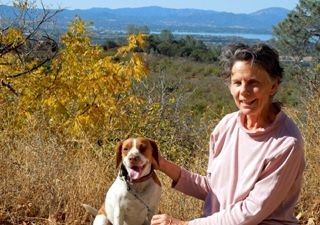 Since fall 2008, I have been funded by Poets & Writers to facilitate the Writers Circle, a free public writing workshop that meets once a month in the Lake County Arts Council gallery. Located in rural Northern California, in a valley isolated by mountain ranges, Lake County is both cursed with the problems that come with extreme poverty, and blessed by clean air and breathtaking scenery. Many artists, writers, and professionals retire in Lake County, where they can enjoy mountain trails and the largest natural freshwater lake in the state. Centuries ago, a now-dormant volcano created rich soil in the valleys—soil that now attracts small family farms growing organic produce, walnuts, pears, and wine grapes.
 In 2010, participant Lourdes Thuesen started writing a short story about a developmentally delayed girl whose mother was addicted to methamphetamine. As we continued asking her questions about this mother and her history, Lourdes ended up writing a compelling novel with the addicted mother at the center of a complex web of relationships. And, recently, a middle-aged man in a wheelchair has joined us, keeping us enthralled with excerpts from his memoir, So You Want to be a Quadriplegic.
 What makes your reading series and its events unique?
  For the first installment, we spoke to

 The 2014 judges, chosen by the Griffin Trust trustees, are Robert Bringhurst of Canada, Jo Shapcott of the United Kingdom, and C. D. Wright of the United States. They read 539 poetry collections, including 24 translations, from 40 countries.