Leaders Are Made

2.22.17

Social justice movements require strong leadership, organization, and resources, often starting with a demonstration leading to more action. Write a short story in which the protagonist wants to organize a demonstration for a cause. What events lead her to this point? Who does she turn to for help? Use the backdrop of this activity to reflect on the growth and development of your character as a leader.

Andrea Fingerson on Workshops With the Inlandia Institute

Andrea Fingerson is a writer and a teacher. She is currently in her tenth year of teaching for the Moreno Valley Unified School District. In 2014 she earned an MFA in Fiction from California State University, San Bernardino. She has written two novels, both of the Young Adult persuasion, and both inspired by her work as a teacher. Her current project is also inspired by her teaching career, but instead of focusing on the lives of students, is concerned with the challenges that teachers face. Fingerson can be found at her blog, in her classroom in Moreno Valley, and leading the Corona workshop for the Inlandia Institute.

What makes your workshops unique?
I’ve had the pleasure of working as a workshop leader for Inlandia over the past two and a half years. The mission of the Inlandia Institute is to recognize, support, and expand all forms of literary activity through community programs in Inland Southern California, and by the publication of books by writers who live or work in and/or write about Inland Southern California, thereby deepening people’s awareness, understanding, and appreciation for this unique, complex and creatively vibrant region.

One of my favorite parts about being a workshop leader is the opportunity to work with new writers, whether they are youth writers or adults, who have come to appreciate the joy that comes from the writing life. My latest workshop started fresh in January, and it was invigorating to see a new group of writers and to expand my community of colleagues. 

I strive to make my workshop a place where writers of all abilities, experience, and genres feel welcome. I love learning from them as I strive to share my knowledge and experience.

What’s the strangest question you’ve received from a student?
I am of the philosophy that there are no bad questions, but I have had some students show interest in publication earlier than I would recommend. Publication can be a long and arduous path, but it is worth it.

What has been your most rewarding experience as a teacher?
It’s always the small things that are the most rewarding. A quiet student who finally feels comfortable enough to share their work out loud with the group. A youth writer whose work continues to progress as they learn the standard formatting for fiction that will allow their wonderfully creative stories to come to life. A new writer whose work is accepted for publication. And, most importantly, someone who is able to complete a project they’ve struggled with for months or longer.
   
What effect has this work had on your life and/or your art?
For me, the greatest benefit of working with Inlandia, and leading these workshops, comes from being an active participant in the writing community. Writing can be an isolating process. I find such workshops and local readings to be invigorating both personally and professionally.

What is the craziest thing that’s happened in one of your workshops?
I always chuckle when I think of the poor mother who brought her middle-school-age daughter, and writer, to the meeting right around Banned Books Week. The conversation included a few references (references only) to some of the more explicit reasons people want to ban books. I never saw the poor woman again, or her daughter, which is unfortunate because such topics rarely come up. My workshops are usually child-friendly.

I also had one sweet writer who always brought her dog to workshops with her. He was a cute little thing, and I always had to spend a few minutes with him, and his owner, after the workshop was over for the night.

Major support for Readings & Workshops in California is provided by the James Irvine Foundation and the Hearst Foundations. Additional support comes from the Friends of Poets & Writers.

Photo: Andrea Fingerson (Credit: Jace Martin).

10 Things I Hate About You

2.21.17

Writing an unsentimental love poem can be one of the more difficult endeavors a poet can take on, whether the subject of that poem is a lover, a family member, or friend. Taking inspiration from the popular film 10 Things I Hate About You, a modern retelling of Shakespeare’s The Taming of the Shrew, write an ode to the aspects of a loved one that downright irk you. How might you use a form of repetition in your poem—like an anaphora or refrain—to build tension and showcase either the unlikable or admirable aspects of this person?

Upcoming Deadlines for Prose Contests

Calling all fiction and creative nonfiction writers! It’s time to polish those stories and essays; today we are rounding up prose contests with a February 28 deadline. From competitions for a short short story to a full-length nonfiction work, we have your end-of-the-month prose deadlines covered. Each of the following contests offers a prize of $1,000 to $10,000 and publication.

If you have a short short story ready to go, submit to Fish Publishing’s Flash Fiction Prize, which awards €1,000 (approximately $1,060) and publication in the Fish Publishing anthology. Chris Stewart will judge. Submit a story of up to 300 words with a €14 (approximately $15) entry fee.

Looking for a place to submit your prose chapbook? Apply to the Florida Review Jeanne Leiby Memorial Chapbook Award, given annually for a chapbook of short short fiction or nonfiction, short stories, essays, or graphic narrative. The winner receives  $1,000 and publication by Florida Review. Submit a manuscript of up to 45 pages with a $25 entry fee.

Emerging short fiction writers are eligible to submit to Glimmer Train Press’s Short Story Award for New Writers. A prize of $2,500, publication in Glimmer Train Stories, and 20 author copies is given three times a year for a short story by a writer whose fiction has not appeared in a print publication with a circulation over 5,000. Using the online submission system, submit a story of 1,000 to 12,000 words with an $18 entry fee.

For women with a full-length prose manuscript, Red Hen Press’s annual Women’s Prose Prize confers $1,000 and publication for a book of fiction or nonfiction. Aimee Bender will judge. Using the online submission system, submit a story or essay collection, a novel, or a memoir of 45,000 to 80,000 words with a $25 entry fee.

The Restless Books Prize for New Immigrant Writing offers a hefty annual prize of $10,000 and publication for a debut full-length prose work by a first-generation American writer. This year’s prize will be given in nonfiction. Memoirs, essay collections, and works of narrative nonfiction by writers who have not published a work of nonfiction with a U.S. publisher are eligible. Anjali Singh, Ilan Stavans, and Héctor Tobar will judge. Using the online submission system, submit a full-length nonfiction manuscript or excerpt of at least 25,000 words with a cover letter and a curriculum vitae. And here’s the clincher: There is no entry fee.

Don’t forget to visit the individual contest websites for complete guidelines, and check out our Grants & Awards Database and Submission Calendar for more poetry and prose contests with upcoming deadlines. Good luck, and happy writing!

Hidden Talent

2.16.17

Poet, jazz musician, woodcarver, multimedia artist, painter. A variety of hidden talents may in fact lie behind the familiar faces of an apartment building porter, doorman, handyman, or other neighborhood figure. Write an essay about a time when you learned about someone’s secret skill or hidden talent. What are the assumptions that accumulate when you only encounter someone in a professional or public capacity? What might be inspiring or exciting about the idea that anyone—perhaps even everyone—may have a hidden talent? 

Shed Your Skin

2.15.17

Researchers recently discovered a new addition to the genus of lizard species that can shed their skin and scales when grabbed by a predator, in order to slip away and escape. The Geckolepis megalepis has the largest known gecko scales, and is able to shed them with particular ease, looking like a “raw chicken tender” before its scales are regenerated over the course of a few weeks. Write a short story in which your main character is able to escape from danger by altering her physical appearance in a drastic way. Why is it imperative that she escape? How does her transformation both save her and make her vulnerable? What is her “regeneration” process?

Deadline Approaches for Emily Dickinson First Book Award

Submissions are currently open for the Poetry Foundation’s Emily Dickinson First Book Award. A prize of $10,000 and publication by Graywolf Press is given for a poetry collection by a U.S. writer of at least forty years of age who has not published a full-length book of poetry.

Using the online submission system, submit a manuscript of forty-eight to eighty pages with a biography that includes publication history by February 27. There is no entry fee. Visit the contest page for complete guidelines.

The Emily Dickinson First Book Award is an occasional contest that is not held annually. Previous winners include Hailey Leithauser, Brian Culhane, and Landis Everson. The winner of the 2017 award will be notified by April 30, and announced publicly at the Poetry Foundation’s Pegasus Awards ceremony in Chicago in June.

Love Through the Ages

2.14.17

“The Love Song for Shu-Sin”—written around 2000 BCE in ancient Mesopotamia—is considered the oldest love poem that exists in text form, but also functioned as a song performed during a sacred marriage ceremony for Shu-Sin, a ruler in the city of Ur. Read through Sumerologist Samuel Noah Kramer’s translation and think about the elements of the writing that tie it to its specific time and context. What feels ancient about the poem? Can you extrapolate or interpret its meanings in a way that reflect your own experiences of contemporary love? Write a love poem that meditates on love as it might have been expressed four thousand years ago versus how you see it today. 

WEX Award Sparks Community, Deepens Commitment

Alicia Upano was born and raised in Hawai'i. She received a BA in journalism from the University of Massachusetts in Amherst and an MFA from the graduate program in creative writing at San Diego State University. She worked for newspapers in Washington, D.C. and Silicon Valley, and for a nonprofit documentary film organization in Oakland, California. Her creative work has appeared in the Asian American Literary Review. She currently works for the University of Hawai'i Press and lives on O'ahu.
Six years ago, I sat on a flight back to California from Hawai‘i, flipping through the inflight magazine. A photo captured my attention: Musicians in the 1970s gathered with string instruments on the Windward side of O‘ahu, in a town south of my elementary school. I left Hawai‘i for college a dozen years before, and what was once a mainland adventure had long been replaced by homesickness.

I built a fictional universe around this image and plodded through drafts as the characters emerged: a slack-key guitarist, his estranged wife, and their two grown children that witnessed the fallout. Through the course of 1969, secrets are revealed as their father’s health fails, and one loss threatens to replace another.

Most pages ended up in the trash those first years. Meanwhile, friends sold short fiction to literary magazines and attracted agents with books. I felt too slow, but in truth, thinking about publishing overwhelmed me when learning to write a novel felt hard enough.

Then I wrote the scene where the mother character decides to return to Hawai‘i and I understood that it was time for me, too. People told me this was a risky move—pricey housing and fewer work opportunities—but family and friends managed on the island, and I figured I could, too.

At home, the book started to take shape. A friend sent me news of the Maureen Egen Writers Exchange Award (WEX) and encouraged me to apply. When I sent my application at a Honolulu post office, I hoped for some recognition that the story was, finally, moving. That there was a little spark.
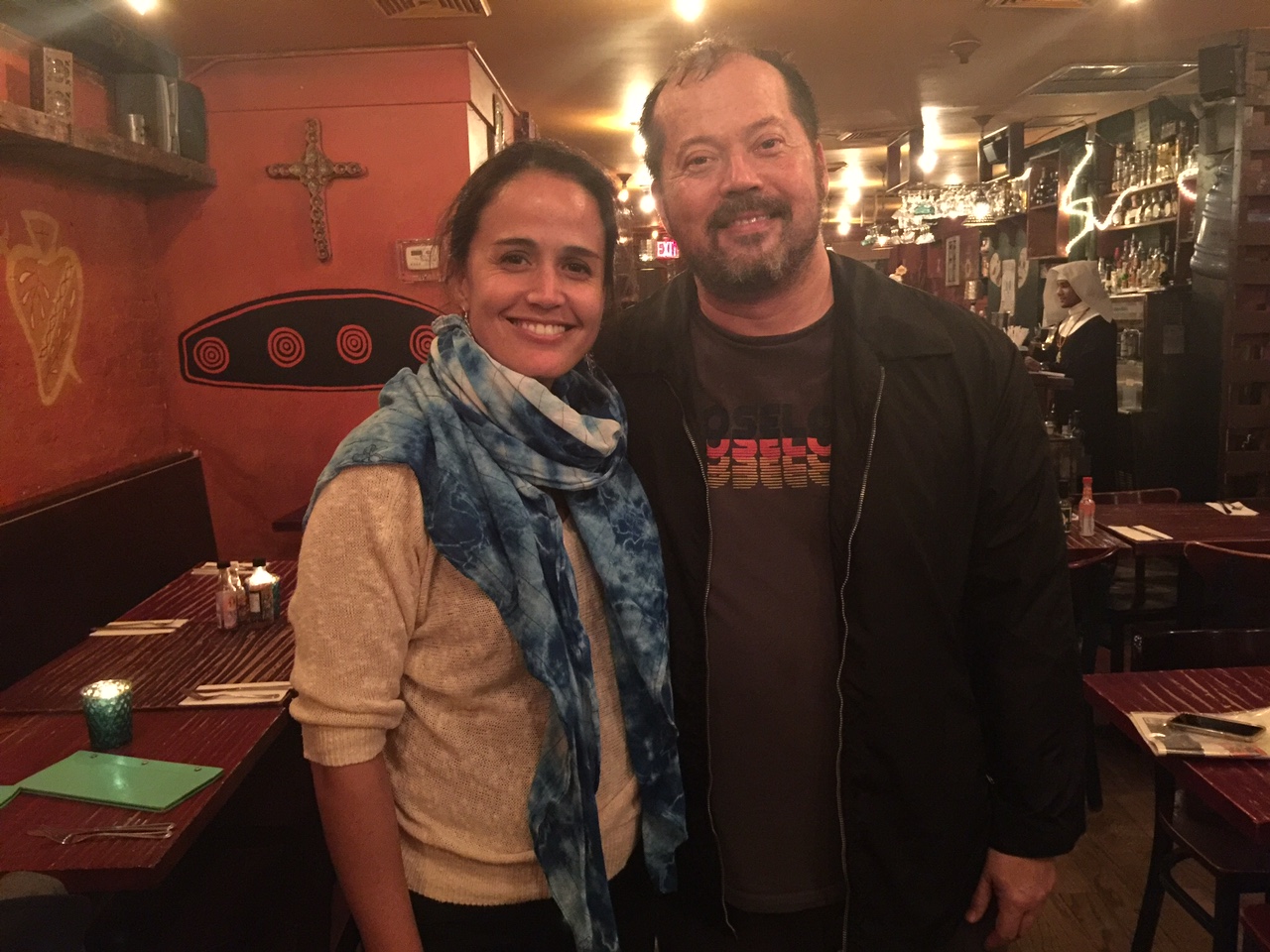
My writing is consumed with this fictional family and their complicated love for each other. It often felt like an insular universe, and I’m the only real one there, but winning the WEX Award changed that. I’m incredibly grateful to fiction judge Alexander Chee for finding promise in my work. In his comments, he wrote that my first chapter was “full of a love for the islands, the history, and the music and the people who make that place what it is,” and I got teary, because this is what I have been working to share.

This award also gave me a welcome crash course in publishing. When Poets & Writers asked who I wanted to meet, I poured through the acknowledgment pages of favorite books to learn about agents and editors. It was a particular treat to share with Maureen Egen, sponsor of the prize, how I’d fallen in love with the classic Gone with the Wind as a twelve-year-old in Kahalu‘u. It was my first adult book and I immediately picked up the sequel, Scarlett, edited by Egen.
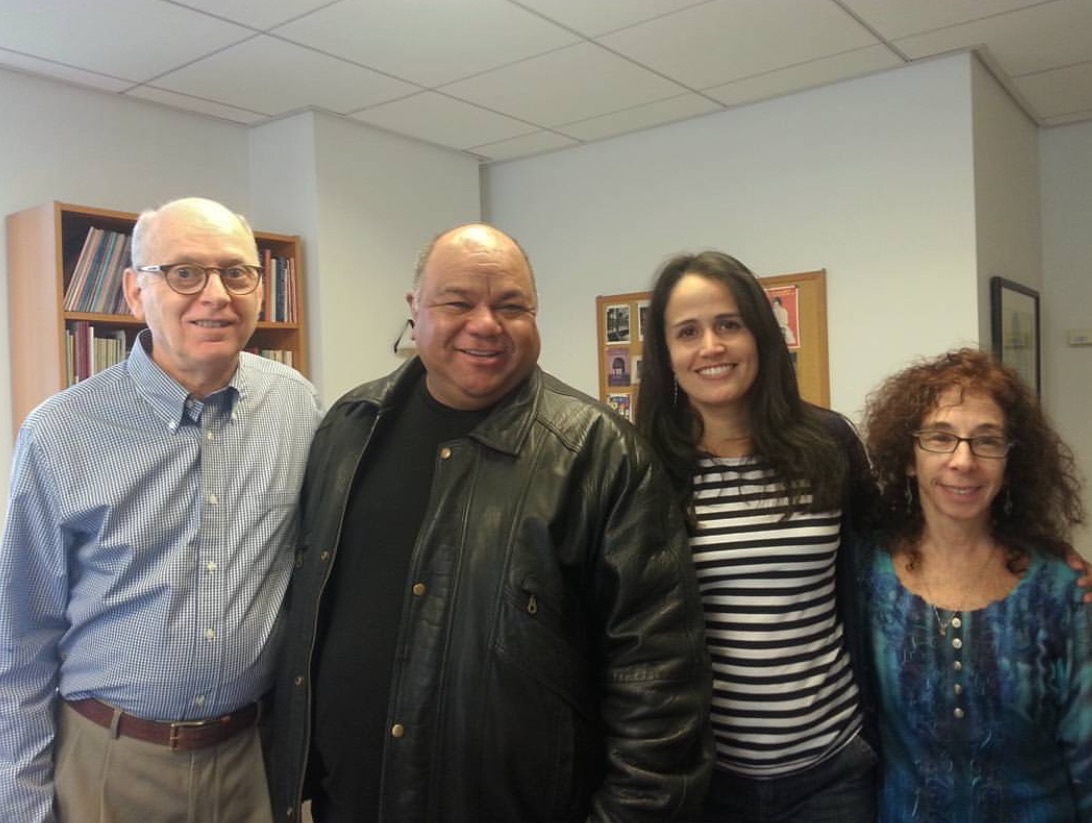
In New York, I felt surrounded by people who love books, as I do. I share this award with poetry winner Kimo Armitage, an accomplished local writer. His friendship and good humor made me feel like I had a bit of home with me, and his own publishing experiences offer me valuable lessons as an emerging writer.

Before this award, my writing was largely private.  After the announcement, several people told me, “I didn’t even know you wrote,” or new acquaintances said, “I was wondering who won that.” What I discovered in New York is that every book needs a community of champions and advisors, both professional and personal, to thrive. This award invites me into a larger writing community, both on the island and away. Thanks to Poets & Writers, Maureen Egen, and Alexander Chee for making this possible.

The Maureen Egen Writers Exchange Award is generously supported by Maureen Egen, a member of the Poets & Writers Board of Directors.

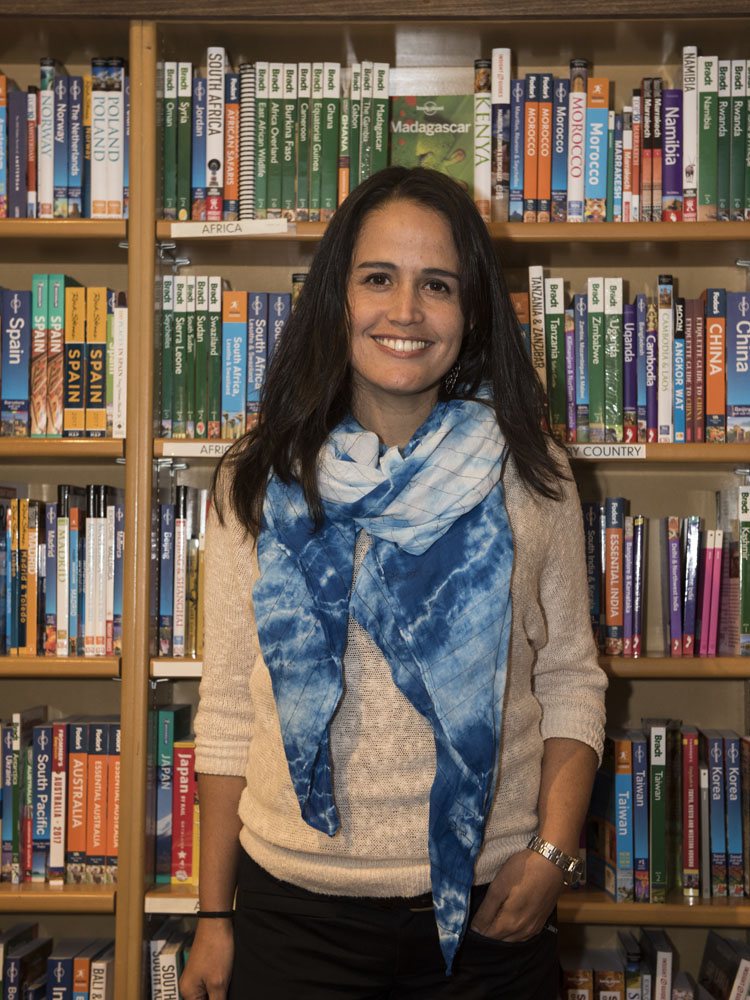
Photos: (top) Alicia Upano (Credit: Margarita Corporan). (middle) Alicia Upano and Alexander Chee (Credit: Kimo Armitage). (bottom) Elliot Figman, Kimo Armitage, Alicia Upano, and Bonnie Rose Marcus (Credit: Jessica Kashiwabara).

Sweethearts and Sweetie Pies

Cabbages, pumpkins, eggs, sugar, honey, fleas, gazelles, doves—all are terms of endearment lovingly used in different cultures and languages. Think of a pet name you have used for a loved one, or one that has been used for you, and write an essay exploring your memories of the word or phrase’s usage. Is the term connected to a specific story or event? Is it used during particular moods? Does it soothe or ruffle feathers? Consider how these terms reflect a certain aspect of your relationships.

Pages

Subscribe to RSS - blogs