Genre: Poetry

Those Five Words

3.17.26

“You were almost apologetic when you said it today. / We were having coffee, checking e-mail, & the grapefruit / Juice shone with pulp,” begins Rachel Eliza Griffiths’s poem “I Might Not Be Here,” published this month in the New Yorker. The five words in the poem’s title have presumably been spoken by the narrator’s spouse, the “you” addressed throughout the poem, and the tension of those words hover over the scene. Later, the narrator remarks, “Five words / Stalk my future with you.” The poem shifts between details of the room where the words were uttered to thoughts related to senescence and the trajectory of love, life, and art. Write a poem that expounds on a short sentence that carries a lot of weight between two people. Recount details of the place in which the words were said to sit in the moment.

Renditions

3.10.26

In Sanam Sheriff’s poem “The Emperor Pats His Lips with a Napkin,” published in the Academy of American Poets’ Poem-a-Day series, each line ends with renditions of the words, “object” and “subject,” a constraint the poet uses as a kind of outline. “Given that you are the object / of the emperor’s touch; given that you object // to his learnt repetition of love; given the abject / shame of a body entered by another body’s object // permanence,” begins Sherrif’s poem. Using a similar type of constraint, compose a poem that plays with different renditions of words that stem from the same or parallel roots. Play with the different verb tenses and homophonic meanings of your chosen words to paint your own portrait.

Build Coffee & Books

Caption: 

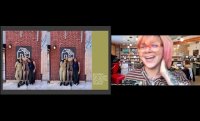
In this episode of the New Social Environment series hosted by the Brooklyn Rail, poets Eve L. Ewing and Andrea Faye Hart read a selection of their poems and join journalist trina reynolds-tyler to discuss how they became co-owners of Build Coffee & Books, a community-centered bookstore and coffee shop in Chicago.

Seeing This World

Alison McAlpine’s fifteen-minute-long documentary, perfectly a strangeness, follows a posse of three donkeys as they traverse the barren landscape of the Atacama Desert in Chile and happen upon an astronomical observatory on top of a mountain. While there is no dialogue, the movements of the donkeys, their expressive ears, and the mechanized motions of the observatory satellites, combined with the setting sun giving way to a night sky, offer an expansive range of interpretations and discovery. McAlpine, who was a poet before she was a filmmaker, says in an interview for Deadline, “Seeing these donkeys grazing besides these billion-dollar beasts, these metallic domes, I asked a question, how do they see this world?” Write a narrative poem without human presence that attempts to convey the perspective of an animal, or other living thing, discovering the universe for the first time. What diction seems most effective at producing the wonder you wish to evoke?


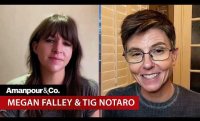
Megan Falley and Tig Notaro on Come See Me in the Good Light

Caption: 

In this Amanpour and Company segment, Hari Sreenivasan speaks with poet Megan Falley and comedian Tig Notaro about their Oscar-nominated documentary film Come See Me in the Good Light, which follows Colorado poet laureate Andrea Gibson’s journey with terminal cancer.

Pages

Subscribe to Poetry