Cynics

It's easy to slip into a bad attitude, and even easier once you're there to stew in all that negativity. For most it's a passing phase, but for some it can color their whole outlook on life. Would you describe yourself as a cynic? If not, do you know someone who fits the bill? Today, write down what happens to you using a cynical perspective. If you keep a journal, compare today's entry with those of previous—perhaps more positive—days and note the similarities and differences in style, tone, and word usage.

Winners on Winning: Chris Hosea

For the eighth installment of our Winners on Winning series, we spoke with Chris Hosea, the winner of the 2013 Walt Whitman Award from the Academy of American Poets for his debut collection, Put Your Hands In. The prize, given annually to a poet who has not yet published a book, includes $5,000, publication, and a residency at the Vermont Studio Center. Hosea's winning manuscript, selected by John Ashbery, was published by Louisiana State University Press in March. Hosea received his MFA in poetry from the University of Massachusetts in Amherst, and is a senior copywriter at H4B Chelsea. He lives in Brooklyn, New York.

What kind of impact has winning the Whitman Award had on your career?
I'm pretty sure the Whitman Award helped me recently to land a new job, with better pay and more impressive-sounding title, in advertising. Creative distinctions, and particularly established institutional honors, are valued in such industries. 

Has winning this award, or previous awards, changed the way you approach your work?
I'm certain that contest judge John Ashbery's comparison between my poems and Marcel Duchamp's Nude Descebding a Staircase, and even more Ashbery's remarks about derision and eroticism in Put Your Hands In, will affect my writing for the rest of my life.

Have you ever entered a contest that you didn't win?
I have entered hundreds of contests and spent thousands of dollars on fees. If you don't play, you can't win. 

What advice would you offer to writers thinking of submitting to writing contests?
Sequencing is important. Give yourself at least a month to order and reorder the poems in your book. Also, contest screeners are often (though by no means always) young students who haven't read a lot of poetry before: so include some lyrical candy up front. 

For more Winners on Winning, read the current issue of Poets & Writers Magazine, and check back next Wednesday for a new installment.

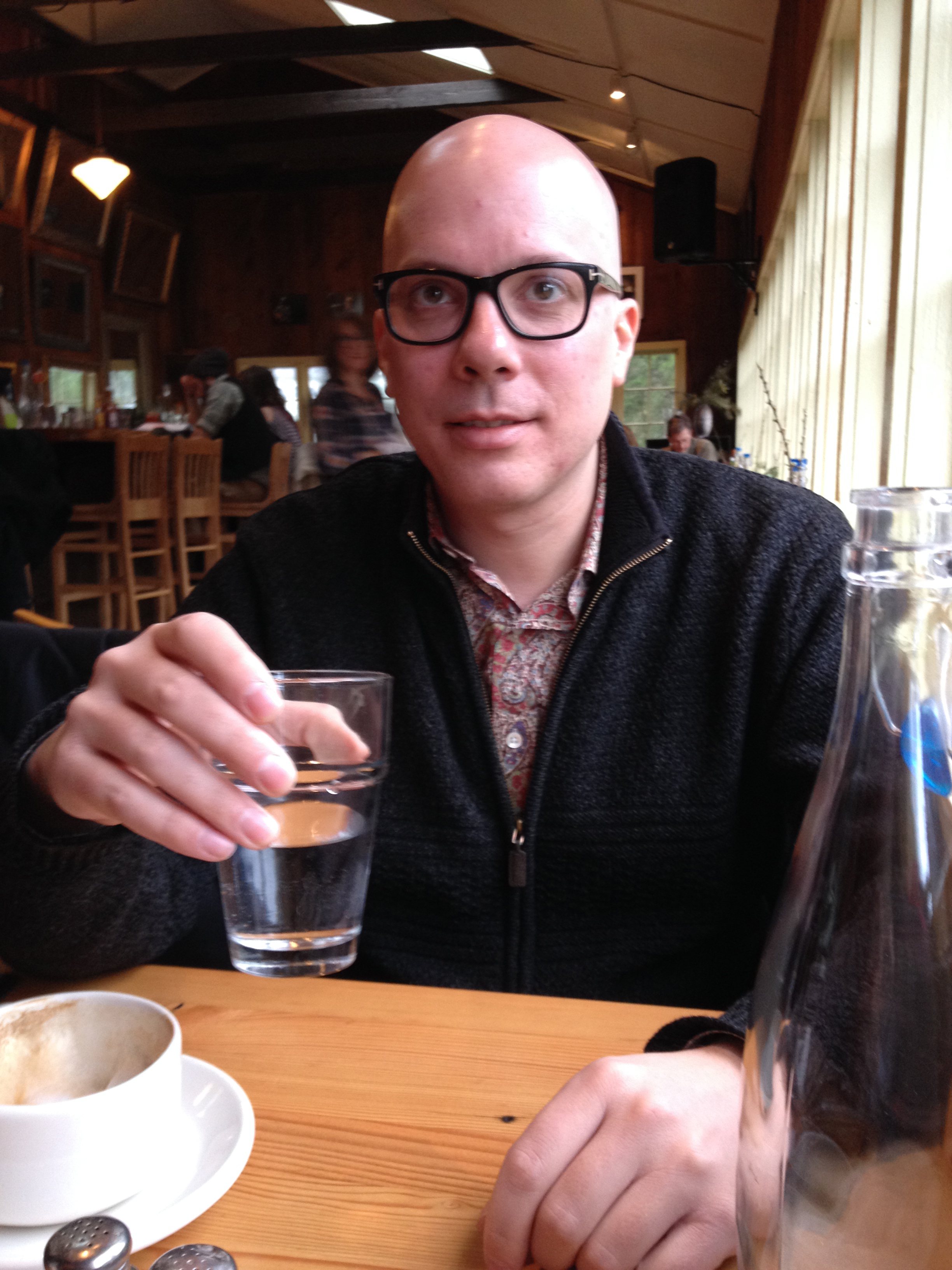
Hosea: Myles Paige

Wheel of Fortune

Most of us associate the phrase "Wheel of Fortune" with the popular television game show. There is, however, another wheel of fortune—the tenth card in the tarot deck. This wheel isn't as glamorous as its television counterpart, but it can be equally exciting; the card represents a pivotal point in your life when new options become possible and which signals that luck is on your side. This week write a short story about a character spinning the wheel of fortune. She could be on the game show, in a casino spinning a roulette wheel, or at a summer carnival. Include some element of dramatic change once the wheel is spun, whether it's winning the grand prize, or taking the first step on a new and unfamiliar path.

Phenomenal Women

Dr. Maya Angelou's joyous poem "Phenomenal Woman" trumpets: "I'm a woman / phenomenally. / Phenomenal woman, / that's me." After her passing last Wednesday, many who have been touched by her words and wisdom have been reflecting on Angelou's rich life. Today, take a moment to reflect on a phenomenal woman in your life and write a poem in her honor. Think about what makes her unique, and attempt to translate the essence of her spirit into the written word.

Deadline for Paz Poetry Prize Approaches

Submissions are open for the 2014 Paz Poetry Prize, sponsored by the Center for Literature and Theater at Miami Dade College and the National Poetry Series. An award of $2,000 and publication of a bilingual edition by Akashic Books will be given for a poetry collection written in Spanish by a U.S. resident. A translator will translate the winning entry from Spanish to English.

Submit a manuscript of at least 48 pages by June 15. There is no entry fee. Submissions can be sent by mail to the National Poetry Series, Paz Prize for Poetry, 57 Mountain Avenue, Princeton, NJ 08540. Richard Blanco will judge.
The biennial Paz prize was established in 2012 to celebrate the tenth anniversary of the Center for Literature and Theater at Miami Dade College. In response to why the prize was started, Lissette Mendez, the programs director at the center, says, “It’s hard for poets to publish, but poets who write in English have many contests they can enter in the U.S., as well as many independent presses and university presses to which they can submit manuscripts. It’s not quite that easy for poets who write in other languages—most publishers of foreign language books are in other countries. And then there is the issue of translation. The Paz Prize really works as a shortcut—publication in the U.S. by a wonderful, highly respected independent press in a bilingual edition. And our partner, National Poetry Series, is one of the most important poetry organizations in the country. It’s a wonderful thing to help a writer’s work get to the greater world, to help her or him find readers.”

Akashic Books, the Brooklyn-based press that will publish the winning collection, describes itself as committed to publishing work by authors who “are either ignored by the mainstream, or have no interest in working within the ever-consolidating ranks of the major corporate publishers.”

The 2012 winner of the Paz Prize, Dinapiera Di Donato, is a Venezuelan poet living in New York City. She won for her collection Colaterales/Collateral, which was chosen by Victor Hernandez Cruz, and translated by the poet Ricardo Alberto Maldonado.

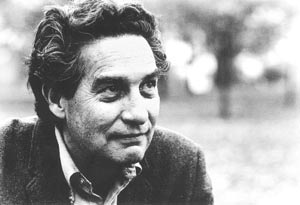
The prize is named after the Mexican poet, essayist, and diplomat Octavio Paz (1914-1998), who wrote numerous poetry collections in Spanish from 1933 to 1989. He won the Cervantes Award in 1981, the Neustadt Prize in 1982, and the Nobel Prize for Literature in 1990.

Paz: La Jornada

Deadline Approaches for the Moth International Short Story Prize

Submissions are currently open for the third annual International Short Story Prize, sponsored by the Cavan, Ireland–based literary magazine the Moth. The winner will receive €3,000 (approximately $4,082), and publication in the autumn 2014 issue of the Moth.

A second-place prize of €1,000 (approximately $1,361) and a third-place prize that includes a weeklong writing retreat at Circle of Misse in Missé, France, and €250 (approximately $340) for travel expenses, will also be given. Both winners will receive publication of their stories in the autumn 2014 issue of the Moth, and will be invited, along with the first-place winner, to read at the Winding Stair Bookshop in Dublin in September.

Submit a story of up to 6,000 words with a €9 (approximately $12) entry fee by June 30. Submissions can be sent through the online submission system, or by mail, with the required entry form, to the Moth Short Story Prize, the Moth, 81 Church Street, Cavan, Co. Cavan, Ireland. Irish fiction writer Mike McCormack will judge. McCormack is the author of two short story collections, most recently Forensic Songs (The Lilliput Press, 2012), and two novels. A recent interview with McCormack can be read on the Moth website.

The International Short Story Prize was established in 2012. The 2013 winner, Meadhbh Ní Eadhra of Galway, Ireland, won for her story “Ghosties,” which was chosen by Martina Evans. Visit the Moth website to read the winning entry.

 Photo: The Winding Stair bookstore in Dublin.

Pages

Subscribe to Poets & Writers RSS