Jennifer Patterson is a grief worker who uses words, threads, and plants to explore survivorhood, body(ies) and healing. She is the editor of Queering Sexual Violence: Radical Voices From Within the Anti-Violence Movement (Riverdale Avenue Books, 2016), facilitates trauma-focused writing and embroidery workshops, and has had writing published in places like OCHO: A Journal of Queer Arts, the Establishment, HandJob, and the Feminist Wire. She is also the creative nonfiction editor of Hematopoiesis Press, which has their first issue out this month. A queer and trans affirming, trauma-informed herbalist, Patterson offers sliding scale care as a practitioner with the Breathe Network as well as through her own practice Corpus Ritual Apothecary. Recently, she finished a graduate program with a thesis focused on translating embodied traumatic experience through somatic practices and critical and creative nonfiction. You can find out more at ofthebody.net.
What makes your workshops unique?
The workshops I offer are multi-dimensional. They’re grounded in writing through, with and about trauma (however people define that for themselves), and in reading other people’s writing about trauma and violence. There’s a somatic approach so we attend to the wisdom in our bodies that we sometimes forget, which might look like lying on the ground and breathing deeply. We hold space for each other in a way that feels really loving, expansive, and honestly, these days, it feels necessary and transformative. I’ve offered them in LGBTQ centers, at harm reduction clinics, in veterans hospitals, and universities. We’re living in a burning world and a lot of us have always felt that singe so it helps to unpack it on the page and turn it into something. I mean, trauma is always on the page but centering it in this way, I think, gives people permission to do the work they have been wanting and needing to do.
What techniques do you employ to help shy writers open up?
First, I thank people for showing up. Showing up is the hardest part especially when you’re inviting people to show up and write about their hardest experiences. I try to let go of demands and expectations and I let people know that they never have to share out loud if they don’t want to. (And actually, more times than not, most, if not all people share out loud.) We build a shared altar. I bring a freshly brewed herbal tea to calm nervousness and support the heart. I remind everyone that wherever they are and whatever comes out of the pen, for that moment, is just right. There’s plenty of time for editing—these workshops are for digging inside and generating.
What has been your most rewarding experience as a teacher?
Mostly just hearing from people that they felt more connected to their writing practice and, in turn, to themselves. That they feel heard and understood. That they felt something in their body soften or move around just a little.
What affect has this work had on your life and/or your art?
I recently finished a thesis (and soon to be manuscript) on trauma, somatic writing and embroidery—using stitch as a metaphor for making and remaking the wound—and it was incredibly difficult work so I’ve been taking a little breather. Some weeks the only time I write is in the workshop, which feels a bit funny to admit. But I also get to remember how writing supports me feeling more in my own life, more alive.
As someone who has been digging into my own history of trauma as well as collective trauma for years, it feels nice to be connected to other people doing similar work. As a younger writer, I felt so ashamed about the directions my writing took, particularly in wanting to write about violence I had experienced, so I feel really alive when I get to shape these spaces and invite other writers into them. I’m also just incredibly inspired by the quality of writing that I get to experience in these workshops literally every week. I get to remember how many incredible writers there are out there just looking for a room to write in.
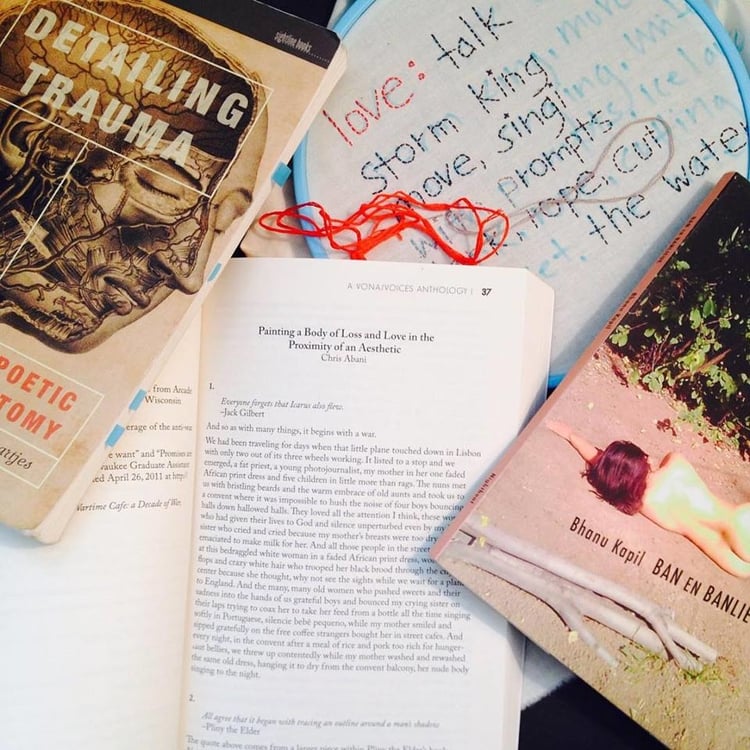
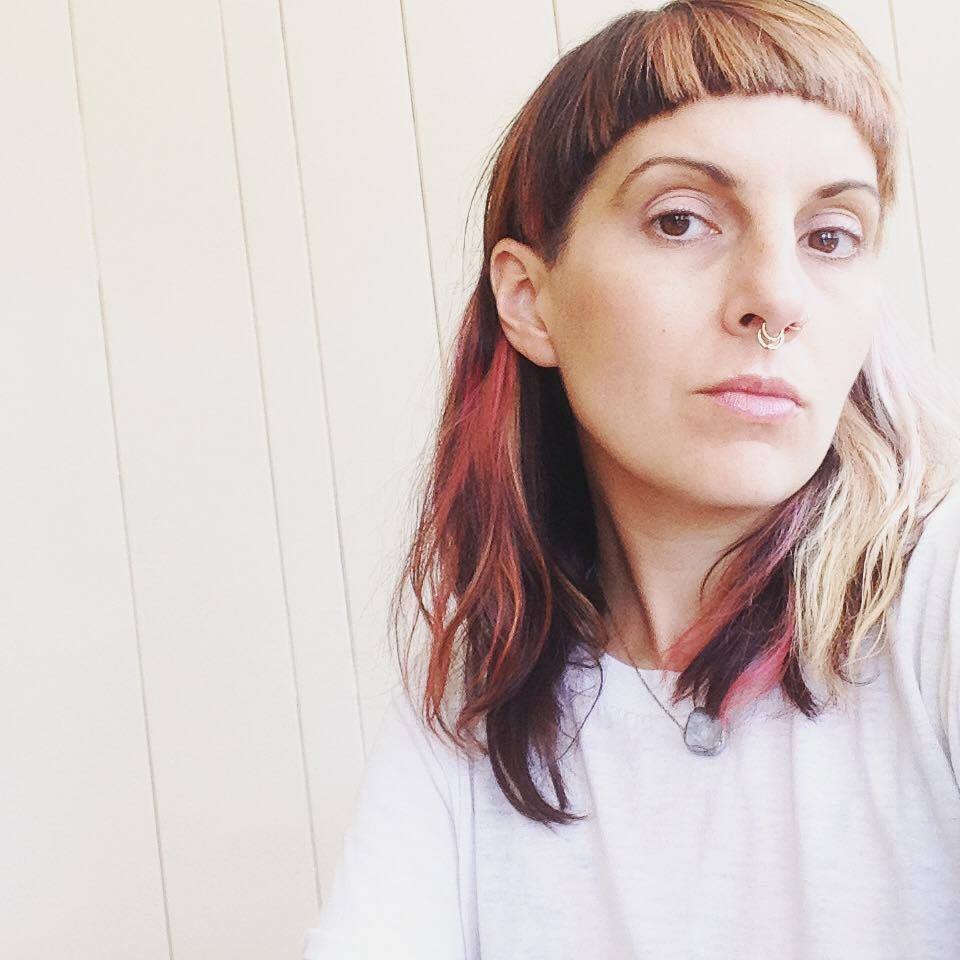
Photo: Jennifer Patterson (top). Class materials (bottom). Photo credit: Jennifer Patterson.
Support for the Readings & Workshops Program in New York City is provided, in part, by public funds from the New York State Council on the Arts, and the New York City Department of Cultural Affairs, with additional support from the Louis and Anne Abrons Foundation, the Axe-Houghton Foundation, the A.K. Starr Charitable Trust, and Friends of Poets & Writers.