Melissa Scholes Young
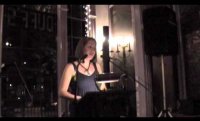
Caption:
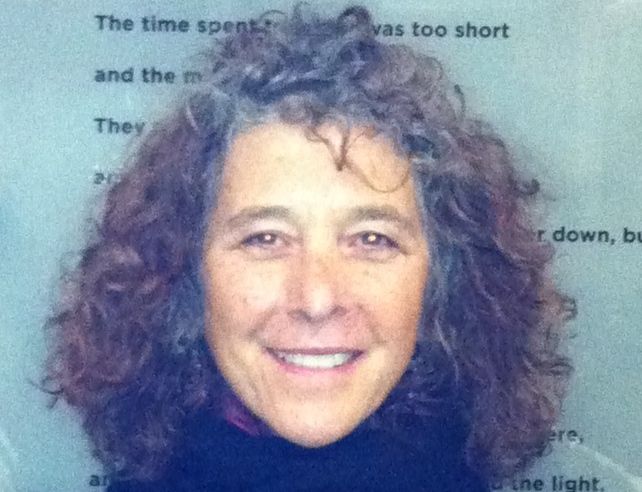
Melissa Scholes Young reads a selection of poems inspired by her time living in Brazil.
Genre:
Jump to navigation Skip to content
Melissa Scholes Young reads a selection of poems inspired by her time living in Brazil.
Brazilian publisher L&PM Editores has created a line of books called Ticket Books, which have refillable subway ticket balances embedded into the back covers, in order to encourage reading while commuting on the train. Titles include works by Arthur Conan Doyle, F. Scott Fitzgerald, Pablo Neruda, William Shakespeare, and Sun Tzu, as well as classic Garfield and Peanuts comics.
February 8 marks the new year on the lunar calendar this year. On the Chinese zodiac, this date marks the passage from the Year of the Sheep, a year of prosperity and promise, to the Year of the Monkey, a sign known for mischief and playfulness. Write a poem about this animal sign, looking beyond the typically cited characteristics of the monkey and exploring the lesser-known traits that might be associated with your own specific wishes or worries for 2016.
Claremont Graduate University announced last week the finalists for the $100,000 Kingsley Tufts Poetry Award. The annual award is given to honor a book by a midcareer poet. The finalists for the $10,000 Kate Tufts Discovery Award, given annually for a debut poetry collection, were also announced.
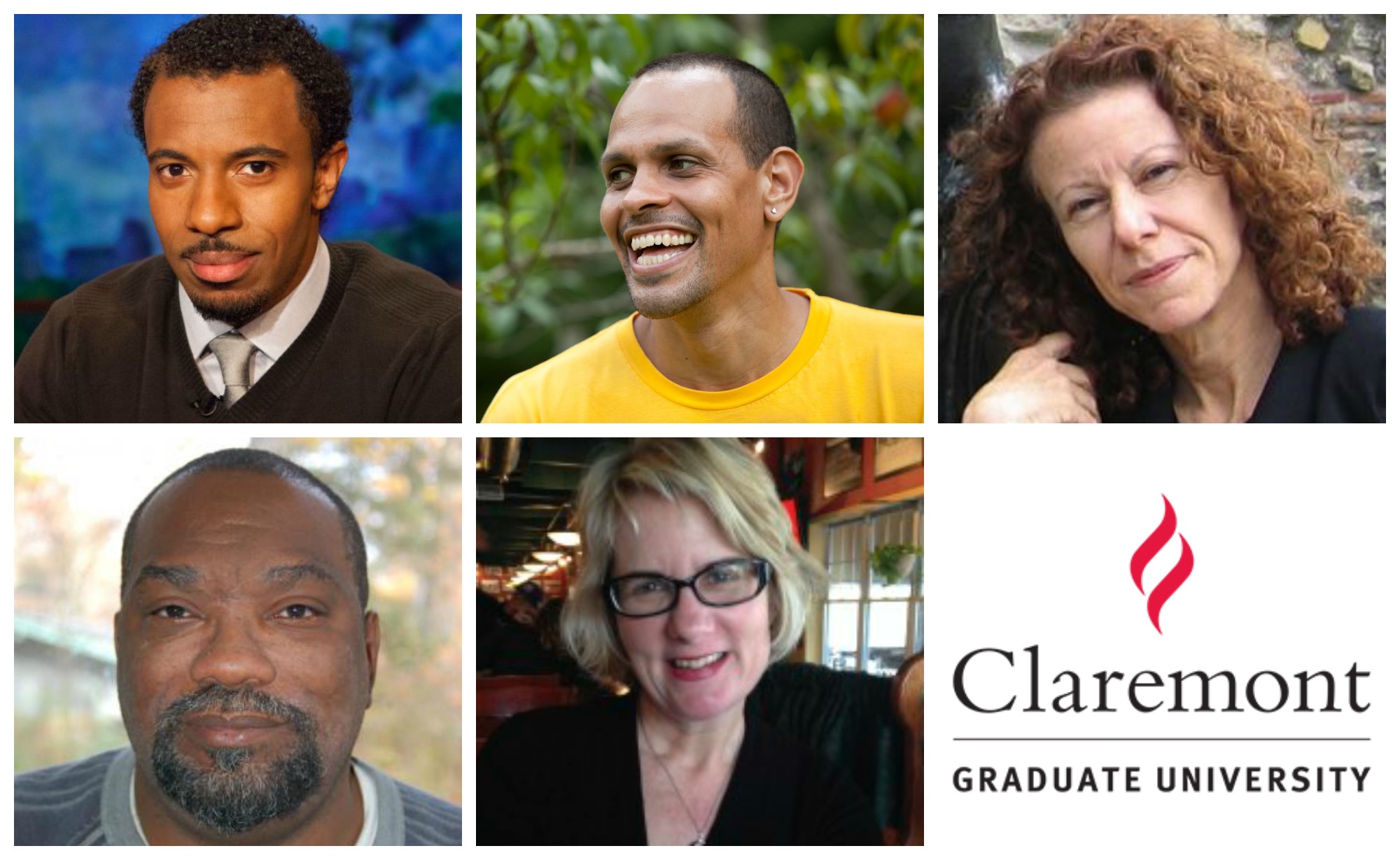
The finalists for the Kingsley Tufts Poetry Award are Kyle Dargan for Honest Engine (University of Georgia Press), Ross Gay for Catalog of Unabashed Gratitude (University of Pittsburgh Press), Amy Gerstler for Scattered at Sea (Penguin), Fred Moten for The Little Edges (Wesleyan), and Jennifer Moxley for The Open Secret (Flood Editions).
The finalists for the Kate Tufts Discovery Award are Meg Day for Last Psalm at Sea Level (Barrow Street), Bethany Schultz Hurst for Miss Lost Nation (Anhinga Press), Michael Morse for Void and Compensation (Canarium Books), Danez Smith for [insert] boy (YesYes Books), and Henry Walters for Field Guide a Tempo (Hobblebush Books).
The judges for both awards were Stephen Burt, Elena Karina Byrne, Brian Kim Stefans, Don Share, and judge chair Chase Twichell. The winners will be announced in March and honored at a ceremony in April at Pomona College in Claremont, California.
Previous winners of the Kingsley Tufts Poetry Award, now in its twenty-fourth year, include Angie Estes, Afaa Michael Weaver, Marianne Boruch, Timothy Donnelly, and Chase Twichell. Previous winners of the Kate Tufts Discovery Award, established in 1993, include Brandon Som, Yona Harvey, Heidy Steidlmayer, Katherine Larson, and Atsuro Riley.
Photos (clockwise from top left): Dargan (Dale Robbins), Gay (Zach Hetrick), Gerstler, Moxley, Moten
In this video from 2013, Pulitzer Prize–winning poet James Tate reads a selection of poems for the Mishi-Maya-Gat series at Manchester Community College.
In this short film, part of the Poetry Everywhere series produced in association with the Poetry Foundation, a poem by James Tate is animated by Steven Wells.
Artist Cheryl Pope speaks about working with youth in Chicago on an interactive poetry project "that responds to issues of segregation, gun violence, inequality, and systems that abuse power." The exhibit and performances were held at the Poetry Foundation.
The challenge is simple: Write a poem that is a single sentence long. But don’t write just any old sentence. Instead, challenge yourself to sustain the sentence for as long as possible. Use all the tools of syntax, grammar, and poetic form to help keep it going. While these tools are already at play when writing a poem, the single-sentence constraint will force you into exciting and unexpected rhetorical solutions. For inspiration, read this article on one-sentence poems by poet Camille Dungy.
Margo Perin is the author of the novel The Opposite of Hollywood (Whoa Nelly Press, 2015) and editor of Only the Dead Can Kill: Stories From Jail (Community Works/West, 2006) and How I Learned to Cook: And Other Writings on Complex Mother-Daughter Relationships (Tarcher/Penguin, 2004). She has taught writing to incarcerated populations, people challenged by life-threatening illnesses, migrants, refugees, elders, and at-risk youth and adults, and has been featured in the San Francisco Chronicle Magazine, O Magazine, and on NPR's "Talk of the Nation." She blogs about a recent P&W-supported writing workshop she conceived and facilitated for San Francisco youth under the auspices of California Poets in the Schools.
 In September and October 2015, I embarked on a series of workshops that linked formerly incarcerated and at-risk youth at the Success Center San Francisco with high school students across the street at the Ruth Asawa School of the Arts (SOTA). I called the project Building Bridges.
The intent of the series was to provide the opportunity for formerly incarcerated and at-risk youth to write about their often invisible life experiences as they develop their creative writing and critical thinking skills, to shed light on their perspectives, and to provide the rare opportunity to foster literary community between young writers of different socioeconomic and cultural backgrounds. The workshops would not only help build bridges between young writers, but also between Success Center and SOTA staff, and family and community members.
Success Center and SOTA youth each explored and wrote personal narratives through poetry, prose, and spoken word, and read and responded to each others’ personal narratives. In addition, both groups responded to the feedback, creating an ongoing dialogue of understanding.
The workshops culminated with a reading by Success Center youth that was attended by staff, who expressed a deep appreciation and greater understanding of the life stories and literary talents of their students. To further connect the Success Center and SOTA, I facilitated a visit to SOTA by the Success Center Client Service Specialist, who gave a presentation to students and staff on the demographics and struggles that Success Center youth commonly face. It is my hope that the relationship between these institutions will continue and help to reinforce the bridge of understanding and the literary community initiated by the generous funding of Poets & Writers.
This project was extremely enlightening in terms of highlighting the vast difference in economics, education, literacy, feelings of self-worth, social support and validation, and services for youth in the same city and, in this case, for youth attending schools directly across the street from each other. While many of the students at SOTA can expect to continue into higher education and compete for jobs in fields of their choice as they continue to develop as writers, students at the Success Center struggle every day just to attend class to get their GED and improve their literacy.
I am deeply grateful to the sponsoring organization California Poets in the Schools for their generous, honest, and steadfast dedication to their mission as they provide opportunities for youth to find and express their literary voices, and to Poets & Writers for providing the funding to work with the Success Center writers, which would not have been possible otherwise. I am hoping to share what I learned through this project with the reading public, and with other writers and educators to help further "building bridges" between diverse populations.
Photo: Margo Perin. Photo credit: Marci Klane.
Major support for Readings & Workshops in California is provided by the James Irvine Foundation and the Hearst Foundations. Additional support comes from the Friends of Poets & Writers.