Genre: Poetry

AAWW Announces 2016 Margins and Open City Fellows

The Asian American Writers Workshop (AAWW) has announced the ten recipients of its 2016 Margins and Open City Fellowships. The fellowships are given to emerging Asian and Asian American creative writers and journalists based in New York City. Fellows receive $2,500 to $5,000, publication in one of AAWW’s online publications, and career development.

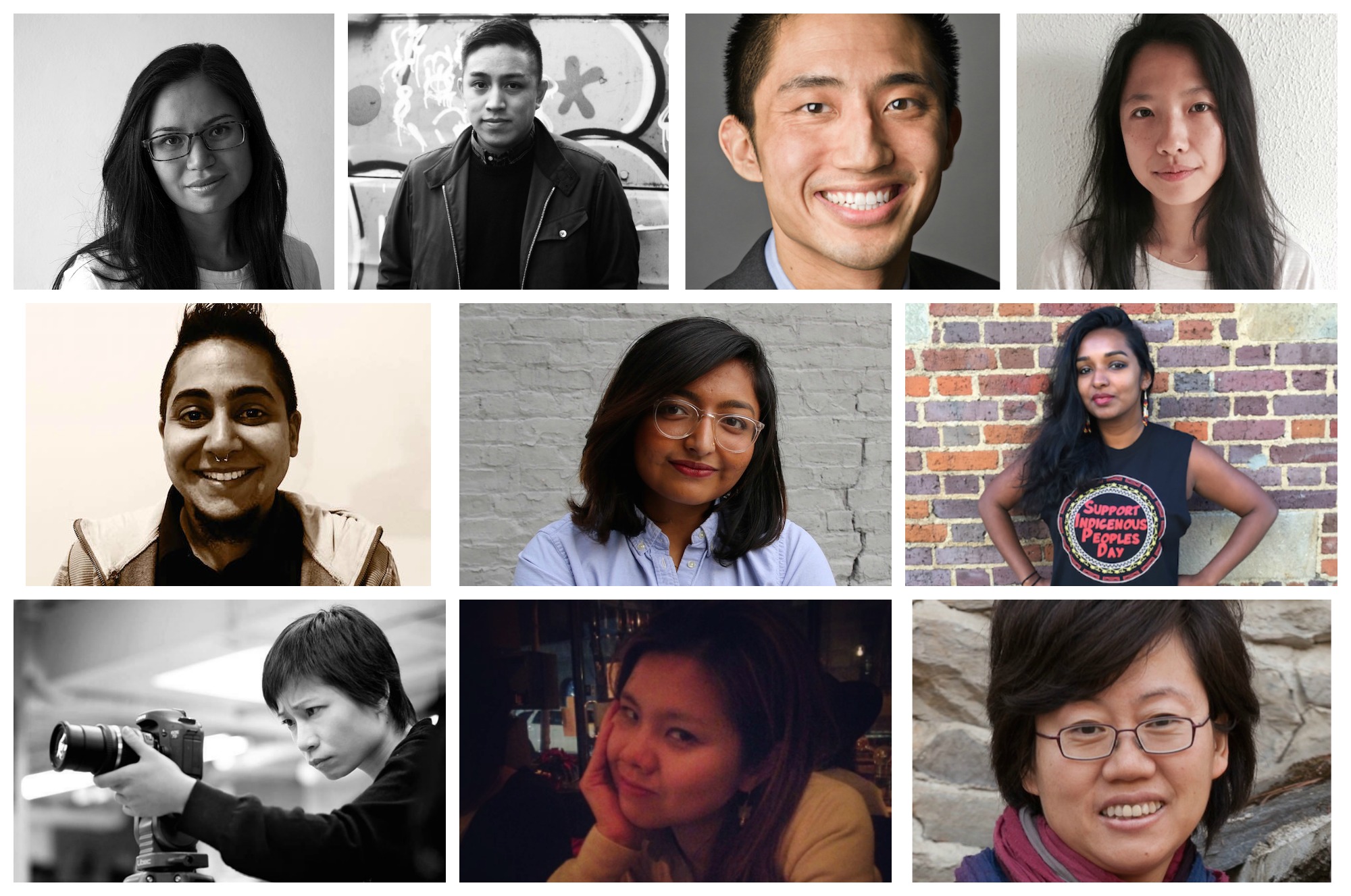
The 2016 Margins Fellows are poet Jen Hyde, fiction writer Vt Hung, fiction writer and filmmaker Steven Tagle, and nonfiction writer Wei Tchou. The fellowships each include $5,000, publication opportunities in the Margins, a residency at the Millay Colony for the Arts, writing space at AAWW’s offices in New York City, and guidance and mentorship from writers and editors in the AAWW community.

The Spring 2016 Open City Fellows are nonfiction writers Jai Dulani, Rahimon Nasa, and Thanu Yakupitiyage. Each fellow receives $2,500, publication in Open City, and career development opportunities to “craft narratively driven creative nonfiction and reportage about issues that matter to the 1.6 million Asian immigrants who call the five boroughs home.” This year, AAWW also awarded three Spring 2016 Open City Language Justice Fellows to Liz Chow, Yichen Tu, and Rong Xiaoqing. The fellowships, which offer the same benefits as the Open City Fellowships, are given to Asian-language immigrant journalists. The inaugural fellows will spend six months developing stories from New York City’s Chinatowns and beyond. All three fellows are journalists who have covered New York City immigrant communities for Asian-language media outlets.

The Margins and Open City fellows were selected from a group of more than a hundred applicants by a panel of writers, AAWW board members, and former fellows. The Language Justice fellows were nominated by members of the AAWW community. Applications for the Fall 2016 Open City Fellowships will open in April; applications for the 2017 Margins Fellowships will open in July.

Established in 1991, the AAWW is devoted to advancing the creation and publication of Asian American writing. Read more about the AAWW, which celebrates its twenty-fifth anniversary this year, in Arvin Temkar’s article “AAWW Continues the Conversation” in the Jan/Feb 2016 issue of Poets & Writers Magazine.

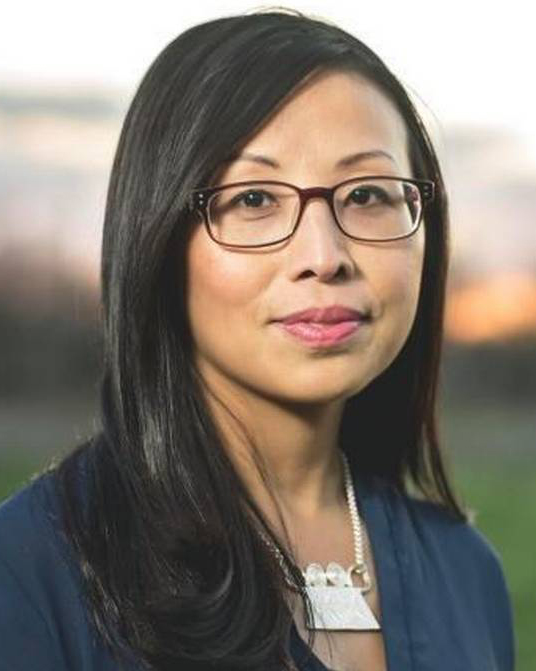
Photos, top row from left: Jen Hyde (Patrick Delorey), Vt Hung (Diana Mai), Steven Tagle (Christopher Smith Photography), Wei Tchou. Middle: Jai Dulani, Rahimon Nasa, Thanu Yakupitiyage. Bottom: Liz Chow, Yichen Tu, Rong Xiaoqing


Rocky Mountain Land Library

Caption: 

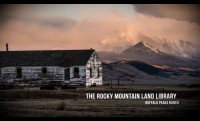
"The books themselves are very powerful—when you're around them, it's palpable." Cofounders Jeff Lee and Ann Martin, and architect Jeff Schultz, talk about the ongoing renovations and collaborations involved with Buffalo Peaks Ranch in Colorado, a part of their ongoing Rocky Mountain Land Library project. The project is featured in “A Book Sanctuary in the Rockies” by Andrew McFadyen-Ketchum in the March/April issue of Poets & Writers Magazine.

Do the Dew

3.29.16

A recent issue of the New Yorker includes poet Timothy Donnelly’s wild ode to one of his favorite guilty pleasures, “Diet Mountain Dew.” The poem barrels along, exploring all the qualities of the less-than-quality beverage, including its radiant green, prominent logo, and commercial history. Write an ode to one of your own culinary guilty pleasures that engages directly with its unsavory elements, such as its ingredients, appearance, and origin. Use your imagination to transform these details into avenues for lyrical observations. 

Mai Der Vang Wins Walt Whitman Award

The Academy of American Poets has named Mai Der Vang the recipient of the 2016 Walt Whitman Award, the largest prize in the country for a debut poetry collection. Vang’s winning manuscript, Afterland, will be published in 2017 by Graywolf Press.

Mai Der VangAs part of the prize, Vang will also receive $5,000 and a six-week paid residency at the Civitella Ranieri Center in Umbria, Italy, and her work will be featured on Poets.org as well as in American Poets, the Academy’s print periodical.

Award-winning poet Carolyn Forché selected Vang as this year’s winner. Of Vang’s manuscript Forché writes, “Afterland has haunted me. I keep returning to read these poems aloud, hearing in them a language at once atavistic, contemporary, and profoundly spiritual. Mai Der Vang confronts the Secret War in Laos, the flight of the Hmong people, and their survival as refugees. That a poet could absorb and transform these experiences in a single generation—incising the page with the personal and collective utterances of both the living and the dead, in luminous imagery and a surprising diction that turns both cathedral and widow into verbs, offering both land and body as swidden (slashed and burned)—is nothing short of astonishing. Here is deep attention, prismatic intelligence, and fearless truth.”

Vang, thirty-four, holds an MFA in poetry from Columbia University. Her poetry and essays have appeared in the Cincinnati Review, the New York Times, the Washington Post, and elsewhere, and she coedited How Do I Begin: A Hmong American Literary Anthology (Heydey, 2011). A Kundiman fellow, Vang has also been awarded residencies from Hedgebrook, and is an editorial member of the Hmong American Writers’ Circle. Vang resides in Fresno, California, where she teaches and works as a writing and creative consultant.

The annual Walt Whitman Award was established in 1975 to encourage the work of emerging poets. Previous winners include Suji Knock Kim, Eric Pankey, J. Michael Martinez, and Sjohnna McCray, whose 2015 winning manuscript, Rapture, will be published next month by Graywolf. 

Jim Harrison

Caption: 

"The dangerous undertow will return you home. One bite of anything can kill." Jim Harrison, author of more than three dozen books, including the novella Legends of the Fall (Delta, 1979), reads a selection of poems and speaks with Peter Lewis for the Lannan Foundation in 2002. Harrison passed away on March 26 at the age of seventy-eight.

In Their Own Time: Teaching Artist Caroline Brown on Trust and Boundaries

Caroline Brown is a teaching artist and educator who develops and implements community-based arts programming. Highlights of her work include collaborations with AIDS widows in rural Kenya, incarcerated individuals and those in reentry, military veterans and their family members, and women living with HIV. Most recently Brown has worked with Recovery Cafe, Path With Art, Senior Housing Assistance Group, and the Freehold Engaged Theater Program at the Washington Corrections Center for Women. She is also a faculty member at Cornish College of the Arts and the Art Institute of Seattle. She blogs here about her experiences teaching a P&W–supported workshop series for the Organization for Prostitution Survivors in Seattle, Washington.
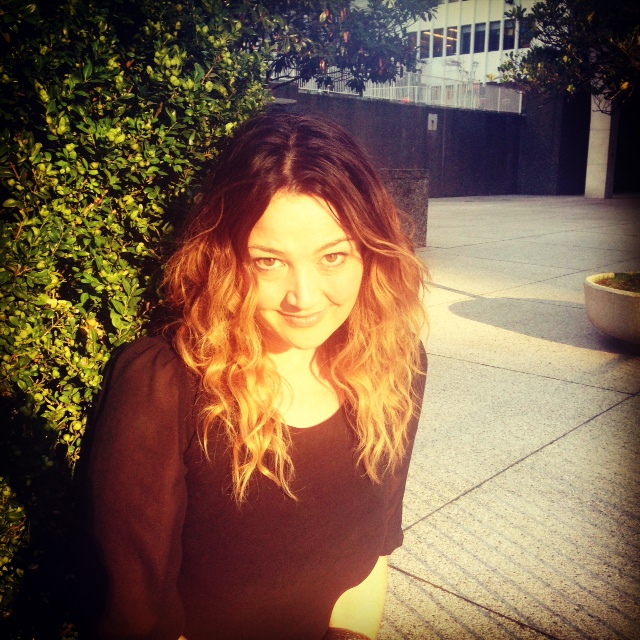
Caroline Brown

As an instructor of Community Based Arts at Cornish College of the Arts in Seattle, Washington, I teach students to use their artistic skill set to make a positive impact on marginalized communities. I tell them there’s no formula for our work; however, there are essential principles for building a successful project, two of which are trust and boundaries. We must trust ourselves, trust the community’s level of participation, and trust the ambiguity of the creative process. We must also keep our expectations realistic.

During my recent work with the Organization for Prostitution Survivors (OPS), I discovered I needed to relearn these principles. OPS was founded to address the damaging effects of prostitution and create opportunities for adult women to seek supportive services and heal from gender-based violence. My colleague and I were invited by the OPS staff to conduct an extended workshop using writing, storytelling, movement, and visual art as a form of personal expression and advocacy. For the sake of anonymity, we agreed to create a video with recorded narratives and abstract images chosen by participants.

From the start, I experienced a strong reticence from our workshop attendees. They repeatedly asked: What is the purpose of this video? How is it going to be shared? With whom and for what purpose? I reassured them that this project was theirs and they had complete ownership of the final product. As a population that has been consistently exploited, their reservations weren’t surprising. What was surprising was what it triggered in me.

I liked these women and wanted to help them engage in powerful and meaningful expression. I wanted them to be excited rather than reserved, to see this process as beneficial as opposed to threatening. If they didn’t welcome the work, my colleague and I had no right to be there. It was devastating to imagine that I might be harming people who’ve already been through enough.

Three weeks into the endeavor, my colleague and I reluctantly handed over the reigns, letting our participants decide when they wanted to meet. With this came a sense of panic that the video might not come to fruition. Then it happened. One woman expressed interest in recording her writing. I went out of my way to explain our intent: “I know a lot of women are apprehensive." She interrupted, “I’m not. I’m ready to record.” And so we began. Another woman soon stepped forward. Then another. Eventually we had an eighteen-minute piece of six women sharing their poetry, reflections, narratives, and visual imagery as survivors of prostitution.

Several weeks and countless hours of editing later, we presented the video at an OPS open house event. "Reflections of a Survivor" is a culmination of risk, vulnerability, triumph, conviction, and truth. As I looked around at the women taking in the success of their work, their willingness to trust me with their stories honored and humbled me. In short, each participant trusted the process in her own time. In that moment, I was reminded that I needed to do the same.

Amber Pauline Walker's "Kodiak Whispers," from the video project "Reflections of a Survivor," can be seen on YouTube.

Photo: Caroline Brown. Photo credit: Emily Schoettle.

Support for Readings & Workshops events in Seattle, Washington is provided by an endowment established with generous contributions from the Poets & Writers Board of Directors and others. Additional support comes from the Friends of Poets & Writers.


Pages

Subscribe to Poetry