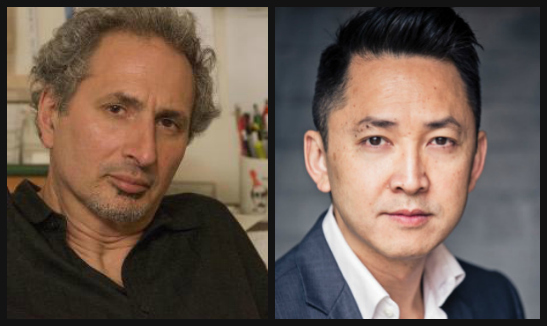
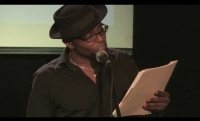
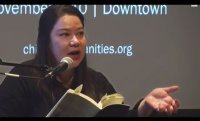
On March 31, 2016, during the AWP Annual Conference & Bookfair in Los Angeles, Poets & Writers brought together P&W–supported teaching artists Dorothy Randall Gray, Michael Kearns, Mike Sonksen, and Leilani Squire for the panel presentation “Creative Writing for the Underserved: Ideas, Inspiration, Revelation.” Panelists spoke about best practices, what motivates them to do what they do, and how teaching writing to underserved groups has enriched their writing lives. Below are some highlights from the conversation, as compiled by Readings & Workshops (West) director and panel moderator Jamie Asaye FitzGerald.
Classroom Approaches
"I look at longevity as a starting point, and have them write about all of the 'selves' that have gotten them to where they are today."
—Michael Kearns, who works with GLBT seniors
"We spend a lot of time just talking, working through issues, then do a timed writing. I listen and witness. That's a big part of it."
—Leilani Squire, who works with veterans and their family members
"I begin the class with three minutes of silence. I work with teenage identity and bring in poems about that. I've had them read [Paul Laurence] Dunbar's 'We Wear the Mask.' I've even had them make a mask, think about the layers of their identity and list them. I try to show them how poets are always talking to each other and that they are part of the conversation. I also use a little hip-hop, documentaries, current events."
—Mike Sonksen, who works with teens
"Sometimes these populations don't want to feel because it hurts too much. I try to get them to connect with their feelings. Music and visuals help. One reward for doing the writing is letting the kids be DJ and pick out the songs. To get them to open up, be silly, bring a visual, ask an easy question like 'What's your favorite food?' or 'What do you want to eat when you get out of here?'"
—Dorothy Randall Gray, who works with incarcerated youth, women, and the homeless
The Effect on Their Writing Lives
"If I tell them to write deeply, to go for the jugular, how can I not do that myself?"
—Squire
"My stakes are higher. I am deepened by them."
—Kearns
"Not only do I have to deal with the truth; I have to face my own truth. I believe in sticking a pen in my own vein. As they tell their stories, I tell my stories."
—Gray
On Self-Care
"Being in the trenches is taking care of myself. Dealing with horror, pain, and abuse—it's contradictory, but it is comforting that I can hear and be empathetic.... And I have my daughter when I feel overwhelmed."
—Kearns
"You get worn out. Performing poetry and doing freelance writing helps. I keep my writing career active. Then there are the two kids who really get it, there's the e-mail from a kid five years later, and the kid who stays after class to help clean up."
—Sonksen
"Meditation. Adjusting my own beliefs. Compassion is a big part of it, and being as gentle and loving as possible."
—Gray
"I have to walk in centered, whole, and confident or I'll get beat up. I'm a practicing Buddhist. I go to Native American lodges, which helps me gain answers to questions I ask. I cuddle with my dog."
—Squire
Hopes for Their Students
"I hope they find a home in their hearts, where they feel loved and safe."
—Gray
"I hope their voices get louder, not softer; more authentic, more hopeful; more of who they are and not less—because that can often happen as one ages."
—Kearns
"I hope they come to a place of acceptance, understanding; of being listened to, witnessed; to come to some sort of wholeness. My agenda is to promote peace."
—Squire
"I try to give them the tools they need to lift themselves up. Ultimately, I'd like to create lifelong readers and writers. But mainly I use writing as a bridge to help them build identity and future hope."
—Sonksen
We are pleased to be able to support writers who work with underserved groups. For more information about whether your event might qualify for Readings & Workshops support, please see our guidelines or contact us.
Major support for Readings & Workshops in California is provided by the James Irvine Foundation and Hearst Foundations. Additional support comes from the Friends of Poets & Writers.