




Print Makes a Comeback, Subconscious Influences, and More
New grant program funds public access to out-of-print books; German vending machine exchanges unwanted presents for books; a year of craft advice; and other news.
Jump to navigation Skip to content
New grant program funds public access to out-of-print books; German vending machine exchanges unwanted presents for books; a year of craft advice; and other news.
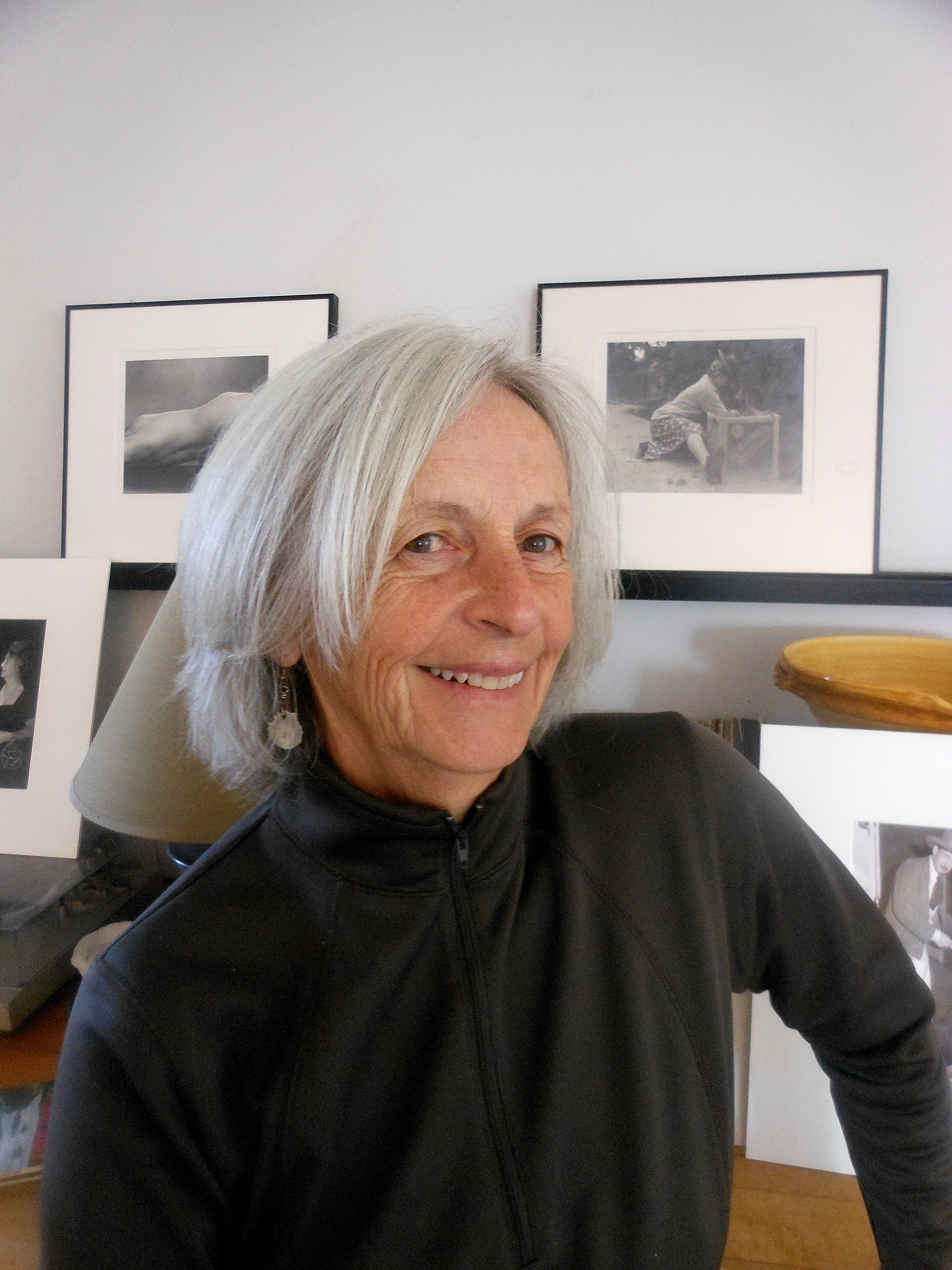
Poet Barbara March with her husband, Ray A. March, founded the Modoc Forum and Surprise Valley Writers’ Conference ten years ago. She holds a BA in English Literature. Her poetry has appeared or is forthcoming in Yemassee, Mudlark, Berkeley Poetry Review, Orion, Denver Quarterly, and other journals and publications. She is a member of the Northern California Book Reviewers and serves on the poetry judging committee for the Northern California Book Awards. March administers Poetry Out Loud in rural counties of northeastern California, publishes an annual student poetry publication, and is an advocate for student poetry in remote communities. She lives in Cedarville, California.
 What makes your programs unique?
Each September writers come to the Surprise Valley Writers’ Conference for the clean air and open vistas, for the gold spires of poplar trees, the natural hot springs, the scent of sage on the evening air. The total population of Cedarville, the valley’s largest village, is five hundred. This is not hyperbole. There is no shopping and little Wi-Fi in this corner of northeastern California where the nearest stoplight is hours away.
The Surprise Valley Writers’ Conference strives to create an event unique in its intimacy, camaraderie, and intense focus on craft. Workshop leaders and students share hikes, dinners, and seats around the campfire. William O’Daly, preeminent translator of Pablo Neruda and frequent workshop leader says, “Bar none, the Surprise Valley Writers’ Conference can’t be beat for intimacy.”
What recent project and/or program have you been especially proud of and why?
One of the missions of the Modoc Forum, the nonprofit sponsor of the Surprise Valley Writers’ Conference, is to share the culture and geography of our corner of the West through literature, the arts, and education. This year’s conference featured field trips conducted by internationally-known geologist Eldridge Moores, who was featured in John McPhee’s seminal book Assembling California (Farrar, Straus and Giroux, 1994). Moores and his wife, Judy, led writers on field trips to sites such as the natural sand stone formation “hoo-doos,” to volcanic “dikes,” to the site of a recent mud volcano. At each location Judy Moores shared her poetry with the group.
What’s the craziest (or funniest or most moving or most memorable) thing that’s happened at an event you’ve hosted?
One of our regular conference attendees is poet Sal Martinez, a member of the Pomo tribe. Sal comes from Manchester, California, where he is currently working to restore the native Pomo name to the Garcia River. At our final dinner this year, I asked Sal if he would lead the group in the native “Grass Game,” a traditional gambling game. He went outside the church hall, found sticks and carved them into game pieces, then told everyone to move their chairs into two lines facing each other. Sal demonstrated the game and writers, urban and rural, joined in.
How has literary presenting informed your own writing and/or life?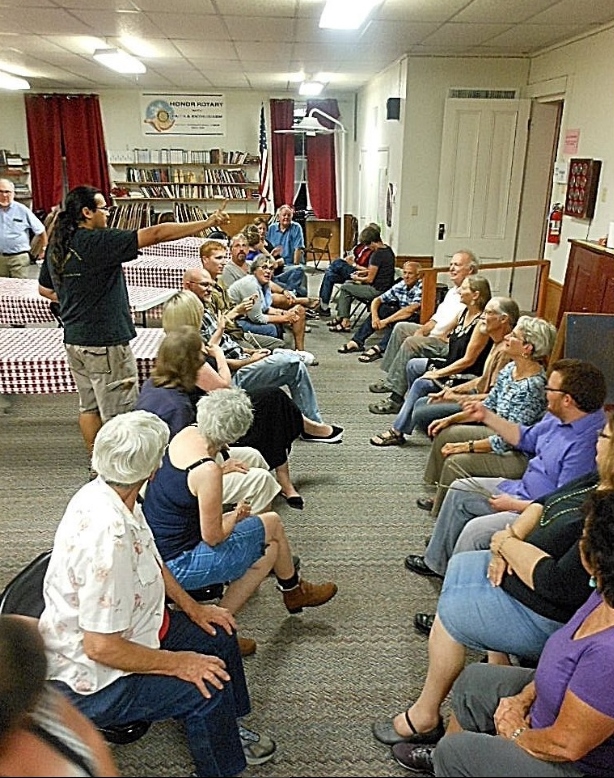
I owe the Surprise Valley Writers’ Conference a huge debt for introducing me to poets and writers who have encouraged me in poetry. Without their support I would not be publishing poems in national journals, including a series of poems about wild horses that were published last year in Mudlark, an electronic journal of poetry and poetics. My work in poetry continues on thanks to not only the workshop leaders who are now my friends and colleagues, but to the hundreds of poets and writers who’ve attended the Surprise Valley Writers’ Conference over the past ten years.
What do you consider to be the value of literary programs for your community?
Surprise Valley is isolated from the rest of the world, which we refer to as “down below.” The Surprise Valley Writers’ Conference and Modoc Forum have introduced our community to the greater world of literature and writers with activities, such as a photo exhibit inspired by John Steinbeck’s Grapes of Wrath, storytelling sessions, and by attending the conference at a “locals only” rate. In addition, the Surprise Valley Writers’ Conference, through the Modoc Forum, administers and sponsors Poetry Out Loud in Modoc County schools each year. A student poetry publication called Early Season comes out each April and there are student poetry slams. The value of literary programs in our community came home to me last spring when a sixth-grade boy, fresh from baseball practice, took the stage at the student poetry slam at the Niles Hotel, flipped open his phone and read William Blake’s “The Tyger.”
Photos: (top) Barbara March, (bottom) Playing the Grass Game at the 2015 Surprise Valley Writers' Conference. Photo credit: Ray A. March.
Major support for Readings & Workshops in California is provided by the James Irvine Foundation and Hearst Foundations. Additional support comes from the Friends of Poets & Writers.
Three Amazon series based on books; new Jonathan Safran Foer coming next fall; PANK editors bid farewell; and other news.
BuzzFeed has announced its four inaugural Emerging Writers Fellows: Chaya Babu, Tomi Obaro, Niela Orr, and Esther Wang. The fellows will each receive twelve thousand dollars, as well as mentorship from BuzzFeed editorial staff over the course of four months.
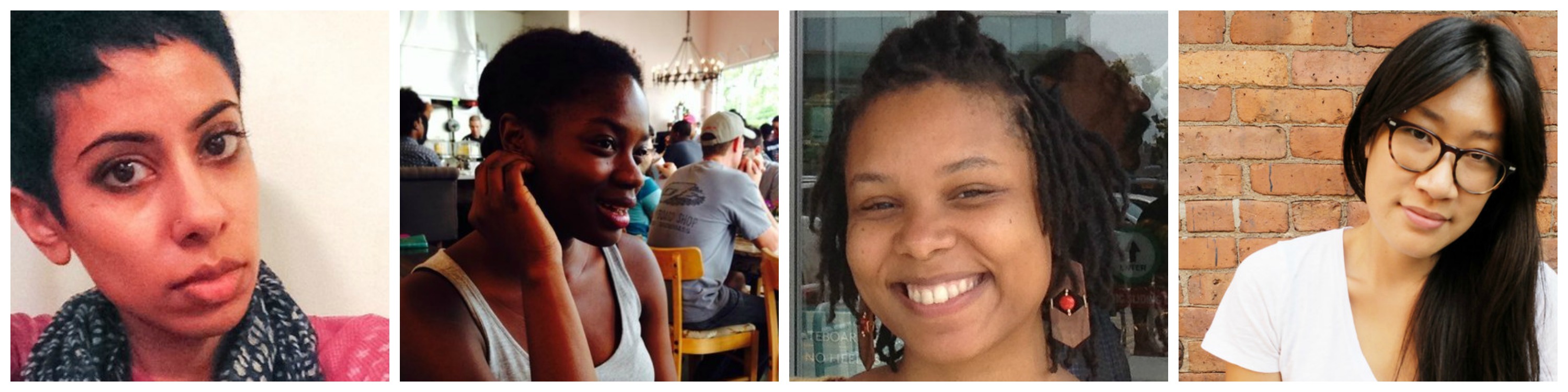
Chaya Babu is a New York City–based writer whose work focuses on race, migration, gender, and sexuality. She is working on a novel, and was the Asian American Writers’ Workshop 2015 Open City Fellow.
Tomi Obaro is a writer based in Chicago; she is an assistant editor at Chicago Magazine.
Neila Orr is a Philadelphia-based writer who is working on a book about the convergence of black pop culture and visual art.
Esther Wang is a writer based in New York City; she was the Asian American Writers’ Workshop Open City Creative Nonfiction Fellow in 2013.
The applicants were chosen from more than five hundred applications, said Saeed Jones, BuzzFeed’s executive editor of culture. “With each of these writers their work reintroduces you to what you thought you knew,” Jones told Paper. “When I go back to the work that all of these fellows are doing, that’s part of it—where a writer can point to an aspect of culture that you already recognize and then make a new constellation [out of all this information]. Like even if you’re aware of one of the stars that they’re mentioning, they talk about this, and this, and this, and all of a sudden you’re like “whoa” and your perspective is changed. That to me is the epitome of great culture writing.”
The fellows will begin at the BuzzFeed offices in New York City in January, and will focus on writing personal essays, profiles, and cultural criticism for the media company.
To learn more about the program, read Jones’s Q&A with Cat Richardson in the January/February issue of Poets & Writers Magazine
Photos (from left to right): Babu, Obaro, Orr, and Wang
Marginalia’s mournful moment; Oscar Wilde’s women; a book from every country; and other news.
The fight for Britain’s public libraries; great literary advocates; mansplaining Lolita; and other news.
Essay contest determines new owner of movie theater; next year’s Shakespeare extravaganza; the role of absurdity in literature; and other news.
Colm Tóibín on Clarice Lispector; Charles D’Ambrosio on the essay form; booksellers’ top picks of the year; and other news.

BuzzFeed’s newly minted executive editor of culture discusses his new position at the media company, and his goals for the recently launched BuzzFeed Emerging Writers Fellowship.
With submission managers like Submittable transforming the ways in which writers submit their work to publications, new online offerings like Literistic are streamlining the process even further. But could the shift to digital-only submissions have a negative impact on the culture of publishing?
