




University of Alaska, Fairbanks
MFA Program
Poetry, Fiction, Creative Nonfiction
Fairbanks, AK
Application Deadline:
Thu, 01/15/2026
Application Fee:
$75
Affiliated Publications/Publishers:
Permafrost, which administers an annual book prize.
Jump to navigation Skip to content
Permafrost, which administers an annual book prize.
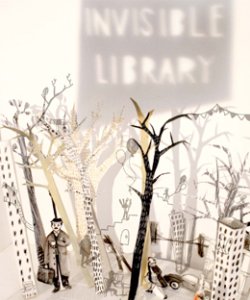
The Invisible Library, the blog that invites readers to submit the titles of unwritten books they’ve discovered in their own reading, served as the primary inspiration behind the Invisible Library exhibition, which ran from June 12 to July 12 at the Tenderpixel Gallery in London.
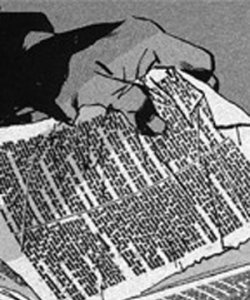
A look at Tim Hamilton's new graphic adaptation of Ray Bradbury's Fahrenheit 451, published by Hill and Wang, featuring an introduction written by Bradbury.
A new genre of fiction known as the Officialdom novel has become increasingly popular in China. Fans claim that the novels offer rich entertainment while providing valuable insights into the byzantine system of manners and etiquette that is the key to success at white-collar jobs in China, but the trend might signal a much more significant shift in the culture—one that goes beyond matters of literary taste.
The Astraea Lesbian Foundation for Justice has pushed its deadline for grants to emerging lesbian poets and fiction writers to July 15. U.S. writers who wish to apply for one of two ten-thousand-dollar grants from the Lesbian Writers Fund must have published literary work at least once in a newspaper, magazine, literary journal, or anthology, but must not have published more than one book.
A third grant will be given to a writer west of the Mississippi, sponsored by Skip's Sappho Fund (established by a bequest from Skip Neal, a lesbian artist and patron of the arts). Astraea will grant two finalists in each genre fifteen hundred dollars each, and honorable mention prizes of one hundred dollars will also be awarded.
"Too often, lesbian writing is marginalized by literary venues and funding sources, resulting in exceptionally talented artists unable to receive the nurturing and support so vital to their craft," the organization stated in a press release announcing the deadline extension. "The Lesbian Writers Fund is attempting to remedy this— and with good results. A former grantee used her award to purchase a computer, and no longer had to write by hand, and another attracted the attention of a prominent agent who facilitated the publication of her first novel."
By next Wednesday, interested writers need to submit a work sample and a one-paragraph anonymous biography focused on writing accomplishments and goals, along with an application, available on the Astraea Web site. Grantees will be announced by January 31, 2010.
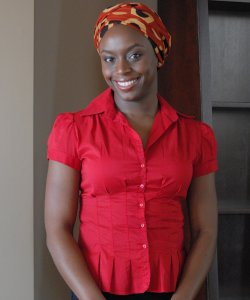
For Nigerian author Chimamanda Ngozi Adichie, literary stardom has yielded more than the confidence to keep writing. Much more.
National Poetry Month is almost over. We laughed; we cried; we read and, perhaps, wrote some good poems. But now that the month-long verse extravaganza is nearly at an end—although it never really ends for the poets out there, does it—attention turns to the other genres as well. So, perhaps it's time to point out that fiction writers have a number of opportunities during May to enter contests in which prizes are given for short stories.
For the procrastinators out there, tomorrow is the deadline for three contests, all of which offer a thousand dollars and publication. The Journal's Short Story Contest is given for a single short story, Lee K. Abbott will judge; Leapfrog Press's Fiction Award is given for an entire manuscript of stories (or a novel or novella) and will be judged by three Michaels (Michael Graziano, Michael Lee, and Michael Mirolla), and the Southwest Review's David Nathan Meyerson Prize for Fiction is given for a single story and is open only to writers who have yet to publish a book.
For those who want to plan a bit further ahead, the deadline for Hunger Mountain's Howard Frank Mosher Short Fiction Prize is May 10. The author of the winning story receives a thousand dollars and publication.
May 15 is the deadline for the Lorian Hemingway Short Story Competition, the well-defined prize given annually for a story writer whose fiction hasn't appeared in a nationally distributed publication with a circulation of five thousand or more.
And even though it falls on a Sunday, May 31 is the deadline for three short story-related contests: the University of Georgia Press's Flannery O'Connor Awards, Glimmer Train Press's Short Story Award for New Writers, and The Writer's Short Story Contest.
The finalists for the New York Public Library Young Lions Fiction Award, given to a writer thirty-five or younger, were announced this week, and—not to toot our own horn or anything, but—two of the five, Rivka Galchen and Salvatore Scibona, were included in our July/August 2008 feature on debut fiction writers.
Galchen was nominated for her novel Atmospheric Disturbances (HarperCollins, 2008), which was also mentioned in Sarah Weinman's article, "Book Trailers: The Key to Successful Marketing" (November/December, 2008), for its especially inventive trailer.
Salvatore Scibona was nominated for his novel,The End, published by Graywolf Press, the St. Paul-based indie, whose authors have been raking in the acclaim lately. Along with Scibona's, Graywolf publishes the work of inaugural poet Elizabeth Alexander and recently released a special chapbook of Alexander's poem "Praise Song for the Day." Matthea Harvey recently won the $100,000 Kingsley Tufts Poetry Award, given for a book by a midcareer poet, for her collection Modern Life, which Graywolf published in 2007. (Harvey, by the way, was featured in "Why We Write Now," our special feature on inspiration included in our January/February 2009 issue.)
The three other finalists are Jon Fasman for The Unpossessed City (Penguin, 2008), Sana Krasikov for One More Year (Spiegel & Grau, 2008), and Zachary Mason for The Lost Books of the Odyssey (Starcherone, 2008).
The winner, who receives $10,000, who be announced on March 16.
A recent study found that literature can be a useful tool in shaping the public's understanding of political and economic issues, perhaps having more of an impact than academic writing on the subjects.
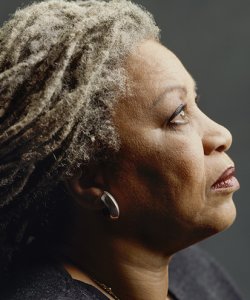
A writer doesn't work for four decades, publish ten books, and win the Nobel Prize without developing a healthy dose of skepticism. This attitude, combined with the confidence to disregard critics, has made Toni Morrison stronger than ever.
