The Whiting Foundation recently announced the winners of its 2012 literary awards, which offer ten grants of $50,000 to emerging poets, fiction writers, creative nonfiction writers, and playwrights.
The 2012 Whiting Award recipients include nonfiction writer Sharifa Rhodes-Pitts of New York City, whose first book, Harlem is Nowhere: A Journey to the Mecca of Black America (Little, Brown, 2011), was among the 100 Notable Books of 2011 by the New York Times Book Review and was nominated for a National Book Critics Circle Award; poet Ciaran Berry of Hartford, Connecticut, whose first full-length collection, The Sphere of Birds, (Southern Illinois University Press, 2008) won the Crab Orchard Series in Poetry Open Competition in 2007; poet Atsuro Riley of San Francisco, whose first book, Romey’s Order (University of Chicago Press, 2010) won the Kate Tufts Discovery Award, the Believer Poetry Award, and the Witter Bynner Award from the Library of Congress; fiction writer Alan Heathcock of Boise, Idaho, whose short story collection Volt (Graywolf Press, 2011) was a finalist for the Barnes and Noble Discover Prize; fiction writer Anthony Marra of Oakland, California, whose debut novel, A Constellation of Vital Phenomena, and short story collection, The Tsar of Love and Techno, will be published in 2013 and 2014, respectively, by Hogarth Press; and fiction writer Hanna Pylväinen of New York City, whose debut novel, We Sinners, was published this past summer by Henry Holt.
Four playwrights, Danai Gurira, Samuel Hunter, Mona Mansour, and Meg Miroshnik also received the awards.
The "no strings attached" grants are given to writers whose early work suggests a promising literary career to come. Past recipients of the Whiting Award have included Michael Cunningham, Mark Doty, Jeffrey Eugenides, Jonathan Franzen, Tracy K. Smith, John Jeremiah Sullivan, David Foster Wallace, Colson Whitehead, and C. D. Wright.
The New York City-based Whiting Foundation has given the Whiting Awards annually since 1985. Candidates are nominated for the award by literary professionals, and an anonymous selection committee of accomplished writers, editors, and literary scholars appointed by the Whiting Foundation chooses the winners. There is no application process.






 On October 1, 2012, Inprint, Inc., and the Poetry Society of America in association with Nuestra Palabra presented a panel discussion, Red, White & Blue: Poets on Politics, featuring Sandra Cisneros and Tony Hoagland and moderated by the Poetry Society’s executive director Alice Quinn. The gathering, held at the University of Houston, drew a mix of students and community members and there was a rich conversation about the urgency of poets to speak in response to social issues. Both Cisneros and Hoagland read work by poets they admire, followed by a discussion about the importance of giving voice to community. Sandra closed with a poem by
  What makes your workshops unique?
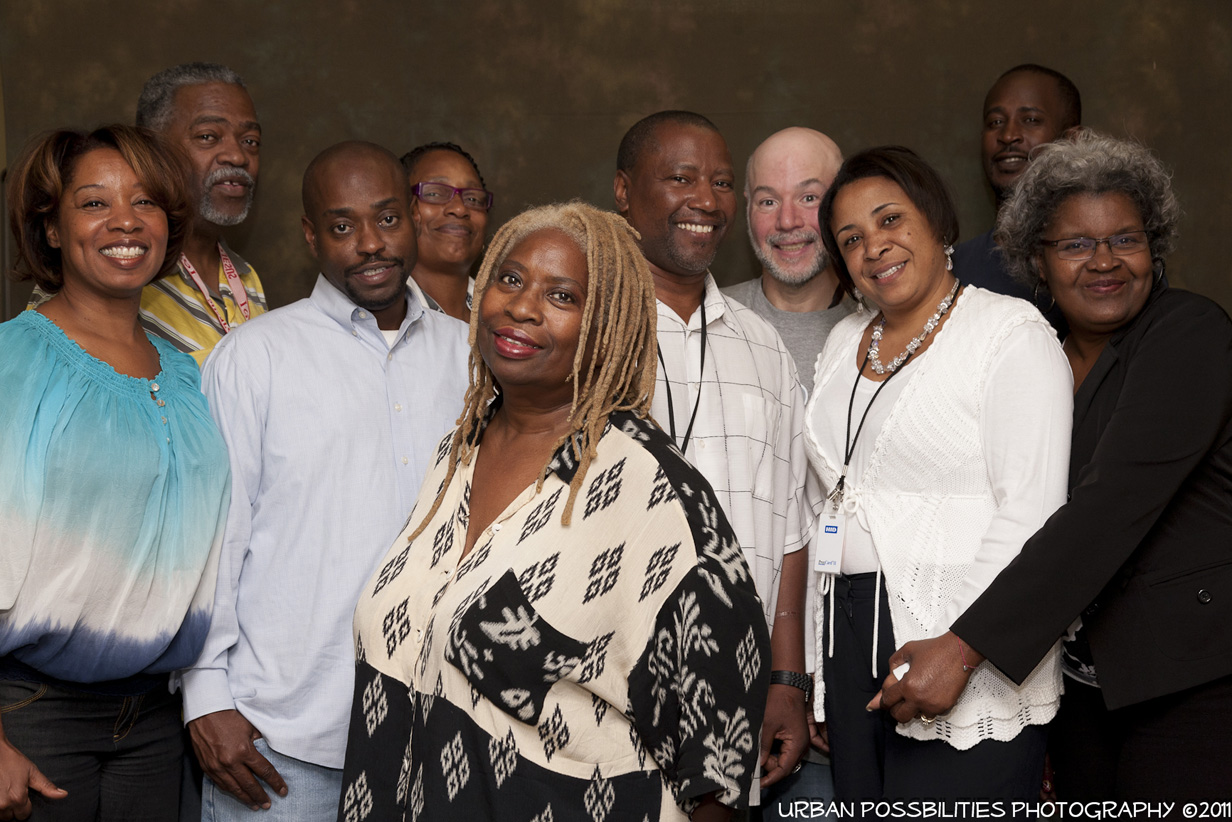
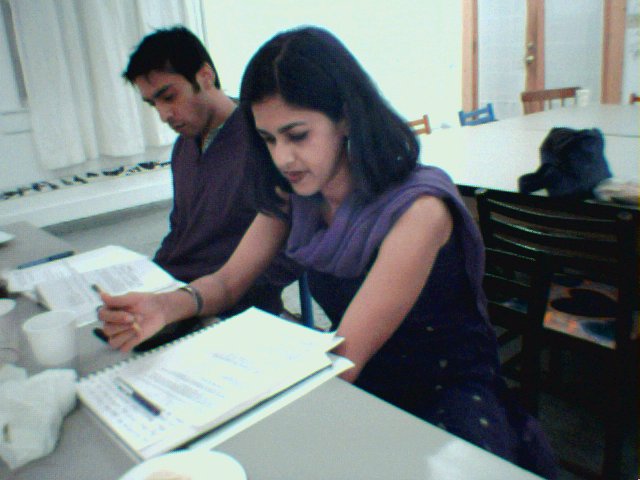 th teenagers, I wanted to work more with adults. So Shaista and I began planning a workshop that spoke to the rootless-ness we both felt, whether we were in Karachi, Houston, or somewhere else. Shaista and I dedicated much thought to our workshop title—just as VBB co-founders and I had spent time honing in on the right title for “our” organization three years earlier. We finally agreed on “Voices of the Displaced,” a title that rang true for us. It also attracted a pool of Houston-based writers who were born in other countries or elsewhere in the United States, who had come from communities of color, or identified themselves as GLBT/queer. Project Row Houses offered us a meeting space and co-sponsored the series. We sent out emails inviting people to join—VBB didn’t even have a website at that time. Our first group was intimate with only six participants, but over time, the group expanded. We always brought food and drinks and our gatherings offered formal writing but also a sense of community.