




Thanksgiving Memories
Write an essay about your memories of Thanksgivings past, how your family celebrated the holiday and what it means to you now and why.
Jump to navigation Skip to content
Write an essay about your memories of Thanksgivings past, how your family celebrated the holiday and what it means to you now and why.
Write an essay about your relationship to food. Consider the following questions: Do you see food as merely sustenance or as emotional comfort? What is your favorite meal and why? Were you a picky eater as a kid? Which foods do you detest and why?
Last night at the National Book Foundation gala in New York City, novelist Louise Erdrich was named the recipient of the 2012 National Book Award in fiction. Erdrich, whose latest novel is The Round House (Harper, 2012), will receive $10,000.
This is the first National Book Award for Erdrich, 58, who over the past thirty years has authored fourteen novels and a short story collection, three books of nonfiction, and three poetry collections. The Round House, the second installment in a trilogy, follows an Ojibwe boy as he seeks to avenge his mother's rape. Erdrich, who is part Ojibwe, dedicated her award last night to "the grace and endurance of native people."
"This is a book about a huge case of injustice ongoing on reservations," she added. "Thank you for giving it a wider audience."
In nonfiction, Katherine Boo took the prize for her debut, Beyond the Beautiful Forevers: Life, Death, and Hope in a Mumbai Undercity (Random House, 2012). David Ferry, whose latest collection is Bewilderment: New Poems and Translations (University of Chicago Press, 2012), won the award in poetry. William Alexander won in the young people’s literature category for his young adult novel Goblin Secrets (Margaret K. McElderry, 2012). Each winner receives $10,000.
The awards were given amid recent discussions among publishers and the National Book Foundation that the annual award—one of the most prestigious literary prizes in the United States, second perhaps only to the Pulitzer—had become too insular, and was in need of expanding its image and scope. Finalists in fiction included such names as Dave Eggers and Junot Diaz; the finalists in nonfiction included Robert Caro's Lyndon Johnson series and the late Anthony Shadid's lauded memoir House of Stone (Houghton Mifflin Harcourt, 2012). Honorary prizes were also given to author Elmore Leonard and longtime New York Times publisher and chairman Arthur O. Sulzberger Jr.
Established in 1950, the National Book Awards are given annually for works of poetry, fiction, and nonfiction published in the previous year. For more information, visit the National Book Foundation website.
Write an essay about the five things that scare you the most. Structure it with numbered section headings that include each thing, such as 1. Fire, 2. Death, 3. Failure, etc.
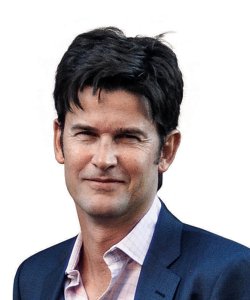
Roger D. Hodge, a former Harper’s editor and the new editor of the Oxford American, discusses his new role and the future of the esteemed Arkansas-based literary magazine.
Literary MagNet chronicles the start-ups and closures, successes and failures, anniversaries and accolades, changes of editorship and special issues—in short, the news and trends—of literary magazines in America. This issue's MagNet features Triple Canopy, Carve Magazine, Ploughshares, Prairie Schooner, and Sea Ranch.
With so many good books being published every month, some literary titles worth exploring can get lost in the stacks. Page One offers the first lines of a dozen recently released books, including Matthew Dickman's Mayakovsky's Revolver and A. M. Homes's May We Be Forgiven, as the starting point for a closer look at these new and noteworthy titles.
The Whiting Foundation recently announced the winners of its 2012 literary awards, which offer ten grants of $50,000 to emerging poets, fiction writers, creative nonfiction writers, and playwrights.
The 2012 Whiting Award recipients include nonfiction writer Sharifa Rhodes-Pitts of New York City, whose first book, Harlem is Nowhere: A Journey to the Mecca of Black America (Little, Brown, 2011), was among the 100 Notable Books of 2011 by the New York Times Book Review and was nominated for a National Book Critics Circle Award; poet Ciaran Berry of Hartford, Connecticut, whose first full-length collection, The Sphere of Birds, (Southern Illinois University Press, 2008) won the Crab Orchard Series in Poetry Open Competition in 2007; poet Atsuro Riley of San Francisco, whose first book, Romey’s Order (University of Chicago Press, 2010) won the Kate Tufts Discovery Award, the Believer Poetry Award, and the Witter Bynner Award from the Library of Congress; fiction writer Alan Heathcock of Boise, Idaho, whose short story collection Volt (Graywolf Press, 2011) was a finalist for the Barnes and Noble Discover Prize; fiction writer Anthony Marra of Oakland, California, whose debut novel, A Constellation of Vital Phenomena, and short story collection, The Tsar of Love and Techno, will be published in 2013 and 2014, respectively, by Hogarth Press; and fiction writer Hanna Pylväinen of New York City, whose debut novel, We Sinners, was published this past summer by Henry Holt.
Four playwrights, Danai Gurira, Samuel Hunter, Mona Mansour, and Meg Miroshnik also received the awards.
The "no strings attached" grants are given to writers whose early work suggests a promising literary career to come. Past recipients of the Whiting Award have included Michael Cunningham, Mark Doty, Jeffrey Eugenides, Jonathan Franzen, Tracy K. Smith, John Jeremiah Sullivan, David Foster Wallace, Colson Whitehead, and C. D. Wright.
The New York City-based Whiting Foundation has given the Whiting Awards annually since 1985. Candidates are nominated for the award by literary professionals, and an anonymous selection committee of accomplished writers, editors, and literary scholars appointed by the Whiting Foundation chooses the winners. There is no application process.
One of the most dangerous pitfalls of creative nonfiction can be chronology, and some of the best essays are written in a nonlinear fashion. Think of a story that you know by heart--maybe a memory from your childhood, of finding first love, or of the birth of a child--and try to retell it without using typical chronologically. Start from the end and work your way back, or alternate between scenes of present and past. The result should be an essay that keeps the reader always moving but never quite sure of what comes next.
