Genre: Creative Nonfiction

A Million Little Pieces

Caption: 

A Million Little Pieces (Nan A. Talese/Doubleday, 2003), the controversial and fabricated best-selling memoir by James Frey, has been adapted into a feature film directed by Sam Taylor-Johnson. Starring Aaron Taylor-Johnson, Billy Bob Thornton, and Odessa Young, the film focuses on the life of a young writer seeking treatment for drug and alcohol addiction.

The Illegible Layer

9.12.19

In Marguerite Duras’s 1985 essay, “Reading on the Train,” from the collection Me & Other Writing (Dorothy, a publishing project, 2019), translated from the French by Olivia Baes and Emma Ramadan, Duras writes about reading the first half of Leo Tolstoy’s War and Peace while on a train and feeling that in speeding through the story, she’d sacrificed a more intense, less narrative-driven understanding of the book. “I had realized that day and forever after that a book was contained between two layers superimposed with writing, the legible layer that I had read that day as I traveled and the other, inaccessible.” Write an essay about a beloved piece of literature in which you discuss both the legible layer and attempt to decipher or articulate a deeper resonance of the writing. What can you glimpse—in the story and in yourself—when you delve beyond the literal reading?

Submissions Open for Whiting Literary Magazine Prizes

Submissions are open for the third annual Whiting Literary Magazine Prizes. Launched in 2017, the prizes recognize publications that “actively nurture the writers who tell us, through their art, what is important.”. Three prizes will be given to print magazines and two to magazines publishing primarily online. Print publications can win up to $60,000, $30,000, and $15,000; digital publications can win up to $30,000 and $9,000. 

Across all categories, the award is dispensed over three years. Each magazine will receive an outright grant in the first year, followed by matching grants in the second and third years. The Whiting Foundation will also connect all recipients to expert advisors for consultation in matters such as fund-raising and marketing, and help organize meetings throughout the year for the winners to discuss shared challenges. 

This year the application for the prizes will include two rounds of review. Magazines are invited to submit a short-form application using the online portal by December 2. In February 2020 a limited number of applicants will be invited to complete an expanded application due in early April. There is no entry fee. Visit the website for complete guidelines and eligibility requirements

The Whiting Foundation hopes the financial and professional support offered by the grants will help the winners develop and achieve ambitious goals. Courtney Hodell, the foundation’s director of literary programs, notes the long-term results: “As the prize continues to mature, we see more clearly how critical these intrepid magazines are to developing and building healthy careers,” she says. “Supporting magazines benefits the entire literary landscape.” 

The 2019 print prizes went to the Common, American Short Fiction, and Black Warrior Review. The Margins and the Offing received the digital prizes. 

Founded in 1963, the Whiting Foundation believes in “identifying and empowering talented people as early as possible in their creative and intellectual development.” In addition to the Literary Magazine Prizes, every year the organization honors emerging writers in fiction, nonfiction, poetry, and drama with the Whiting Awards, and supports nonfiction writers completing works-in-progress with the Whiting Creative Nonfiction Grants. 

Maxine Hong Kingston and Celeste Ng

Caption: 

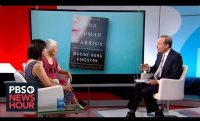
“Being born a writer, I had to tell, I had to blab these stories out.” Maxine Hong Kingston speaks about her award-winning book, The Woman Warrior: Memoirs of a Girlhood Among Ghosts, (Knopf, 1976) and the power of imagination with Jeffrey Brown and Celeste Ng, who chose the book for PBS NewsHour’s Now Read This book club.

Open House

“I saw the book as another kind of house. How did I want the reader to pass through it? What room would they enter first, and how should that room feel?” writes Sarah M. Broom about the structure of her debut memoir, The Yellow House (Grove Press, 2019), in “The New Nonfiction 2019” in the September/October issue of Poets & Writers Magazine. Write a memoiristic piece, or revisit one already in progress, and work on constructing it like a house that the reader must pass through. Plan out the points of entry and exit, and organize different sections or vignettes to be experienced as rooms visited one after another.

Going the Distance

8.29.19

What would motivate you to walk thousands of miles? Last month, researchers released data that tracked an arctic fox that had made a trek of over two thousand miles across the frozen Arctic Ocean from Norway to Canada over the course of seventy-six days, most likely prompted by a search for food or a new habitat. Write a personal essay about a time that you traveled a long way—traversing a great physical, emotional, psychological, or spiritual distance—to achieve something that was of utmost importance to you. What motivated you along the way? How did the trials of the journey compare with the end result?

Ta-Nehisi Coates on Why He Writes

Caption: 

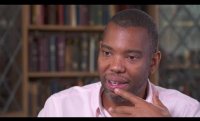
“I just felt this deep need to express myself.... I had a strong desire to understand and to express that understanding.” In this CBS Sunday Morning interview, Ta-Nehisi Coates talks about the purpose of his writing and how the music of Marvin Gaye influences the language in his work. Coates’s debut novel, The Water Dancer (One World, 2019), is featured in Page One in the September/October issue of Poets & Writers Magazine.

Upcoming Contest Deadlines

Summer’s final deadlines are upon us! Contests with a deadline of August 31 span poetry and prose, and include awards celebrating queer writers, writers over the age of 60, and writers living in upstate New York. Each offers a prize of at least $1,000.

Aesthetica Creative Writing Award: Two prizes of £1,000 (approximately $1,225) each and publication in the Aesthetica Creative Writing Annual are given annually for a poem and a short story. The winner in poetry also receives a membership to the Poetry Society in London, and the winner in short fiction receives a consultation with the literary agency Redhammer Management. Both winners receive a subscription to Granta and a selection of books from Bloodaxe Books and Vintage Books. Katy Guest, Oz Hardwick, Liz Jones, Teresa Palmiero, Martine Pierquin, and Steve Toase will judge. Entry fee: £12 (approximately $15) for a poem of up to 40 lines, or £18 (approximately $22) for a short story of up to 2,000 words.

Black Lawrence Press St. Lawrence Book Award: A prize of $1,000 and publication by Black Lawrence Press is given annually for a debut collection of poems or short stories. The editors will judge. Entry fee: $25.

Ex Ophidia Press Poetry Book Contest: A prize of $1,000, publication by Ex Ophidia Press, and 15 author copies is given annually for a poetry collection. Richard-Gabriel Rummonds will judge. Entry fee: $25.

Gemini Magazine Flash Fiction Contest: A prize of $1,000 and publication in Gemini Magazine is given annually for a short short story. The editors will judge. Entry fee: $6.

Grid Books Off the Grid Poetry Prize: A prize of $1,000 and publication by Grid Books is given annually for a poetry collection by a writer over the age of 60. Jon Davis will judge. Entry fee: $25.

Masters Review Short Story Award for New Writers: A prize of $3,000 and publication in Masters Review is given twice yearly for a short story by a writer who has not published a novel (writers who have published story collections are eligible). The winning story will also be sent to agents Victoria Cappello from the Bent Agency, Sarah Fuentes from Fletcher & Company, Andrea Morrison from Writers House, and Nat Sobel from Sobel Weber Associates. Tope Folarin will judge. Entry fee: $20.

Omnidawn Publishing Open Book Prize: A prize of $3,000, publication by Omnidawn Publishing, and 100 author copies is given annually for a poetry collection. Rachel Zucker will judge. Entry fee: $27.

Red Hen Press Quill Prose Award: A prize of $1,000 and publication by Red Hen Press is given annually for a short story collection, a novel, or an essay collection by a queer writer. Uzodinma Iweala will judge. Entry fee: $10.

University of New Orleans Press Publishing Lab Prize: A prize of $10,000 and publication by University of New Orleans Press is given annually for a short story collection or a novel. Entry fee: $28.

Utica College Eugene Paul Nassar Poetry Prize: A prize of $2,000 is given annually for a poetry collection published in the previous year by a resident of upstate New York. The winner will also give a reading and teach a master class at Utica College in April 2020. Entry fee: none. 

Visit the contest websites for complete guidelines, and check out the Grants & Awards database and Submission Calendar for more contests in poetry, fiction, and creative nonfiction.

Pages

Subscribe to Creative Nonfiction