Genre: Creative Nonfiction

Listing the Ways

10.14.21

The final months of the year can provide a time to reflect on and list the many things for which we are grateful. Try using the generative form of the list essay to write about what you’re grateful for or what you’re looking forward to in the coming year. Written with or without numbers, the form has proved extremely effective in works such as Maggie Nelson’s Bluets (Wave Books, 2009), Wayne Koestenbaum’s essay “My 1980s,” and Sarah Manguso’s 300 Arguments (Graywolf Press, 2017). Consider how writing such a list essay might allow you to step back and observe how gratitude and expectation are related or in opposition to each other.

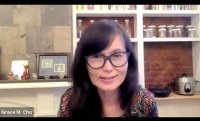
Grace M. Cho With Sun Yung Shin

Caption: 

“It wasn’t until I was assigned the family tree project at the age of nine, the same age as my mother when she became a refugee, that I began to understand that she had survived a war.” In this Greenlight Bookstore virtual event, Grace M. Cho reads from her memoir, Tastes Like War (Feminist Press, 2021), which is shortlisted for the 2021 National Book Award in nonfiction, and speaks with Sun Yung Shin about breaking the conventions of writing genres.

Upcoming Contest Deadlines

Embrace sweater weather by curling up indoors and preparing to submit to one of the following writing contests, which all close on October 31. Opportunities abound for writers in all disciplines, but especially poets. Among the poetry awards are two chapbook prizes and a prize for a female translator who has translated a collection by a female poet. All contests offer a cash prize of $1,000 or more.

American Poetry Review Honickman First Book Prize: A prize of $3,000 and publication by American Poetry Review is given annually for a first poetry collection. The winning book will be distributed by Copper Canyon Press through Consortium. Jericho Brown will judge. Entry fee: $25.

Cloudbank Books Vern Rutsala Book Prize: A prize of $1,000 and publication by Cloudbank Books is given annually for a collection of poetry, flash fiction, or a combination of the two. Doug Ramspeck will judge. Entry fee: $25.

Conduit Books & Ephemera Minds on Fire Open Book Prize: A prize of $1,500, publication by Conduit Books & Ephemera, and 30 author copies is given annually for a book of poetry. The editors will judge. Entry fee: $25.

Elixir Press Poetry Award: A prize of $2,000 and publication by Elixir Press is given annually for a poetry collection. Esther Lee will judge. All entries are considered for publication. Entry fee: $30.

Finishing Line Press Open Chapbook Competition: A prize of $1,500 and publication by Finishing Line Press is given annually for a poetry chapbook. All entries are considered for publication. Entry fee: $15.

Hidden River Arts Tamaqua Award: A prize of $1,000 and publication by Hidden River Press is given annually for an essay collection. Entry fee: $20.

PEN/Faulkner Foundation Award for Fiction: A prize of $15,000 is given annually for a book of fiction published during the current year. Four finalists will each receive $5,000. The winner and finalists will also be invited to read in Washington, D.C., in May 2022. Entry fee: none.

Persea Books Lexi Rudnitsky First Book Prize: A prize of $1,000 and publication by Persea Books is given annually for a first poetry collection by a writer who identifies as a woman and who is currently living in the United States. The winner also receives an optional six-week, all-expenses paid residency at the Civitella Ranieri Center in Umbria, Italy. Entry fee: $30.

Poetry Society of the United Kingdom National Poetry Competition: A prize of £5,000 (approximately $7,075) and publication on the Poetry Society of the United Kingdom website is given annually for a single poem. A second-place prize of £2,000 (approximately $2,830) and a third-place prize of £1,000 (approximately $1,415) are also given. The winners will also be published in Poetry Review. Poems written in English by poets from any country are eligible. Fiona Benson, David Constantine, and Rachel Long will judge. Entry fee: £7 (approximately $10).

Red Hen Press Benjamin Saltman Poetry Award: A prize of $3,000 and publication by Red Hen Press is given annually for a poetry collection. Major Jackson will judge. Entry fee: $25.

River Teeth Book Contest: A prize of $1,000 and publication by University of New Mexico Press is given annually for a book of creative nonfiction. Rigoberto González will judge. Entry fee: $27 (includes subscription).

Saturnalia Books Malinda A. Markham Translation Prize: A prize of $2,000 and publication by Saturnalia Books will be given annually for a translation of a poetry collection. Translators who identify as female (including those who are assigned-female-at-birth [AFAB] nonbinary, genderfluid, agender, and intersex) and who are translating the work of a woman poet (including those who are AFAB nonbinary, genderfluid, agender, and intersex) are eligible. Entry fee: $25.

Tucson Festival of Books Literary Awards: Three prizes of $1,000 each are given annually for works of poetry, fiction, and creative nonfiction. The winners will also receive scholarships to attend a workshop on the University of Arizona campus in March 2022. Entry fee: $20.

Tupelo Press Sunken Garden Chapbook Poetry Prize: A prize of $1,000, publication by Tupelo Press, and 25 author copies is given annually for a poetry chapbook. Entry fee: $25.

University of North Texas Press Vassar Miller Prize: A prize of $1,000 and publication by University of North Texas Press is given annually for a poetry collection. Entry fee: $25.

Visit the contest websites for complete guidelines, and check out the Grants & Awards database and Submission Calendar for more contests in poetry, fiction, and creative nonfiction.


Tips and Tricks

10.7.21

“I’ve attended plenty of workshops and lectures with writers I admire, only to leave with vague and puzzling advice about listening to your story’s truth,” writes Blair Hurley in the latest Craft Capsule essay “Tiny Doable Things.” “I treasured, instead, the writers who admitted that their writing was not always inspired and that their drafts were not always successful on the first try.” In the essay, Hurley compares writers with specific technical advice to “woodworkers or glassblowers who must learn the practical needs of their medium.” Write a list of practical writing advice you have received over the years, and reflect upon which practices have stuck with you and why.

Siskiyou Prize for Environmental Literature

Ashland Creek Press
Entry Fee: 
$25
Deadline: 
December 31, 2021

A prize of $1,000 is given biennially for an unpublished or published book of fiction or creative nonfiction that focuses on the environment, animal protection, ecology, or wild

The Question

9.30.21

Catapult’s column “How’s the Writing Going?” by Sari Botton features writers in conversation about their process and what they’re working on, offering insight and tips for writer’s block and other challenges. The column focuses on the one question “no writer wants to be asked—but which every writer wants to ask others.” Write an essay about how your writing is going. Consider the question at large and answer it in terms of how your writing process has evolved over time. What have you learned along the way?

Upcoming Contest Deadlines

Book prizes abound this month! If you are at work on a full-length manuscript, consider submitting to one of the following contests, which all close on September 30. One contest is exclusively open to women poets over 40 who have not yet published a book in any genre. There is also one essay contest and a prize for an individual poem.

Boulevard Nonfiction Contest for Emerging Writers: A prize of $1,000 and publication in Boulevard is given annually for an essay by a writer who has not published a full-length book in any genre with a nationally distributed press. The editors will judge. All entries are considered for publication. Entry fee: $16 (includes subscription).

California State University in Fresno Philip Levine Prize for Poetry: A prize of $2,000 and publication by Anhinga Press is given annually for a poetry collection. Carmen Giménez Smith will judge. Entry fee: $22 ($25 for electronic submissions).

Carlow University Patricia Dobler Poetry Award: A prize valued at $2,000 is given annually to a woman poet over 40 who has not published a book in any genre. The winner receives $1,000, publication in Voices From the Attic, and travel and lodging to give a reading with the contest judge at Carlow University. Lee Ann Roripaugh will judge. Entry fee: $20.

Dzanc Books Prizes: Three cash prizes and publication are given for a novel ($5,000), a story collection ($2,500), and a nonfiction book ($1,500). Nina Shope, David Tromblay, and Anne Valente will judge for the novel prize. Entry fee: $25.

Ghost Story Supernatural Fiction Award: A prize of $1,500, publication on the Ghost Story website and in the Ghost Story print anthology, 21st Century Ghost Stories, is given twice yearly for a short story with a supernatural or magic realism theme. Lesley Bannatyne will judge. Entry fee: $20.

Red Hen Press Fiction Award: A prize of $1,000 and publication by Red Hen Press is given biennially for a short story collection or a novel. Aimee Liu will judge. Entry fee: $25.

University of Arkansas Press Miller Williams Poetry Prize: A prize of $5,000 and publication by University of Arkansas Press is given annually for a poetry collection. Patricia Smith will judge. Entry fee: $28.

University of Iowa Press Short Fiction Awards: Two awards of publication by University of Iowa Press are given annually for first collections of short fiction. Entry fee: None.

University of Massachusetts Press Juniper Prizes: Five prizes of $1,000 each and publication by University of Massachusetts Press are given annually for a first poetry collection, a poetry collection by an author who has previously published a book, a short story collection, a novel, and a book of creative nonfiction. The creative writing faculty at the University of Massachusetts in Amherst will judge. Entry fee: $30.

Winning Writers Tom Howard/Margaret Reid Poetry Contest: Two prizes of $3,000 each and publication on the Winning Writers website are given annually for a poem in any style and a poem that either rhymes or is written in a traditional style. Soma Mei Sheng Frazier and Vernon Keeve III will judge. Entry fee: $15.

Visit the contest websites for complete guidelines, and check out the Grants & Awards database and Submission Calendar for more contests in poetry, fiction, and creative nonfiction.

Travel Writing Contest

Nowhere
Entry Fee: 
$20
Deadline: 
December 15, 2021
A prize of $1,000 and publication in Nowhere is given twice yearly for a poem, a short story, or an essay that "possesses a powerful sense of place." Porter Fox will judge. Unpublished and published pieces that have not already been chosen as a contest winner are eligible. Using only the online submission system, submit a poem or group of poems of up to 800 words or a story or essay of 800 to 5,000 words with a $20 entry fee by December 15. All entries are considered for publication. Visit the website for complete guidelines.

Pages

Subscribe to Creative Nonfiction