




Amanda Deutch on Her Celebrity Poem Workshop with Coney Island Teens
Poet and artist Amanda Deutch blogs about her P&W–supported poetry workshop for young women at the YWCA in Coney Island. She is the author of four chapbooks: Gena Rowlands, Box of Sky: Skeleton Poems, Motel Drift, and The Subway Series. She is also the recipient of a 2007 Footpaths to Creativity Fellowship to write in the Azores Archipelago.
 Celebrities flash everywhere: billboards, newspapers, computer screens, televisions. We live in a KarGaGaianBieber glowing orb of a virtual society. They suggest what we buy, how we dress, how we live, and what we consider beautiful. Unfortunately, Warhol’s prediction of fifteen minutes of celebrity fame has drawn out to become several hours of fame and in some cases, even years of it. Like it or not, we know celebrity's faces, their favorite coffee drinks, and the names of their pet monkeys.
Thursday afternoons, I lead a poetry workshop for the YWCA’s teenage girls’ empowerment program in Coney Island. Poets & Writers has generously funded eight out of a year’s worth of these workshops. (We still seek funding for the rest of them, as the workshop is such a success that we plan to keep coming back!) One Thursday, two of the teenagers were clamoring and giggling over Justin Bieber. Fourteen-year-old Medina screamed, “I have total Bieber fever!” Medina is a beautiful teenager with an infectious smile who lives in Coney Island, a low-income, urban neighborhood at the end of the subway line. This is not who first comes to mind when I think of Bieber’s fan base. But I am glad that life continues to surprise me. I decided to follow the guidelines we set forth at the beginning of the writing workshop: to suspend judgment and listen.
"What do you like about him and his music?" I asked. Then I asked, “Would you like to write celebrity poems?” “Yesssss!” We read Frank O’Hara, Diane DiPrima, and newpaper articles about celebrities. We wrote poems about a chosen celebrity, incorporating lyrics from their songs or language from news clippings. The topics of media, celebrity, and pop culture brought up great conversations in the room about fashion, body image, women in media, and intelligent role models. Below are some of our celebrity poems. Can you guess who the celebrities are? (Answers can be found at the bottom of this page.) If you’d like to read more of the teenager’s poetry, see our magazine online, Teenager Fever Magazine.
Hello Superstar
by Maya
I don’t know who you are
all I know is what I see
all over the silver screen
Plastic here plastic there
Short outfits
Outrageously colored hair
But what about your life?
What shows do you watch
on tv or do you watch tv at all?
Do you eat fried chicken stereotypically
or some gourmet stuff that
I can’t afford?
Do you shop at the mall?
Or does someone do it
for you?
Do you run your own
household or do
maids do all the work?
I’m not an overly
obsessed fan
but I just wanna see
beyond my tv.
Nobody’s Perfect
by Imani
Dear________,
I adored you since day one.
From your hit tv show to your
goofy catch phrases. Your hair
fascinated and intrigued me.
I envied the life you lived and
wanted to be you more than anything.
Then one day it was said that you
released nudes. I didn’t care.
You were still my idol and fashion
icon. Just like me, you
absolutely loved your dog. Then
one day you just vanished off the
face of the Earth and came back
with an EPIC haircut. Oh how
I admired it. Everyone made jokes
and criticized it, but I knew it was
for a great cause. When you
finally marry Liam
I’ll be there to throw rice as you
walk out.
Young Money
by Gavrielle
Your songs go from hell and
back
Range from As to Zs
You can bring the final knockout
You have hate in your
heart, love in your mind
You see nights
full of pain and
days that are the same
Young Money
"Hello Superstar" is about Nicki Minaj; "Nobody’s Perfect" is about Miley Cyrus; "Young Money" is about Lil Wayne. (In case you are wondering, Justin Bieber’s illegal pet monkey’s name is Mally. But c’mon like you didn’t already know that!)
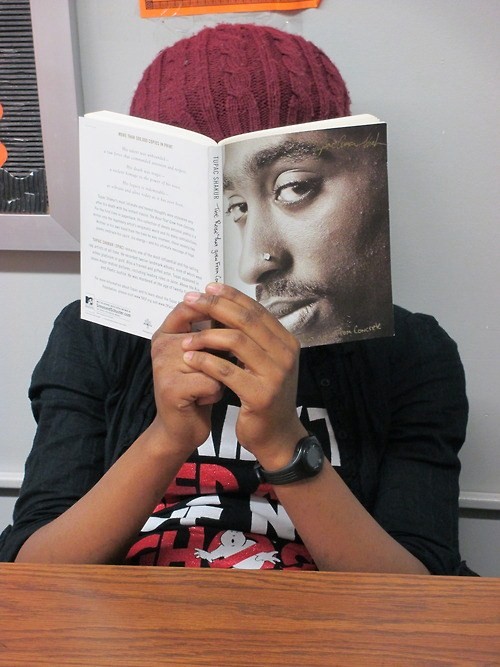
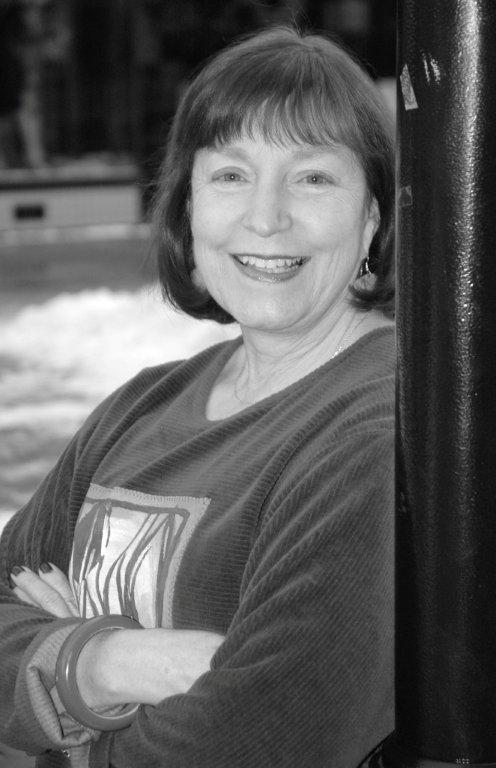
Photo: Workshop participant Maya reading Tupac Shakur's The Rose that Grew from Concrete. (Credit: Amanda Deutch.)
Support for Readings/Workshops in New York City is provided, in part, by public funds from the New York State Council on the Arts and the New York City Department of Cultural Affairs, with additional support from the Louis & Anne Abrons Foundation, the Axe-Houghton Foundation, The Cowles Charitable Trust, the Abbey K. Starr Charitable Trust, and the Friends of Poets & Writers.
 From street signs to carnival talkers, from the Chief hawking fresh clams with a call of, “Hey! Get it! Get it!” to the influx of monarch butterflies in late August, there is poetry in the everyday language that surrounds us. I want people to stop and notice poetry in daily motions. That’s part of my job as a poet.
  The
The 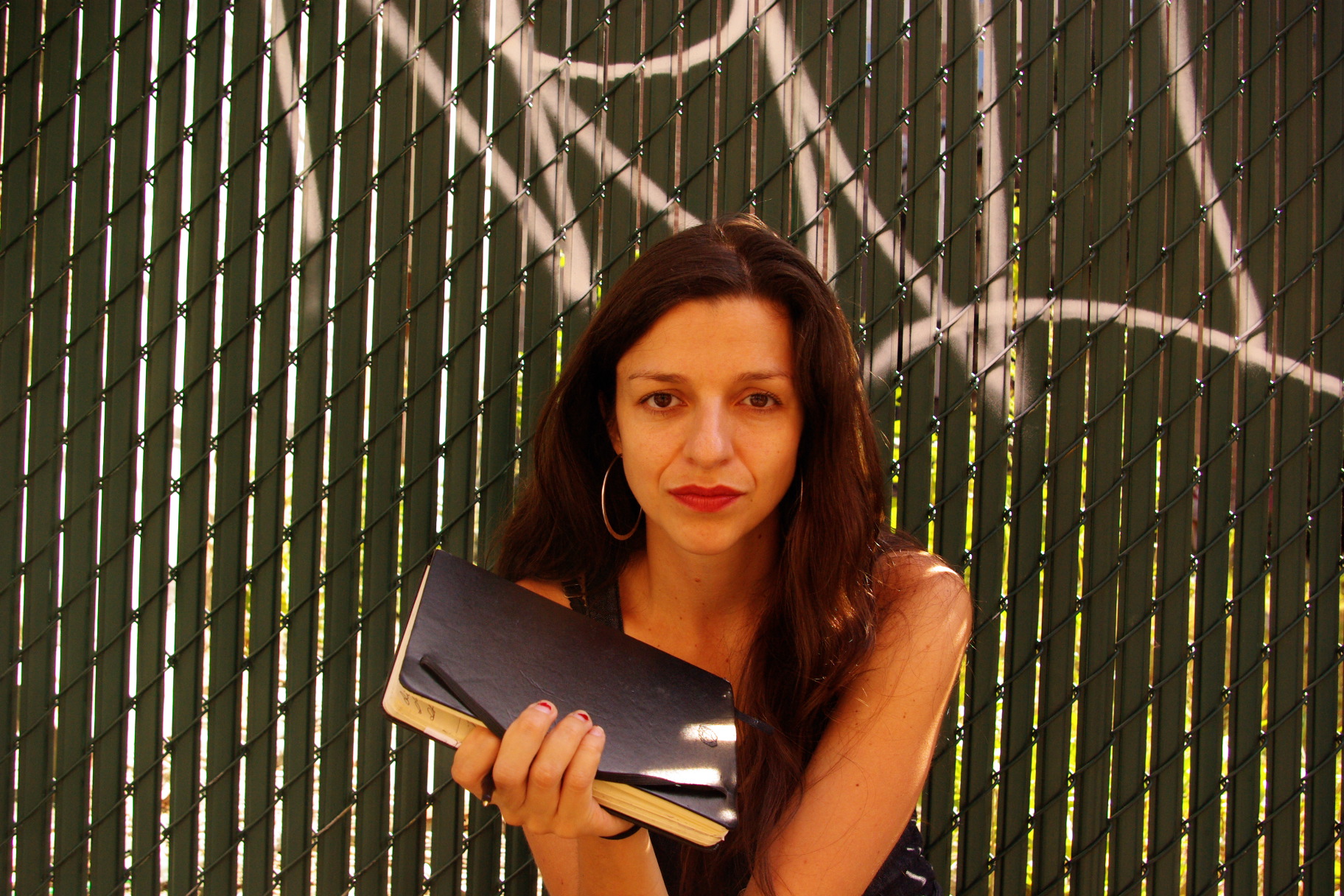 I have spent much of the last week with Sabrina Chap. I organized two events while she was in Seattle, and I enjoyed the conversations in between as much as the workshop and lecture. Sabrina is very open and encouraging when it comes to difficult subjects. She makes it suddenly okay to talk about topics such as grief and self-destruction that our society says are shameful. Her book
 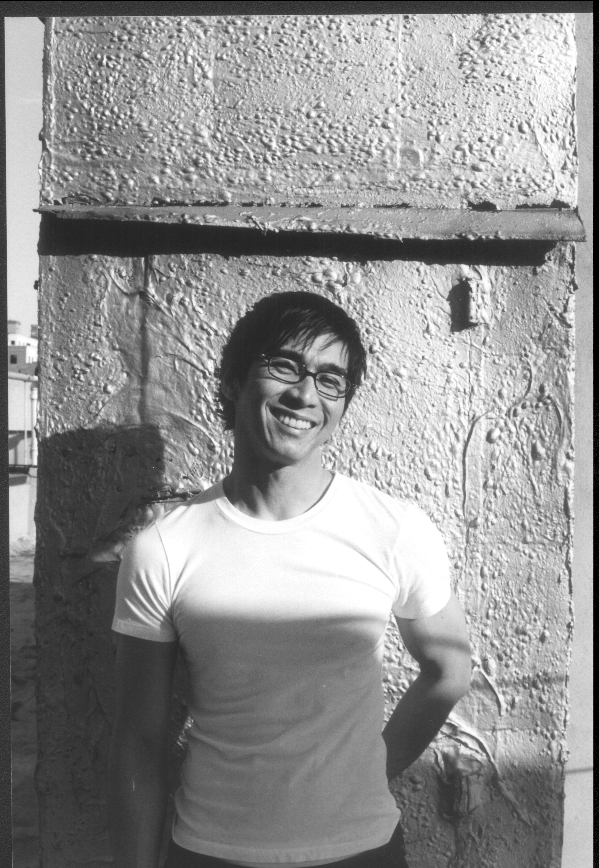 Why poetry? I’m asked frequently, which brings me to ask myself the same question. I imagine the typical inquisitor thinks poetry as gilded, arcane, highfalutin'. As it is, it has taken me years to be comfortable saying that I’m a poet. To this day there’s still a tiny level of discomfort, uttering the—what? title, character, state of being? What does it mean to be a poet? Poetry is not a career nor is it employment that pay the bills. It's not a marker of identity like gender or nationality. What is it that you do? Americans love to ask. I write poems. But not all the time. Not the same amount of hours as my day job, and my other jobs.
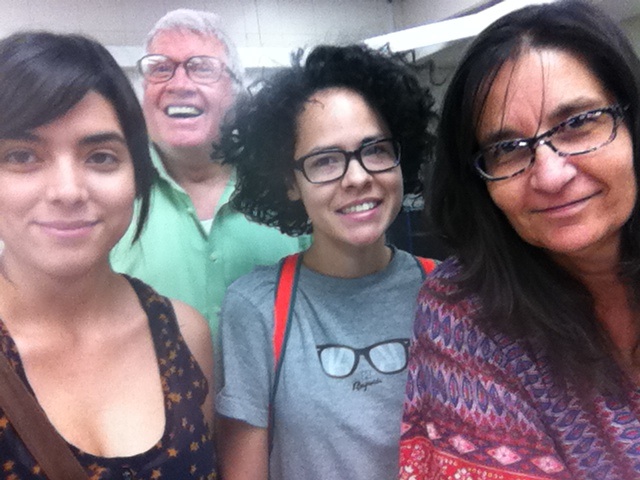 The thing about invisibility is that there are real risks to refusing its cloak. Invisibility counts on these risks for its effective deployment. Anyone who has found their space at the periphery—which is more of us than not—knows how terrifying it can be to push back the curtain and demand to be counted. As the person at the helm of programming for the (In)Visible Memoirs Project, I am constantly awed by how many people—instructors, participants, and community sponsors alike—are ready to let their stories ring out.
  Three years ago I moved to Queens because I fell in love. With a man, who is now my adorable, kind-hearted husband. The only person who could’ve taken me out of Manhattan, where I've resided since moving to New York in the mid-nineties to pursue a creative writing degree at New York University. Just as I had emigrated from Manila where I was born, then left Los Angeles to come to New York, I uprooted myself. You can say I moved because of family, a search for my own. An important part of the move was finding vital communities, creative and otherwise.
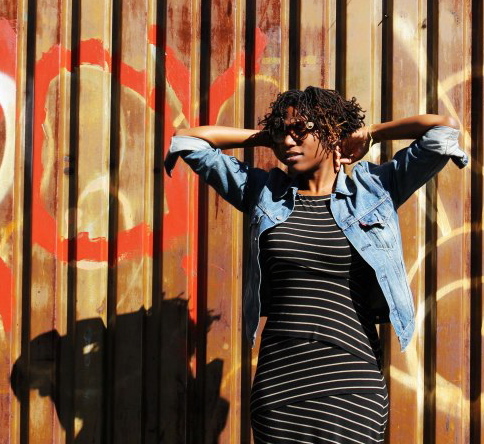 What are your reading dos?
 This past October,
 h Gambito and I were swaying on a hammock at a backyard BBQ in Westchester. Watching the mostly Filipino crowd—families and community—playing games, eating, totally at ease with one another, we were mesmerized and even envious. As recent MFA graduates and young Filipino American poets trying to patch together literary lives in New York City, we felt alone and lost. We wanted to recreate the joyful and safe space that we witnessed in Westchester, but for Asian American artists. I then told Sarah about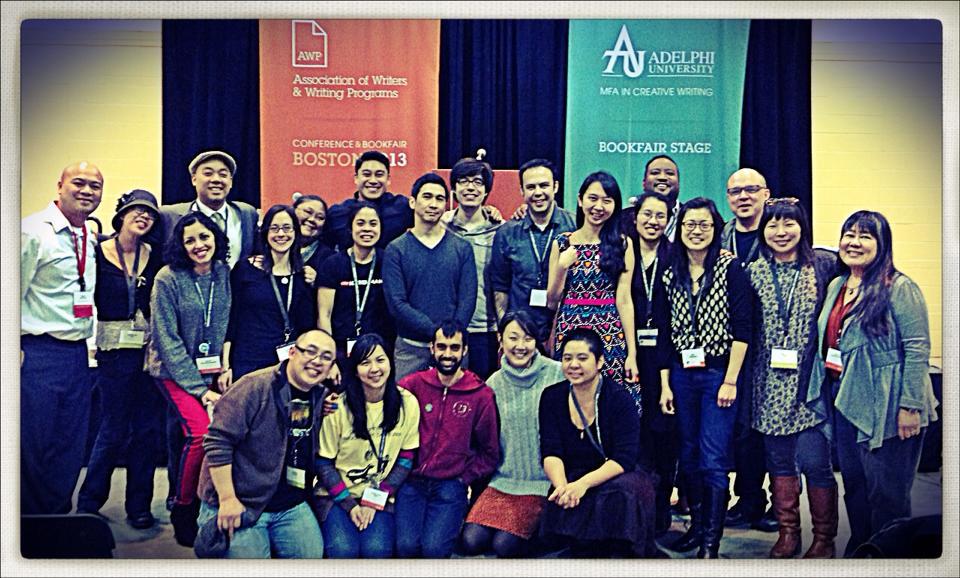
 It started with an experiment. Before the poet Sarah Gambito and I fully conceived of Kundiman, the nonprofit we founded to serve Asian American poetry, there were the poems. At the time, in 2003, we were interested in the idea of poems as physical objects, as solid and tangible art pieces. We were also regulars imbibing lychee martinis at
  The bottom line is that for a literary series to thrive, much generosity is needed: a place for gathering, a co-host/co-sponsor who shares your vision, an open-minded audience, and kind readers. Recently, another act of generosity: Poets & Writers, through its
  Florence is magical: the people, the shrimp and grits and muffins. I left wanting to curate a queer arts festival this year. Why? Because I'm insane. But also because the community is so friendly and warm and I know that the impact of a queer spoken word gathering would forever affect the 40,000-person population of Florence. Thigpen is a born and bred resident of Florence; he loves words, is an incredible writer, and his running of series in a small town creates an incredible impact. Chelsea Root is an up-and-coming writer with an intense delivery and shares Thigpen's enthusiasm for the word.
 Given that many reading series struggle to draw audiences, it’s somewhat astonishing to consider that Red Hen Press maintains five series—one in New York and four in the Los Angeles area, where the eighteen-year-old press is based. And judging by a mid-March reading by poet Terrance Hayes and several Red Hen authors, sagging attendance is not an issue.
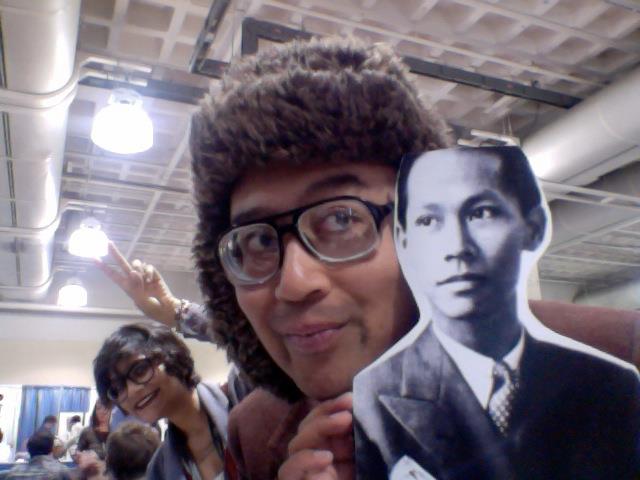 light to Madison will be on time. I am scheduled to perform at the Midwest Filipino Students Association. I am to give a workshop and a performance in the evening. I bring my bags to Friday morning's Kundiman panel. Myung Mi Kim, Paisley Rekdal, and I read poems and talk about pedagogy.
 I am so grateful to Poets & Writers for the once-in-a-lifetime experience of the California Writers Exchange! I heard people say this week that there’s no mystery in publishing, but for those of us not in New York, it can feel mystifying. In an attempt to pull back the curtain and share what I’ve learned, I give you my Top Ten Things Every Writer Should Know: