Genre: Poetry

Balakian, Nguyen Win Pulitzer Prizes

Today in New York City, the Pulitzer Prize board announced the winners and finalists of the 2016 Pulitzer Prizes. Of the twenty-one categories, the prizes in letters are awarded annually for works of literature published in the previous year by American authors.

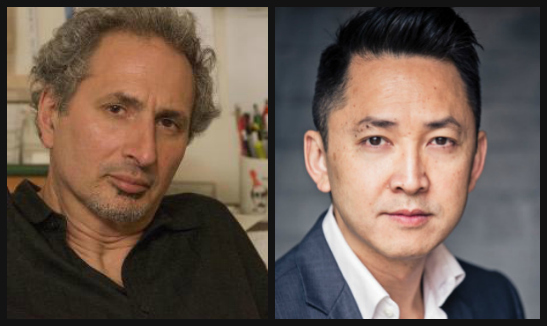
The winner in poetry is Peter Balakian for his collection Ozone Journal (University of Chicago), a collection of poems “that bear witness to the old losses and tragedies that undergird a global age of danger and uncertainty.” The finalists were Diane Seuss for Four-Legged Girl (Graywolf) and Elizabeth Willis for Alive: New and Selected Poems (New York Review Books).

Viet Thanh Nguyen won in fiction for his debut novel, The Sympathizer (Grove), “A layered immigrant tale told in the wry, confessional voice of a “‘man of two minds’—and two countries, Vietnam and the United States.” The finalists were Kelly Link for Get in Trouble: Stories (Random House) and Margaret Verble for Maud’s Line (Houghton Mifflin Harcourt). 

Prize administrator Mike Pride announced the winners and finalists at Columbia University’s School of Journalism. Each winner receives $10,000. A complete list of winners and finalists in each of the twenty-one categories, including journalism, literature, and drama, is available on the Pulitzer Prize website.

The 2015 winners included poet Gregory Pardlo and fiction writer Anthony Doerr.

Hungarian-American newspaper publisher and journalist Joseph Pulitzer established the Pulitzer Prizes in 1911, and the first prize was administered in 1917. In celebration of this year’s centennial, the Pulitzer board has partnered with individuals and organizations across the country for its Campfires Initiative, which hosts events with the aim “to inspire new generations to consider the values represented by Pulitzer Prize–winning work.” 

Nominations for the 2017 prizes will open in May.

Creative Writing for the Underserved: Ideas, Inspiration, Revelation

On March 31, 2016, during the AWP Annual Conference & Bookfair in Los Angeles, Poets & Writers brought together P&W–supported teaching artists Dorothy Randall Gray, Michael Kearns, Mike Sonksen, and Leilani Squire for the panel presentation “Creative Writing for the Underserved: Ideas, Inspiration, Revelation.” Panelists spoke about best practices, what motivates them to do what they do, and how teaching writing to underserved groups has enriched their writing lives. Below are some highlights from the conversation, as compiled by Readings & Workshops (West) director and panel moderator Jamie Asaye FitzGerald.

Classroom Approaches

"I look at longevity as a starting point, and have them write about all of the 'selves' that have gotten them to where they are today."
—Michael Kearns, who works with GLBT seniors

"We spend a lot of time just talking, working through issues, then do a timed writing. I listen and witness. That's a big part of it."
—Leilani Squire, who works with veterans and their family members

"I begin the class with three minutes of silence. I work with teenage identity and bring in poems about that. I've had them read [Paul Laurence] Dunbar's 'We Wear the Mask.' I've even had them make a mask, think about the layers of their identity and list them. I try to show them how poets are always talking to each other and that they are part of the conversation. I also use a little hip-hop, documentaries, current events."
—Mike Sonksen, who works with teens

"Sometimes these populations don't want to feel because it hurts too much. I try to get them to connect with their feelings. Music and visuals help. One reward for doing the writing is letting the kids be DJ and pick out the songs. To get them to open up, be silly, bring a visual, ask an easy question like 'What's your favorite food?' or 'What do you want to eat when you get out of here?'"
—Dorothy Randall Gray, who works with incarcerated youth, women, and the homeless

The Effect on Their Writing Lives

"If I tell them to write deeply, to go for the jugular, how can I not do that myself?"
—Squire

"My stakes are higher. I am deepened by them."
—Kearns

"Not only do I have to deal with the truth; I have to face my own truth. I believe in sticking a pen in my own vein. As they tell their stories, I tell my stories."
—Gray

On Self-Care

"Being in the trenches is taking care of myself. Dealing with horror, pain, and abuse—it's contradictory, but it is comforting that I can hear and be empathetic.... And I have my daughter when I feel overwhelmed."
—Kearns

"You get worn out. Performing poetry and doing freelance writing helps. I keep my writing career active. Then there are the two kids who really get it, there's the e-mail from a kid five years later, and the kid who stays after class to help clean up."
—Sonksen

"Meditation. Adjusting my own beliefs. Compassion is a big part of it, and being as gentle and loving as possible."
—Gray

"I have to walk in centered, whole, and confident or I'll get beat up. I'm a practicing Buddhist. I go to Native American lodges, which helps me gain answers to questions I ask. I cuddle with my dog."
—Squire

Hopes for Their Students

"I hope they find a home in their hearts, where they feel loved and safe."
—Gray

"I hope their voices get louder, not softer; more authentic, more hopeful; more of who they are and not less—because that can often happen as one ages."
—Kearns

"I hope they come to a place of acceptance, understanding; of being listened to, witnessed; to come to some sort of wholeness. My agenda is to promote peace."
—Squire

"I try to give them the tools they need to lift themselves up. Ultimately, I'd like to create lifelong readers and writers. But mainly I use writing as a bridge to help them build identity and future hope."
—Sonksen

We are pleased to be able to support writers who work with underserved groups. For more information about whether your event might qualify for Readings & Workshops support, please see our guidelines or contact us.

Major support for Readings & Workshops in California is provided by the James Irvine Foundation and Hearst Foundations. Additional support comes from the Friends of Poets & Writers.


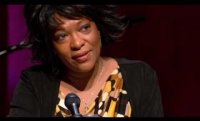
Rita Dove

Caption: 

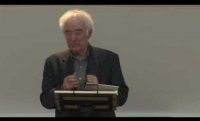
Rita Dove reads her poem "American Smooth" at the Geraldine R. Dodge Poetry Festival in 2010. Her new book, Collected Poems: 1974–2004 (Norton, 2016), which is longlisted for the 2016 National Book Award, is featured in Page One in the May/June issue of Poets & Writers Magazine.

Genre: 

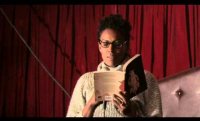
Aracelis Girmay

Caption: 

"Whole years will be spent, underneath these impossible stars / when dirt's the only animal who will sleep with you..." Aracelis Girmay reads her poem, "Kingdom Animalia," for the Page Meets Stage reading series in 2013. Her new poetry collection, The Black Maria (BOA Editions, 2016), is featured in Page One in the May/June issue of Poets & Writers Magazine.

Genre: 

Tyehimba Jess

Caption: 

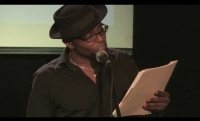
"How the real blues claims every inch of the hungry mouth." Tyehimba Jess reads his poem "The Harmonica Lesson" and plays harmonica for the Page Meets Stage reading series in 2010. Jess is featured in Ampersand: The Poets & Writers Podcast, and his new poetry collection, Olio (Wave Books, 2016), is featured in Page One in the May/June issue of Poets & Writers Magazine.

Genre: 

Brenda Shaughnessy

Caption: 

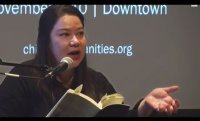
"For each night is a long drink in a short glass." Listen to a reading by poet Brenda Shaughnessy at the Chicago Humanities Festival in 2013. Shaughnessy is featured in Ampersand: The Poets & Writers Podcast and her fourth poetry collection, So Much Synth (Copper Canyon Press, 2016), is featured in Page One in the May/June issue of Poets & Writers Magazine.

Genre: 

Mia Alvar, Ta-Nehisi Coates Among PEN Award Winners

Last night in New York City, the PEN American Center honored the recipients of the 2016 PEN Literary Awards. A selection of winners were announced in February; the winners of the following five awards were announced live at the ceremony.

Mia Alvar won the $25,000 PEN/Robert W. Bingham Prize for Debut Fiction for her story collection, In the Country (Knopf). Helon Habila, Elizabeth McCracken, Edie Meidav, and Jess Row judged. “It is rare to find a debut of such depth and breadth, work singing with the grace of a thousand doomed lifetimes compressed into stories both luminous and empathic, populated by memorable characters facing such keenly felt challenges,” the judges wrote.

Ta-Nehisi Coates took home the $10,000 PEN/Diamonstein-Spielvogel Award for Art of the Essay for his critically acclaimed epistolary memoir, Between the World and Me (Spiegel & Grau).

The PEN Open Book Award went to Rick Barot for his third poetry collection, Chord (Sarabande Books).

Lauren Redniss won the PEN/E. O. Wilson Literary Science Writing Award for Thunder & Lightning: Weather Past, Present, Future (Random House).

Jean Guerrero received the inaugural PEN/FUSION emerging writers prize for her manuscript “Crux.” The $10,000 prize was established in 2015 to recognize an unpublished nonfiction manuscript by a writer under the age of thirty-five.

Meanwhile, novelist and Nobel laureate Toni Morrison was honored with the PEN/Saul Bellow Award for Achievement in American Fiction.

This year, PEN will confer approximately $200,000 in awards, fellowships, grants, and prizes to writers and translators. Visit PEN’s website for a complete list of the 2016 Literary Award–winners.

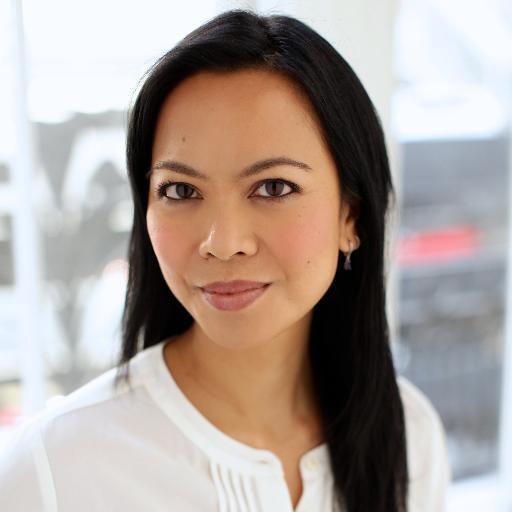
(Photo: Mia Alvar, Credit: Deborah Lopez)

Watch a video of the awards ceremony below:

Poems in Your Pocket

4.12.16

In preparation for next week’s Poem in Your Pocket Day, find a short poem that you are especially drawn to and carry it with you, taking time to reread and reflect upon it. If you need help finding one, try the Academy of American Poets or Poets House websites. At the end of the week, write your own poem that in some way responds to your chosen poem. Next Thursday, on Poem in Your Pocket Day, add your original poem to your pocket and share it with others.

Pages

Subscribe to Poetry