

Genre: Poetry

Crossing Nations, Cultures, and Languages with Marick Press Founder Mariela Griffor

Since 2008, P&W has supported readings and workshops presented by literary publisher Marick Press. Its founder, Mariela Griffor, answered our questions about her experience publishing writers from around the world out of Grosse Pointe, MI, a small city neighboring Detroit. Griffor was born in the city of Concepción in southern Chile. She is the author of Exiliana (Luna Publications, 2007) and House (Mayapple Press, 2007). Her work has also appeared in Passages North, Cerise Press, and Washington Square Review. Her forthcoming translations include Canto General by Pablo Neruda (Tupelo Press, 2013), At Half Mast by Carmen Berenguer, Militant Poems by Raúl Zurita, Desolation by Gabriela Mistral and Bye, have a good time! by Kristina Lugn. She is Honorary Consul of Chile in Michigan.
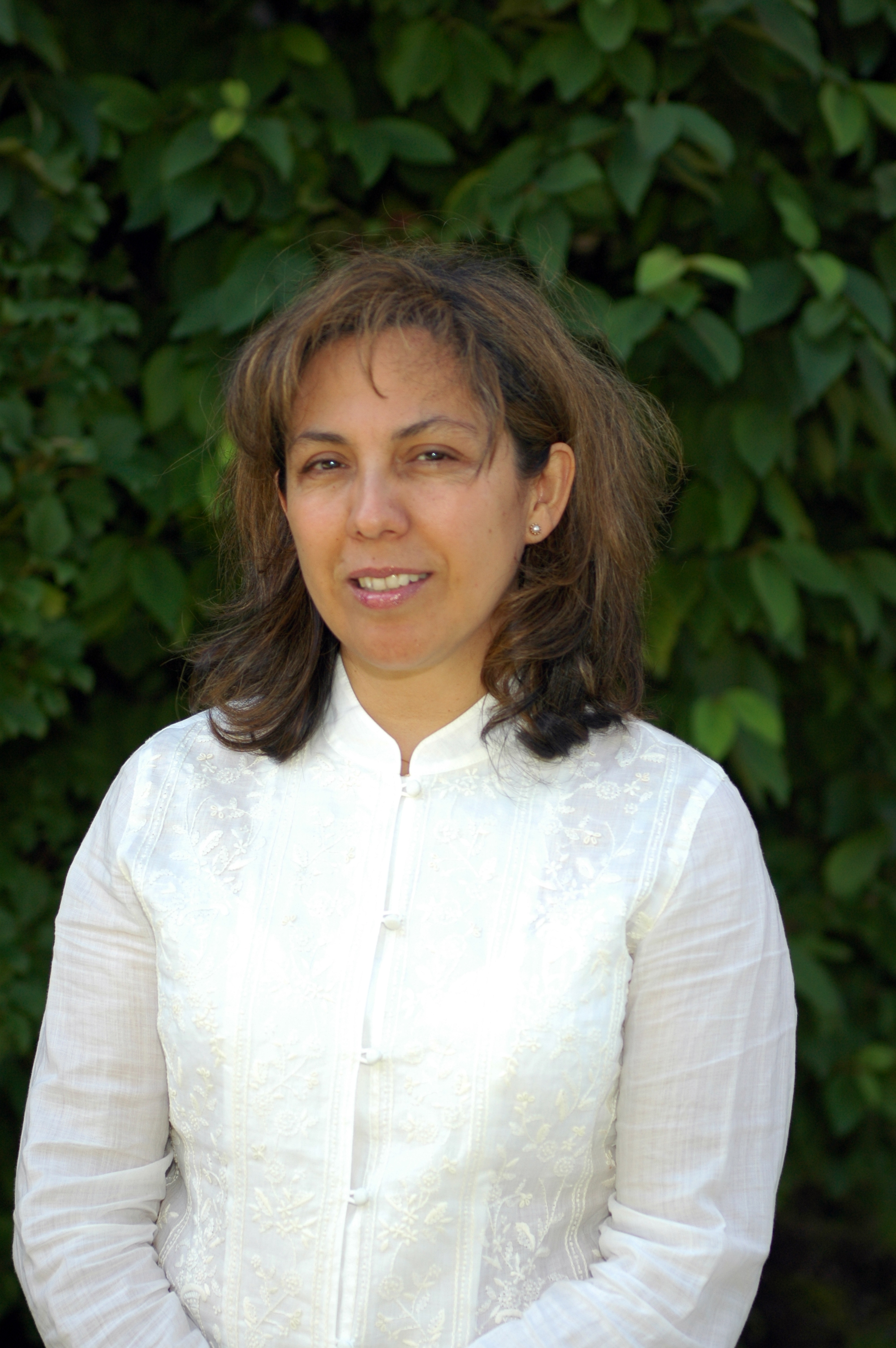
Mariela GrifforWhat makes Marick Press unique?
Marick Press strives, across boundaries of nations, cultures, and languages, to create fine literature and make it a personal experience. We seek out and publish the best new work from an eclectic range of aesthetics—work that is technically accomplished, distinctive in style, and thematically fresh.

What project have you been especially proud of?
I’m proud of every single book I've published, but the translation series is something very, very special. This series includes some of the most accomplished and original writers in the world, translated into English.

I have always been able to find a special or unique book of poetry that has been overlooked in its original language or is essential to understanding the complete work of a poet. Particular cases of this are INRI by the Chilean poet Raúl Zurita, and From Threshold to Threshold by Paul Celan.

What’s the most memorable event you’ve hosted?
P&W sponsored a festival of poetry held in Marick’s home town of Grosse Pointe, MI. The writers, publishers, and public shared some of the most remarkable readings I’ve experienced. It was the first time a poetry festival had been held in our community. For many in attendance, it was their first personal experience of fine literature—and it was new, fresh, and exciting!

What do you consider to be the value of literary programs for your community?
A community with a literary program is an intellectually vibrant and relevant community not only for itself, but for its surrounding communities. I admire the work of Ann Arbor District Libraries here and in Ann Arbor. Individuals and community groups in my area use a lot of its resources.

I could not live in a place that is not interested in literature. Once a community experiences literature personally, it will go to any lengths—establishing writing programs, festivals, and public readings—to perpetuate and expand the personal experience of writing to everyone. If you counted how many writers of note have been attracted to, or were raised or born in Michigan, you would be stunned!

How has publishing and presenting informed your own writing and life?
If you are a publisher, you learn to be humble. You struggle, you struggle more, and then you get some satisfaction when the book is out. The creation of a book is not an easy task. It is a work of art, but also a responsibility. Very few can handle the weight of this work. You listen, take notes, produce, and through it all get to know people as they are.

The writing community in the United States is very assured, very eclectic, and much more resistant to foreign influence than those in other countries. Being a publisher and the host of a reading series has taught me the blessings of comparative literature among living writers.

Photo: Mariela Griffor. Credit: Javiera Denney.
Support for Readings/Workshops events in Detroit is provided by an endowment established with generous contributions from the Poets & Writers Board of Directors. Additional support comes from the Friends of Poets & Writers.

Robert Bly Receives Frost Medal

The Poetry Society of America (PSA) has announced that poet Robert Bly will receive the 2013 Frost Medal, an award presented annually for distinguished lifetime achievement in poetry. 

The PSA’s most prestigious award, the Frost Medal was established in 1930. Originally called the “Gold Medal,” the award’s early recipients included Robert Frost, Edna St. Vincent Millay, Wallace Stevens, and Marianne Moore. In 1984, to pay tribute to Robert Frost's longstanding association with the organization, including his tenure as honorary president from 1940-1963, the award was renamed in his honor; subsequent winners have included Gwendolyn Brooks, Adrienne Rich, John Ashbery, Sonia Sanchez, and in 2012, Marilyn Nelson. Winners receive a cash prize of $2,500. 

Born in western Minnesota in 1926, Robert Bly attended the Iowa Writers’ Workshop and later founded the literary magazine The Fifties (later The Sixties and The Seventies), which published poetry in translation. Bly published his first book of poetry, Silence in the Snowy Fields (Wesleyan), in 1962, and received a National Book Award in 1968 for The Light Around the Body (Harper & Row). He has since published over thirty books of poetry, translation, and essays, including most recently the poetry collection Talking Into the Ear of a Donkey (Norton, 2011). A forthcoming collection, Stealing Sugar from the Castle: the Selected Poems of Robert Bly, will be published in September by Norton. 

Bly will be honored, along with the twelve recipients of the annual PSA awards, at a ceremony on Friday, April 5, at the National Arts Club in New York City. Bly will also give a reading.

The Poetry Society of America, the nation's oldest poetry organization, was founded in 1910. Its mission is “to build a larger and more diverse audience for poetry, to encourage a deeper appreciation of the vitality and breadth of poetry in the cultural conversation, and to place poetry at the crossroads of American life.” For more information about the PSA and the annual awards, visit the website

Text Me

2.12.13

Send a line of poetry to a friend via text message or e-mail and ask her to compose a line in response. Collaborate on drafting a poem in this way, building it line by line until you both agree that it's reached its end. Using the final product as a draft, revise the poem and have your friend do the same. Compare your final drafts.

Cybele Knowles on Balancing Work, Art, and Everything Else

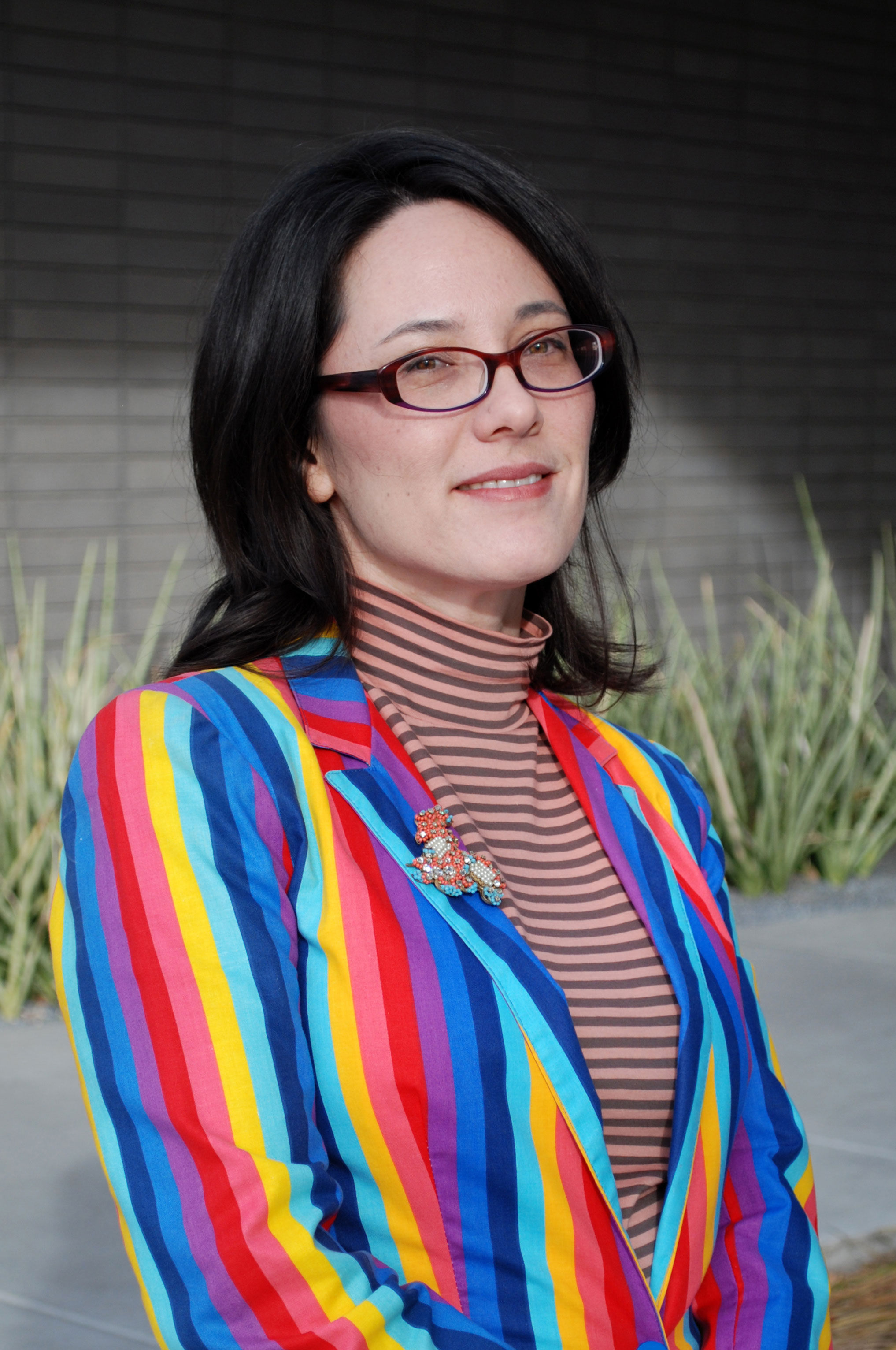
Cybele Knowles works as a program coordinator at the University of Arizona Poetry Center, where she coordinates the PW-funded Center’s Reading and Lecture Series, Classes & Workshops program, and Closer Look Book Club. She holds an MFA in fiction from the University of Arizona and an MA in English from U.C. Berkeley. Her poetry and prose have appeared in the Destroyer, Spiral Orb, Diagram, Pindeldyboz, the Asian Pacific American Journal, Faucheuse, and the Prose Poem.

Cybele KnowlesThe University of Arizona Poetry Center is run by a staff of eight arts administrators and librarians with specializations in education, grant writing, fundraising, marketing, and more. Most of us work full-time and, being employed in the nonprofit sector, we work intensively. Each of us also has an important other job: We are all poets and writers.

Here’s where the phrase “finding a balance” tends to get yoked up. That tired old plowhorse. For me, the phrase “finding a balance” evokes a delicate and precise action, like a jeweler weighing out diamonds by the milligram. But I experience the process of negotiating between the roles of worker and writer as…somewhat more rough. For me it’s like being a perpetual beginner on the balance beam—falling off, landing hard (puff of chalk dust), and then getting back up, but this time with a sore butt. And repeat.

I asked my coworkers how they manage the demands of their day jobs, their calling as a writer, and all the other business of being human. They had wonderful responses, some practical and some perceptual, but all helpful and genuine.

Renee Angle, Programs Coordinator: When I get down about how much I’m not writing, I think of my heroes: Frank O’Hara who wrote in short bursts and did not seek out publications or residencies but the company of other artists; William Carlos Williams who became a doctor because he wanted to write and write what he wanted, not what a publisher expected; and Wallace Stevens who worked all day in order to come home to a fabulously expensive library each night. But then, of course, my heroes did not care for young children as I do. So, I think of my heroines: Sor Juana Inéz de la Cruz who devoted her whole life to reading and writing despite extreme pressure to do otherwise and Anne Bradstreet who wrote poems without a microwave or dishwasher.

Allie Leach, Education Programs Assistant: For me, staying focused and on track with my writing is super hard without deadlines and encouragement. For that reason, having a writer’s group has been a life saver. Not only do we hold each other accountable with oral and written feedback, but we are also cheerleaders for each other. Another plus: Our meetings always include wine and cheese (and sometimes cupcakes).

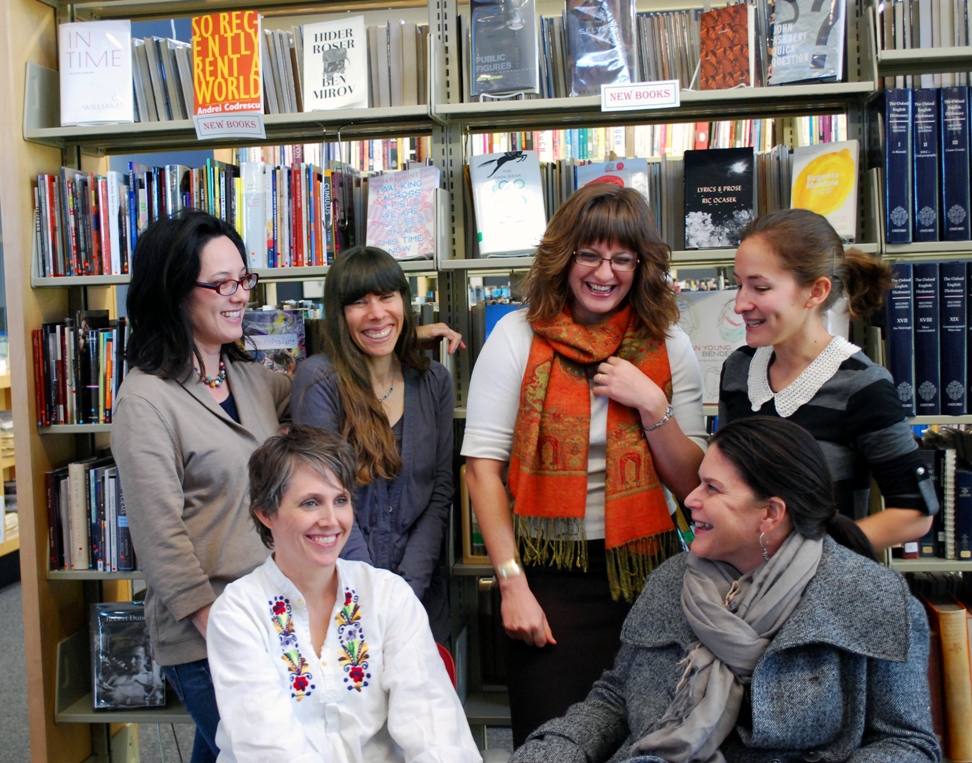
Sarah Kortemeier, Library Specialist: My solution so far has been twofold: First, to create a regular block of time for writing and another for submitting, both once a week; second, to give myself permission to devote free moments outside those times to other activities. When I was in graduate school, I tried to write every day, and I’ve had to accept the fact that that schedule isn’t very productive for me (I seem to need a lot of space around my writing time). A “writing morning” once a week, on the day I work the late shift in the library, is the best compromise I’ve come up with.UA Poetry Center Staff

Julie Lauterbach-Colby, Development Program Coordinator: I would honestly get depressed if I were to treat only the time I actually sat at my computer and wrote as writing time. The guilt, the shame by comparison as I hear love stories between other writers and the weekly six-hour stints they have at their computers. So I’ve had to retrain my brain to “practice” writing in everyday ways: by thinking, by looking, and focusing on everyday scenes, conversations, stories, images, and treating those as written opportunities. I carry these scenes with me in my head. I mull them over. If I’m around my notebook, I write them down and then I think about them some more until they’ve manifested in my mind as something more solid. Sometimes this could be just a word: I’ll focus on, say, speed, and like a practice in mindfulness breathing, that word will become a way to constantly “return to writing” throughout my day. It’s like Pinterest, but in my head.

Annie Guthrie, Marketing Director: I try and banish entirely any dichotomous inner argument about time/not enough time, which I have found to be a seductive whirlpool of a time-waster in itself. “Not having time” is a cultural spell I’d like to undo. It’s a spell that becomes a chant. I am interested in seeing what I can do with the time I do have, and how I can come into it, my life, as a writer all the time. For example, if I can become more alert and more observant and more thinking and more feeling during even the most mundane of tasks, then I feel I am making the most of my time.

Speaking for myself: I've worked as a desk jockey for years in a variety of professions, and I've found that compared to any other job I've held, working in literary arts administration is, itself, a great support to my writing. The job and the calling synergize. As an example, every day at the office I have the opportunity to think and talk about literature with the talented working writers quoted above. That’s pretty fabulous.

Top Photo: Cybele Knowles. Credit: Allie Leach. Photo: (back row) Cybele Knowles, Wendy Burk, Sarah Kortemeier, Allie Leach; (front row) Renee Angle and Annie Guthrie. Credit: Meg Wade.
Support for Readings/Workshops events in Tucson is provided by an endowment established with generous contributions from the Poets & Writers Board of Directors and others. Additional support comes from the Friends of Poets & Writers.
Lawrence Ferlinghetti

Caption: 

In Ferlinghetti: A Rebirth of Wonder, which opens tonight in New York City, director Christopher Felver reveals the poet's true role as a catalyst for numerous literary careers and for the Beat movement itself. The documentary features one-on-one interviews with Ferlinghetti as well as appearances by Allen Ginsberg, Dennis Hopper, Dave Eggers, and others. For more opening dates, visit the First Run Features website.

Genre: 

Clip Art

Using scissors, cut up one of your poems that needs revision into its lines or parts of lines. Rearrange these clippings in various combinations and create a new draft. Write a revision of your poem based on this new draft.  

Cybele Knowles on Creating Audiences for Poetry

Cybele Knowles works as a program coordinator at the University of Arizona Poetry Center, where she coordinates the PW-funded Center’s Reading and Lecture Series, Classes & Workshops program, and Closer Look Book Club. She holds an MFA in fiction from the University of Arizona and an MA in English from U.C. Berkeley. Her poetry and prose have appeared in the Destroyer, Spiral Orb, Diagram, Pindeldyboz, the Asian Pacific American Journal, Faucheuse, and the Prose Poem.

Cybele KnowlesI have served as the coordinator of the University of Arizona Poetry Center Reading and Lecture Series for four years. The longer I work with this literary program, the more I admire it and understand its power. This year, the series celebrates its fiftieth anniversary. It has been sustained over the decades by an extensive community of individuals and organizations, including Poets & Writers through the Readings/Workshops program. It is capacious and generous, representing many poetic voices, and (for the most part) free and open to the public. One of the things I particularly admire about the series is that our poetry readings regularly attract audiences in excess of 150 people. In today's post, I want to share a sketch of how the Poetry Center creates an audience for poetry, using the example of a reading by Mary Jo Bang with Joni Wallace on October 6, 2011, which was supported by Poets & Writers.

We (the Poetry Center staff) conceive of our task as creating an audience not just for poetry events, but for Poetry with a capital "P." Therefore we treat each reading not just as an event, but as an occasion to educate local communities about the poetry being presented. To get people reading the poems before the event, and to help keep them engaged afterward, we schedule ancillary programs in conjunction with each reading.

In the case of the reading by Mary Jo, the ancillary events included a visit to a University of Arizona literature class and a “shop talk” about Mary Jo’s work. Shop Talk is the Poetry Center’s poetry discussion group, which is free and open to the public. We also led our Poetry Center docents (a group of fifteen dedicated volunteers at the time; currently, there are many more) through an introduction to Mary Jo’s work. The reading itself, attended by 160 people, was recorded for the Poetry Center’s online audiovisual library, voca. Recordings are tagged with accurate metadata, which enhances their value as an archive. Now available on voca, Mary Jo’s reading can continue to be enjoyed and experienced by many others. And last but not least, about a year after the reading, we scheduled our Closer Look Book Club to read Mary Jo’s translation of The Inferno. Typically our book club reads prose, of course, but we took advantage of a seasonal theme of “Narratives in Translation” to “serve up” poetry to our prose readers. Both the Shop Talk and Book Club were led by poet Joni Wallace, who also read with Mary Jo, and whose first book, Blinking Ephemeral Valentine, was selected by Mary Jo for the 2009 Levis Prize.

We have additional ways of connecting visiting poets to local communities. Other ancillary events we schedule for a visiting poet might include a meeting with middle- and high-school students, or a workshop offered through our community Classes and Workshops program, or a meeting with Poetry Center donors or other specific community- or university-based group.

Through this multi-pronged approach, we introduced Mary Jo to many readers, and I know that through this process she garnered new fans, as did Poetry with a capital “P.” As you can imagine, pulling all this off took a lot of coordination! Even though the Reading Series is only one of the Poetry Center’s many areas of activity, all eight of the Poetry Center staff, and many volunteers, must pitch in to produce the series in the manner described above. In my post next week, you’ll meet some of the hard-working team at the Poetry Center.

Photo: Cybele Knowles. Credit: Allie Leach.
Support for Readings/Workshops events in Tucson is provided by an endowment established with generous contributions from the Poets & Writers Board of Directors and others. Additional support comes from the Friends of Poets & Writers.
Six Video Poems

by Staff
2.1.13

The video poem may be ushering a whole new demographic to poetry. Here are six that have been made available to a wide audience on YouTube.

Pages

Subscribe to Poetry