Where Art Begins

6.26.25


In Zhang Yueran’s novel Women, Seated, translated from the Chinese by Jeremy Tiang and forthcoming in August from Riverhead Books, the protagonist Yu Ling works as a nanny for a wealthy couple and their young son in China, after initially taking on duties assisting in the art studio of her employer, Qin Wen. In a flashback, Yu Ling recalls a remark by Qin Wen about an artist she admires: “Do you know why Alice Neel liked drawing mothers and children so much? It’s because she abandoned her own child.” Compose a pair of short lyrical essays, one that originates from loss and one that begins with a thing achieved or acquired. You might start with your instinctive responses to personal losses and gains, whether physical or more abstract. Do your attendant essays mirror each other or diverge?

Hala Alyan: I’ll Tell You When I’m Home

Caption: 

In this Amanpour and Company interview, Palestinian American author Hala Alyan talks about how fragmentation influenced the form and subjects in her memoir, I’ll Tell You When I’m Home (Avid Reader Press, 2025), and about the importance of preserving memory, culture, and identity. Alyan’s book is featured in Page One in the July/August issue of Poets & Writers Magazine.

All So Different

6.25.25

“It was all so different than he expected. / For years he’d been agnostic; now he meditated. / For years he’d dreamed of being an artist living abroad; / now he reread Baudelaire, Emerson, Bishop. / He’d never considered marriage … / Still, a force through the green fuse did drive.” So begins Henri Cole’s poem “At Sixty-Five,” which appears in The Other Love, forthcoming in July from Farrar, Straus and Giroux, a collection in which Cole reflects on the shifting observations of a person as they age and gain new perspective on the passing of time and the accumulation of memories. Write a short story from the point of view of someone older than you, which begins with the sentence “It was all so different than I expected.” Is your inclination to plot out key milestones in your character’s life before you begin writing or to simply see where the character’s meditations take you?

City Lights Live: Jon Hickey

Caption: 

In this virtual City Lights Live event, Jon Hickey reads from and talks about his debut novel, Big Chief (Simon & Schuster, 2025), in a conversation with author Tomas Moniz. Hickey is featured in “First Fiction 2025” in the July/August issue of Poets & Writers Magazine.

Genre: 

Magic Net

6.24.25

In the essay collection Exophony: Voyages Outside the Mother Tongue, translated from the Japanese by Lisa Hofmann-Kuroda and published by New Directions in June, Yoko Tawada explores various aspects of life, communication, and art through a lens of linguistic and cultural hybridity. In “Paris: This Language Which Is Not One,” Tawada writes about a poem by Paul Celan in which the German words for dwindling (Neige) and snow (Schnee) appear in adjacent lines, pointing out that Neige means snow in French. “To me, Celan’s poems have a multilingual structure akin to a magic net that even captures Japanese, a language he never knew,” Tawada notes. Write a poem in which you deploy a “magic net” that allows you the freedom to play with associative, expansive thinking, capturing any basic knowledge of words in other languages or dialects or registers. What unexpected connections can be made?

Kyung-Ran Jo on Her Writing Process

Caption: 

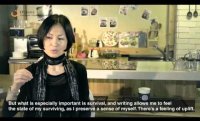
In this Literature Translation Institute of Korea interview, Kyung-Ran Jo talks about how writing helps her preserve a sense of herself and shares her process of starting with a voice before subject matter. Jo’s novel Blowfish (Astra House, 2025), translated from the Korean by Chi-Young Kim, is featured in Page One in the July/August issue of Poets & Writers Magazine.

Melissa Febos: The Dry Season

Caption: 

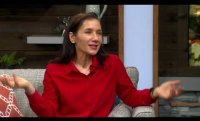
In this AM Northwest interview with host Helen Raptis, author Melissa Febos speaks about her fourth memoir, The Dry Season: A Memoir of Pleasure in a Year Without Sex (Knopf, 2025), and what she learned from taking a step away from romantic relationships. Febos’s book is featured in Page One in the July/August issue of Poets & Writers Magazine.

Generational Storytelling

6.19.25

In award-winning Palestinian American poet and novelist Hala Alyan’s debut memoir, I’ll Tell You When I’m Home (Avid Reader Press, 2025), she explores themes of loss and exile in conjunction with her experience preparing for the arrival of a new baby through surrogacy after years of struggling with infertility and miscarriages. While looking forward to the birth of her daughter, Alyan reflects on her family’s history with immigration and her childhood moving around Kuwait, Jordan, Lebanon, the UAE, Texas, and Oklahoma, and examines the roles of heritage and matriarchal storytelling. Write a personal essay that looks to the role of storytelling in your own family and childhood. What stories were told to you by parents, aunts and uncles, grandparents, and elders in your community? How are these stories and myths connected to your cultural inheritance and your formation as a writer and storyteller?

Carrie R. Moore

Caption: 

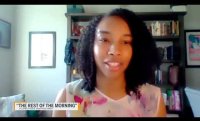
In this video, Carrie R. Moore, winner of the University of Texas at Austin’s 2021 Keene Prize for Literature, talks about how a Solange song inspired her short story “The Rest of the Morning.” Moore, author of Make Your Way Home (Tin House Books, 2025), is featured in “First Fiction 2025” in the July/August issue of Poets & Writers Magazine.

Genre: 

Double-booked

6.18.25

Double-booking can be a hilarious premise for comedy, as in the wedding rom-com films Bride Wars and You’re Cordially Invited in which two weddings are booked for the same venue on the same day, or a terrifying setup for horror, as in the 2022 film Barbarian in which a woman arrives at a rental home already occupied by a mysterious guest. This week write a short story that revolves around a reservation error that results in characters being unexpectedly forced into sharing a space. Do the opposing parties know each other or are they complete strangers? You might consider playing with narrative perspective and incorporating portions from opposing characters’ points of view or experimenting with a fragmentary structure to evoke suspense and disorientation. Is your story a comedy or horror of errors?

Pages

Subscribe to Poets & Writers RSS