Miami, Florida

P. Scott Cunningham, poet and director of the literary festival O, Miami, gives a writer's tour of Miami, Florida—a city in the throes of cultural enlightenment.
Jump to navigation Skip to content

P. Scott Cunningham, poet and director of the literary festival O, Miami, gives a writer's tour of Miami, Florida—a city in the throes of cultural enlightenment.
Terror suspects arrested this week reportedly were inspired by a manuscript posted online; the fate of St. Mark's Bookshop in New York City seems finally to be resolved; Bob Vila tours Edith Wharton's restored Berkshire retreat; and other news.
In this excerpt from a short film directed by Griffin Dunne, Joan Didion reads from the second chapter of her new memoir, Blue Nights. Be sure to read Kevin Nance's moving profile of Didion in the current issue and listen to Kimberly Farr read a passage of the audio book.
The Inspired Word, a twice-weekly poetry, spoken word, and performance series in New York City, featured P&W-supported poet Beau Sia on September 22. Inspired Word founder and producer Mike Geffner (whose journalistic work has appeared in USA Today, Details Magazine, and the Village Voice) describes the evening.
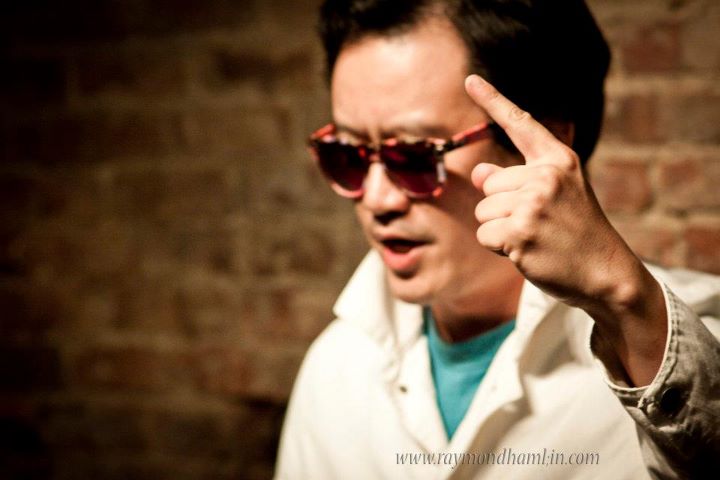
At my Inspired Word series in Manhattan’s East Village, Los Angeles poet Beau Sia took the stage donned like some kind of rock star: chalk-white jacket flipped up (Elvis-style) at the collar, tight-fitting jeans, and nifty looking maroon-colored shades.
It all seemed pretty cool until we quickly found out the sunglasses weren’t a fashion statement. His eyes, you see, were sensitive right now. “This light is painful to me,” he told the packed downstairs Nexus Lounge–a crowd of about fifty people–inside the Irish pub, One and One. He wore ear plugs too. Because his ears were sensitive as well, he said as flat as can be, his arms pinned to his sides like a pair of wooden slats and his neck, as if held by a brace, not budging a smidgen.
He went on to explain that he’d recently had a bad car accident, suffered whiplash, and now had “this brain-stem injury thing,” which meant a sudden jolt could send his world upside down. Which also meant that he had no choice other than to be desperately “low key." He apologized in advance for not being at his best.
Indeed, imagining a poet known for his frenetic performances (on HBO's Def Poetry and as a two-time National Poetry Slam Champion) unable to use his body reminded me of what Gay Talese once famously wrote about Sinatra having a cold: It’s like “Picasso without paint, Ferrari without fuel.”
“You guys can’t imagine how frustrating it is for me," Sia said early on, "to not utilize my full physical capability."
But a poet of stunning range, Sia still pulled it off brilliantly, reading with such intensity that his body appeared to pulsate. He had us all leaning forward (with poignant pieces about life’s fragility and wisdom gained from working with stroke patients), laughing a whole lot (especially one moment when he cranked up a stiff left arm to count off parts of his poem with equally stiff fingers), and thinking a ton.
“It’s pretty awesome of you guys to be listening as deeply as you are,” he said. “I can feel [it].”
He received a standing ovation, having created, despite everything working against him, a truly magical evening. He could’ve easily blown off the night and called in sick. But he didn't. Instead, he endured all the discomfort and pain and weirdness for the sake of doing nothing more than sharing his words with an audience. It’s what I’ll remember most about that night. Not the words so much, as what he went through to utter them. Could poetry be any more inspiring?
Photo: Beau Sia. Credit: Raymond Hamlin.
Support for Reading/Workshops events in New York is provided, in part, by public funds from the New York State Council on the Arts, with additional support from the Friends of Poets & Writers.
Each summer Robert Frost's New Hampshire farmhouse, nestled on a country road with a view of the White Mountains, opens up to one resident poet.
This year, writers "at an artistic and personal crossroads comparable to that faced by Robert Frost when he moved to Franconia in 1915" have an extra few weeks to apply for the opportunity, until the end of November.
The residency, which is available for six to eight weeks between July 1 to August 31, offers a poet exclusive use of the non-public rooms of the house (part of it is a museum). The poet will also give a series of regional readings—Dartmouth College will be one of the stops—and in turn will receive a one-thousand-dollar honorarium.
Aside from the spirit of Frost himself, one might find evidence of contemporary luminaries who have recently spent time living at the farm. Among past resident poets are Robert Hass, Major Jackson, Cleopatra Mathis, Katha Pollitt, and Mary Ruefle. Emerging writer K. A. Hays (Dear Apocalypse, Carnegie Mellon University Press, 2009) won last summer's residency.
Visit the Frost Place website for guidelines on applying before November 30.
In the video below, a reading of "The Road Not Taken" by Frost accompanies a tour of the woods and poetry trail around the poet's farmhouse.
A closer look at Amazon Publishing's numbers; Elizabeth Bishop was also a painter, and a book of her visual art has been published; Salmon Rushdie weighs in on Kim Kardashian; and other news.
Inspired by Herman Melville's masterpiece, Ohio artist Matt Kish crafted an original piece of art for each page of Moby-Dick. The resulting collection was published in October by Tin House Books. Take a closer look at Kish's work in this issue's installment of The Written Image as well as the related slideshow, which features eleven images from Moby-Dick in Pictures.
Ragip Zarakolu, a publisher and free-speech activist, has been imprisoned by the Turkish government; Novelist Hisham Matar will return to Libya to find his father, long imprisoned by the Qaddafi regime; how to save thousands of dollars on rare books; and other news.
L. S. Klatt reads a poem from Cloud of Ink (University of Iowa Press, 2011) in this short film by Tom Jacobsen. Andrew Wyeth, who died in 2009, was a visual artist best known for his painting "Christina's World," an image of which appears in the clip.
Celebrating the kickoff of National Novel Writing Month, the website HubPages, a sort of micro-blogging community, is holding a no-fee writing contest—for poets as well as fiction writers. Prizes of five hundred dollars, one hundred dollars, and fifty dollars will be given to writers in both genres, and one overall winner will be offered publication of a poetry or story collection via self-publishing outfit Smashwords (though editing of the manuscript is not part of the prize).
Writers are invited to create a HubPages login and then publish the works they wish to enter as "hubs," or short posts that are housed on the website under a variety of topic headings: poems and poetry, creative writing, and so on. Every post must be accompanied by a photo (a separate photo competition is also being held in conjunction with the writing contests).
The winners, to be announced on December 2, will be selected by judging panels made up of staff members and HubPages users pulled from the more than two-hundred-thousand registered with the site. Entries may be posted (with the tag "contest") until November 22.
Complete guidelines, including links to the profiles of each panelist, are available on the Hub Patron of the Arts web page.