What We Carry

8.19.20

Tim O’Brien’s classic war novel The Things They Carried (Houghton Mifflin Harcourt, 1990) begins by listing objects that each soldier carries with them: “Among the necessities or near-necessities were P-38 can openers, pocket knives, heat tabs, wristwatches, dog tags, mosquito repellent, chewing gum, candy, cigarettes, salt tablets, packets of Kool-Aid, lighters, matches, sewing kits…” This inventory provides effective context for both their needs as characters and the exposition of the novel. Write a story that begins with a list of objects your protagonist carries. What objects are familiar, and which are surprising? How do these items connect to your character’s needs, desires, and motivations?

Alan Chazaro Reads From Piñata Theory

Caption: 

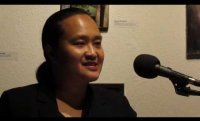
In this video for the Black Lawrence Press Virtual Reading Series, Alan Chazaro discusses moving to Mexico to write, and reads from his chapbook, This Is Not a Frank Ocean Cover Album (Black Lawrence Press, 2019), and his debut poetry collection, Piñata Theory (Black Lawrence Press, 2020), which is featured in Page One in the September/October issue of Poets & Writers Magazine.

Genre: 

The Punctum

8.18.20

In Roland Barthes’s 1981 book Camera Lucida, he introduces the concept of a photograph’s punctum, which can be defined as the sensory, intensely subjective effect of a photograph on the viewer, or as he puts it: “that accident which pricks me (but also bruises me, is poignant to me).” Barthes contrasts the punctum with the studium, which is the more general approach to a photograph informed by historical and cultural experiences. Choose a personal photograph and meditate on the specific conditions, feelings, and circumstances behind it. What do you feel and know from looking at it? Then, identify the precise detail in the photograph you are drawn to—what is it exactly? Using your senses, write a poem that centers and delves into the punctum, the precise detail. What does a detail reveal about the whole?

Barbara Jane Reyes: Letters to a Young Brown Girl

Caption: 

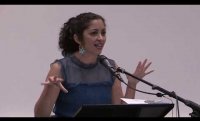
“I want to say I was waiting but I don’t know what I was waiting for.” In this video, Barbara Jane Reyes reads from her poetry collection Letters to a Young Brown Girl (BOA Editions, 2020) for the Well-RED reading series, presented in partnership with Poetry Center San José at Works/San José community art and performance center. The collection is featured in Page One in the September/October issue of Poets & Writers Magazine.

Genre: 

A Reading With Aimee Nezhukumatathil

Caption: 

“Every hand that once reached / for me still haunts me at the most unexpected times.” In this video, Aimee Nezhukumatathil reads a selection of poems covering her time as a high school mascot, bad reviews of the seven wonders of the world, and The Incredible Hulk for Poetry @ Tech in Atlanta. A Q&A with Nezhukumatathil by Ross Gay appears in the September/October issue of Poets & Writers Magazine.

Genre: 

A Stack of Photographs

8.13.20

“If this story was a stack of photographs—the old kind, rounded at the corners and kept in albums under the glass and lace doilies of center tables in parlors across the country—it would start with Vivek’s father, Chika. The first print would be of him riding a bus to the village to visit his mother,” writes Akwaeke Emezi at the start of their second novel, The Death of Vivek Oji, out this month from Riverhead Books. Taking inspiration from this novel’s introduction, think of a transformative time from your past or an incident that resulted in a change in perspective, one that involved family or friends. If you were to tell the story of this experience as a stack of photographs, what images spring to mind? Write a personal essay that begins with descriptions of a few memorable photos—or mental snapshots you’ve retained—allowing the details in the images to provide a contextual background.

Akwaeke Emezi on Belonging

Caption: 

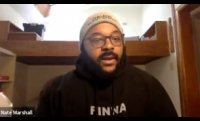
“I can make worlds. That’s literally my job, is to make worlds,” says Awkaeke Emezi in this American Writers Museum video. “Instead of searching for other people to give me a place to belong, I just bent one into existence myself.” Emezi’s latest novel, The Death of Vivek Oji (Riverhead Books, 2020), is featured in Page One in the September/October issue of Poets & Writers Magazine.

Genre: 

Skip Forward

8.12.20

“My first visit to Tokyo Station was ten years earlier, the summer I turned twenty. It was a day like today, when you can never wipe off all the sweat.” In the opening scene of Mieko Kawakami’s novel Breast and Eggs, translated from the Japanese by Sam Bett and David Boyd and published by Europa Editions in April, the thirty-year-old narrator is caught in a moment of loneliness and thinks back to another summer memory ten years prior. The second part of the novel occurs ten years later: “August. Two-thirty in the afternoon. Everything before our eyes burned white, and the sky was a perfect blue over the buildings, the total blue of a computer screen.” Write a short story that is split into two or three parts by the passing of a decade. How do familiar markers—like seasonal changes, reunions with friends or family, or descriptions of the body—pull to the surface the ways your main character has stayed the same, or changed?

Skazat and the Living Room in July

As summer swiftly sweeps through Detroit, I’ve been keeping an eye out for more virtual events. Today I want to highlight two virtual readings I was able to attend in July that have more events coming soon.

Skazat! Poetry Series at Sweetwaters is based in Ann Arbor, a short drive from Detroit and a regular destination for many of us. Skazat! has been around for as long as I can remember and is hosted by Scott Beal. Beal is the author of >Wait ‘Til You Have Real Problems published by Dzanc Books in 2014 and The Octopus published by Gertrude Press in 2016. Additionally, Beal is the winner of a 2014 Pushcart Prize for the poem “Things to Think About.” Beal has invited me to read for the series a few times in the past which have been great experiences, so it is encouraging to see it continuing virtually. On July 28 Skazat! featured Jon Sands, winner of the 2018 National Poetry Series, selected for his second poetry collection, It’s Not Magic (Beacon Press, 2019). This event offered a light-hearted open mic and then a powerful reading by Sands, all via Zoom. Skazat! will be returning in October following an annual late-summer break.

M. L. Liebler has established the Living Room Online Literary Series during Michigan’s stay-at-home orders. Liebler is known for many reading series in the Detroit area and has overseen publications such as the Wayne Literary Review with Wayne State University’s Department of English. The Living Room Online Literary Series features three artists. In July, we heard from this Gary Metras, author of White Storm (Presa Press, 2018); Laura Hulthen Thomas, University of Michigan’s RC creative writing director; and a personal favorite and Detroit native, Aurora Harris. Liebler will be returning with this series on August 16 with Mark Doty, Minnie Bruce Pratt, and Mary Jo Frith Gillett. Find the series on Facebook to join the event!

Both of these series offered a relaxing yet relevant listening party for me last month. With the open mics and the diverse featured readers, I was happy to attend and definitely will have their upcoming events on my calendar!

Justin Rogers is the literary outreach coordinator for Poets & Writers in Detroit. Contact him at [email protected] or on Twitter, @Detroitpworg.


Pages

Subscribe to Poets & Writers RSS