The Deep Sea

1.19.23

In a recent installment of our Writers Recommend series, Janine Joseph, author of Decade of the Brain (Alice James Books, 2023), writes about finding solace in computer scientist Neal Agarwal’s the Deep Sea website. Scrolling down the website, Joseph discovers animals and plant life at varying depths of the ocean, including the wolf eel, the chain catshark, and the terrible claw lobster. In the ocean’s midnight zone, where “creatures survive by their own light,” she finds inspiration in “what can and might exist at those disappearing depths.” Write an essay that meditates on the mysteries and profundities of the ocean. Does its depth inspire awe and wonder as it does for Joseph, or does it strike fear in you?

Behind the Awards

1.18.23

It’s awards show season for the film and television industry, but behind the camera are all the hardworking folks that make these shows happen. From florists arranging dramatic centerpieces, to chauffeurs driving celebrities from venue to venue, to the graphic designers of the envelopes holding the winners’ names—each individual helps make these one-night-only events possible. Consider what happens behind the scenes at one of these massive events and write a story from the perspective of someone working for an awards show. Imagine the mounting pressure throughout the night, the unexpected responsibilities that may arise, and the difficult celebrities one might encounter for the details in your story.

Sabrina Imbler

Caption: 

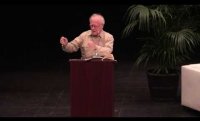
In this video, Sabrina Imbler speaks about their debut book, How Far the Light Reaches: A Life in Ten Sea Creatures (Little, Brown, 2022), with journalist Heather Smith after an introduction by Rebecca Solnit for this event hosted by the Green Arcade in San Francisco. Imbler’s book is featured in Page One in the January/February issue of Poets & Writers Magazine.

Stephen Markley on The Deluge

Caption: 

“The way in is always through human beings.” Stephen Markley discusses his new novel, The Deluge (Simon & Schuster, 2023), and the importance of emotionally connecting to characters when writing about topics such as climate change in this Late Night With Seth Meyers interview.

Genre: 

Delight and Distraction

1.12.23

In a Q&A with Kaveh Akbar by Claire Schwartz, published in the September/October 2021 issue of Poets & Writers Magazine, the poet reflects on the image of a salad spinner in his long poem “The Palace.” He writes: “I have a salad spinner in my kitchen, and we use it. Every time I see it, I’m like, ‘What a ghoulish thing to have—this thing that spins lettuce.’ I can’t think of anything more useless, a more damning indictment of our relative comfort.” What central everyday objects remind you of your relative comfort, or lack thereof? Write an essay that uses concrete images to reflect on the pleasures of your daily life. Do you ever feel shame about these pleasures?

Benjamín Labatut on Literature and Science

Caption: 

“I think of literature as a science that really cares about experiments, you can consider the wildest ideas, and you can play with theories that are wrong, that are delirious and insane.” Chilean novelist Benjamín Labatut, author of When We Cease to Understand the World (New York Review of Books, 2021), translated from the Spanish by Adrian Nathan West, speaks with his Danish translator Peter Adolphsen for this Louisiana Channel interview.

Genre: 

Astrological Reading

1.11.23

The multitude of popular astrology apps—such as Co–Star, the Pattern, and Time Passages—exemplifies how the ancient study of celestial bodies predicting what happens on Earth is still very relevant. Many rely on astrological readings for career and dating advice, financial decisions, spiritual guidance, and even for what books to read. Write a short story in which a character relies on astrology to make a major life decision. How does their relationship to this divinatory practice change once things are set in motion?

Passing Minutes

1.10.23

In David Kirby’s poem “The Hours,” published in the latest issue of the Bennington Review, the poet reflects on a subject that feels more significant at the start of a new year: the presence of time. “I’m going to rely on you hours to lead me, / to open one door after another and beckon / me through. Look it’s time to make lunch. / Look, it’s time to go back to work. Look, / it’s time to rub cat Patsy’s belly again,” he writes. This week, write a poem that ruminates on the presence of time in your life. How does your perception of the passing minutes change from season to season?

Pages

Subscribe to Poets & Writers RSS