Rebe Huntman

Caption: 

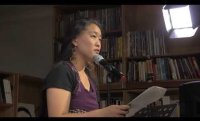
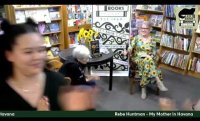
In this Left Bank Books event, Rebe Huntman talks about her journey to Cuba following her mother’s passing, which inspired her debut memoir, My Mother in Havana: A Memoir of Magic & Miracle (Monkfish Book Publishing Company, 2025). For more from Huntman, read her installation of our Ten Questions series.

Oral History

2.27.25

Have you ever conducted an oral history interview? There are many reasons for recording one, from documenting family stories to reporting the experiences of survivors of tragedies and storing knowledge and perspectives of a particular region or culture. Try your hand at documenting personal reflections by turning to a friend, acquaintance, or family member and conduct a short interview with them, selecting a particular element of their life that you would be curious to know more about and that they wouldn’t mind sharing. You might browse your local library’s oral history projects, maps, and photographs for ideas. Afterward, write a personal essay about the experience. How did preparing the questions and asking someone to share their stories affect the dynamic of your relationship?

A Conversation With Omar El Akkad

Caption: 

For this Conduit Club event hosted by Max Porter in London, Egyptian Canadian novelist and journalist Omar El Akkad discusses his debut memoir, One Day, Everyone Will Have Always Been Against This (Knopf, 2025), and reflects on the “derangement of language” while reporting the War on Terror and the threats faced by journalists in Gaza today.

Not for Anything

2.26.25

The phrase “for love nor money” is used when referring to an impossibility of persuading someone to do something, that they will not even do it for love or money. This week take inspiration from this idea of ineffective incentives and write a short story in which your main character insists there is something they would never do. Consider your character’s past and what has led them to this conviction. What happens if the circumstances shift for your character and love or money hangs in the balance? Do they hold true to their stance and resist all temptation?

Sarah Chihaya: Bibliophobia

Caption: 

In this episode of Poured Over: The Barnes & Noble Podcast hosted by Miwa Messer, book critic and editor Sarah Chihaya talks about her debut memoir, Bibliophobia (Random House, 2025), and the concept of “life ruiner” books that “not only make you want to keep reading, but make you read the world around you differently.”

Common Words

2.25.25

According to the Oxford English Corpus, a text corpus of twenty-first-century English with over two billion words collected from online and print sources produced by Anglophone countries, time, person, year, way, and day are the top five most common nouns in the English language. Browse through lists of the most common words, whether nouns, verbs, adjectives, prepositions, pronouns, or articles. Instead of making use of unusual language, write a poem that revolves around playing with the most common ones. Experiment with how you might be able to manipulate unconventional repetition, syntax, spacing, or grammar to express fresh and unexpected meanings.

Evie Shockley at Smith College

Caption: 

In this event hosted by the Boutelle-Day Poetry Center at Smith College, Evie Shockley reads a selection of new poems, as well as some from her latest poetry collection, suddenly we (Wesleyan University Press, 2023), and discusses her vision for solidarity in these times in a conversation with Yona Harvey.

Genre: 

Lauren Francis-Sharma on Casualties of Truth

Caption: 

In this Politics and Prose Bookstore event, Lauren Francis-Sharma reads from and speaks about her third novel, Casualties of Truth (Atlantic Monthly Press, 2025), in a conversation with Kwame Alexander. The novel is featured in Page One in the March/April issue of Poets & Writers Magazine.

Genre: 

Memories of Eating

2.20.25

In “Eat, Memory,” an essay published by Harper’s Magazine in 2017, author David Wong Louie, who passed away a year after its publication, wrote about his experiences enduring years of treatment for throat cancer. Radiation, chemotherapy, a gastrostomy feeding tube, and laryngectomy surgery all affected his lifelong love for eating food and drinking, and he discovered how his memories of time spent with family and friends were deeply tied to communal dining. Write a lyric essay composed of short vignettes of memories you have that are tied to food—whether preparing and cooking meals, celebrating while eating out at a restaurant, buying produce at the market, or recalling phases of favorite snacks shared with friends. Taken together, how do these memories reveal a larger portrait of how you’ve enjoyed or been nourished by time spent around food?

Pages

Subscribe to Poets & Writers RSS