Influenced

3.19.25

In Matt Spicer’s 2017 dark comedy film Ingrid Goes West, Aubrey Plaza stars as a woman obsessed with social media who moves to Los Angeles after a brief stint in a psychiatric ward and attempts to befriend her influencer idol which eventually leads to chaos. The satire makes clear the extent to which the use of social media can be a type of performance and the potential destruction that may result from mistaking artifice for truth. Write a short story in which one of your main characters interacts with social media in a way that has dramatic repercussions due to their excessive trust in digital personas and confusion between reality and life online. You might play around with describing and presenting social media posts, language, and imagery in an innovative way.

Development and Denouement

3.18.25

Over the course of Rita Dove’s three-stanza prose poem “Prose in a Small Space,” the speaker meanders through a sequence of questions, observations, and digressions, periodically returning to the functionality of the prose poem form itself. “Prose likes to hear itself talk; prose is development and denouement, anticipation hovering near the canapés, lust rampant in the antipasta,” writes Dove. This week, forgo the options of line breaks and nonstandard grammar of more conventional poetry, and compose a series of short prose poems that take greater advantage of other poetry elements—rhythm, prosody, diction, pacing, and sensory details. Allow your prose to “hear itself talk,” develop, and conclude.

Translating Yukio Mishima

Caption: 

In this Knopf video, John Nathan speaks about his translation process, his personal relationship with Yukio Mishima, and the historical context of Voices of the Fallen Heroes: And Other Stories (Vintage, 2025), a newly published collection of Mishima’s work with an introduction by Nathan, edited by Stephen Dodd.

Mohsin Hamid on His Writing Process

Caption: 

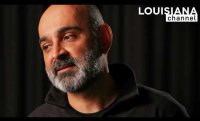
In this Louisiana Channel interview, Mohsin Hamid talks about how his writing process has changed over the years with each novel he’s written, the importance of form and structure to a reader’s understanding of narrative, and the responsibility of writers to establish and shape reality. “We talk about reality as though it is real, but we are aware that we are creating it,” he says.

Genre: 

The Antidote: Karen Russell in Conversation With Brian Gresko

Caption: 

In this Poets & Writers event, Karen Russell reads from her new novel, The Antidote (Knopf, 2025), and joins frequent Poets & Writers Magazine contributor Brian Gresko for a discussion on the Dust Bowl research that went into the book and the competing histories of the so-called American Dream of westward expansion. A profile of Russell by Gresko appears in the March/April issue of Poets & Writers Magazine.

Genre: 

Shubha Sunder: Optional Practical Training

Caption: 

In this Brookline Booksmith event, Shuba Sunder reads from her first novel, Optional Practical Training (Graywolf Press, 2025), and speaks about the process of writing her “immigrant novel” in a conversation with Neema Avashia. Optional Practical Training is featured in Page One in the March/April issue of Poets & Writers Magazine.

Genre: 

Five Years Later

3.13.25

On March 11, 2020, the World Health Organization declared COVID-19 a global pandemic. Five years later, it may all feel like a distant dream (or nightmare) or completely forgotten, but there’s no denying that the pandemic created irrevocable changes in our world, both big and small. Write a personal essay that reflects on how your life has transformed in the last five years. You might trace certain hopes, fears, or expectations as they evolved over the course of each year and consider where you are today. What have been the biggest shifts in your mindset regarding relationships with family and friends, socializing, health, finances, and travel?

Han Kang: Nobel Prize Interview

Caption: 

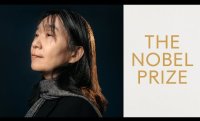
In this Nobel Foundation interview, Han Kang, winner of the 2024 Nobel Prize in literature, talks about her writing process and how she draws inspiration from being present in everyday life. “Reading books, and especially reading literature, enables you to enter the depths of another human,” she says. “It’s a very direct way to enter the other’s heart or soul.”

Genre: 

First and Last Words

3.12.25

In Bye Bye I Love You: The Story of Our First and Last Words (The MIT Press, 2025), linguist and author Michael Erard examines the beginnings of language in infancy and the endings in aging and death from a range of angles: common and idiosyncratic utterances, perspectives on their importance, and the beliefs and practices underpinning first words and last words from different eras, cultures, and religions. Write a short story that revolves around either someone’s first or final words—perhaps a sentence, phrase, or fragment that could be interpreted in multiple ways or is somehow cryptic. How do the other characters respond? Are there disagreements about the significance or meaning of these words?

Calm and Collected

3.11.25

Can a poem calm the nerves? Whether it’s reading, listening to music, meditating, taking a walk, or observing the natural environment, consider the activities and sensory experiences that bring you some peace of mind. Compose a poem with diction, rhythm, imagery, and sentiments that evoke a state of tranquility. You might prepare by initially jotting down a list of words, phrases, and tidbits of sensory details, including specific sounds and types of words that align with your serene tone. Be open and allow yourself to be honest—and even playful—about what calms you down.

Pages

Subscribe to Poets & Writers RSS