Find details about every creative writing competition—including poetry contests, short story competitions, essay contests, awards for novels, grants for translators, and more—that we’ve published in the Grants & Awards section of Poets & Writers Magazine during the past year. We carefully review the practices and policies of each contest before including it in the Writing Contests database, the most trusted resource for legitimate writing contests available anywhere.
Find a home for your poems, stories, essays, and reviews by researching the publications vetted by our editorial staff. In the Literary Magazines database you’ll find editorial policies, submission guidelines, contact information—everything you need to know before submitting your work to the publications that share your vision for your work.
Whether you’re pursuing the publication of your first book or your fifth, use the Small Presses database to research potential publishers, including submission guidelines, tips from the editors, contact information, and more.
Research more than one hundred agents who represent poets, fiction writers, and creative nonfiction writers, plus details about the kinds of books they’re interested in representing, their clients, and the best way to contact them.
Find publishers ready to read your work now with our Open Reading Periods page, a continually updated resource listing all the literary magazines and small presses currently open for submissions.
Since our founding in 1970, Poets & Writers has served as an information clearinghouse of all matters related to writing. While the range of inquiries has been broad, common themes have emerged over time. Our Top Topics for Writers addresses the most popular and pressing issues, including literary agents, copyright, MFA programs, and self-publishing.
Our series of subject-based handbooks (PDF format; $4.99 each) provide information and advice from authors, literary agents, editors, and publishers. Now available: The Poets & Writers Guide to Publicity and Promotion, The Poets & Writers Guide to the Book Deal, The Poets & Writers Guide to Literary Agents, The Poets & Writers Guide to MFA Programs, and The Poets & Writers Guide to Writing Contests.
Poets & Writers lists readings and other literary events held online and in person. Whether you are an author on a book tour or the curator of a reading series, the Literary Events Calendar can help you find your audience.
Research newspapers, magazines, websites, and other publications that consistently publish book reviews using the Review Outlets database, which includes information about publishing schedules, submission guidelines, fees, and more.
Well over ten thousand poets and writers maintain listings in this essential resource for writers interested in connecting with their peers, as well as editors, agents, and reading series coordinators looking for authors. Apply today to join the growing community of writers who stay in touch and informed using the Poets & Writers Directory.
Since our founding in 1970, Poets & Writers has served as an information clearinghouse of all matters related to writing. While the range of inquiries has been broad, common themes have emerged over time. Our Top Topics for Writers addresses the most popular and pressing issues, including literary agents, copyright, MFA programs, and self-publishing.
Find a writers group to join or create your own with Poets & Writers Groups. Everything you need to connect, communicate, and collaborate with other poets and writers—all in one place.
Well over ten thousand poets and writers maintain listings in this essential resource for writers interested in connecting with their peers, as well as editors, agents, and reading series coordinators looking for authors. Apply today to join the growing community of writers who stay in touch and informed using the Poets & Writers Directory.
Find information about more than two hundred full- and low-residency programs in creative writing in our MFA Programs database, which includes details about deadlines, funding, class size, core faculty, and more. Also included is information about more than fifty MA and PhD programs.
Whether you are looking to meet up with fellow writers, agents, and editors, or trying to find the perfect environment to fuel your writing practice, the Conferences & Residencies is the essential resource for information about well over three hundred writing conferences, writers residencies, and literary festivals around the world.
Poets & Writers lists readings and other literary events held online and in person. Whether you are an author on a book tour or the curator of a reading series, the Literary Events Calendar can help you find your audience.
Discover historical sites, independent bookstores, literary archives, writing centers, and writers spaces in cities across the country using the Literary Places database—the best starting point for any literary journey, whether it’s for research or inspiration.
From in-person events held in cities across the country to virtual events available to all, Poets & Writers Live offers a more tangible connection to the community of writers through celebrations of authors featured in the pages of Poets & Writers Magazine, including readings and conversations with the debut authors in our annual debut poets roundup, First Fiction, The New Nonfiction, and 5 Over 50 and acclaimed authors such as Garth Greenwell, Douglas Kearney, Karen Russell, and Clint Smith.
Establish new connections and enjoy the company of your peers using our searchable databases of MFA programs and writers retreats, apply to be included in our directory of writers, and more.
Each year the Readings & Workshops program provides support to hundreds of writers participating in literary readings and conducting writing workshops. Learn more about this program, our special events, projects, and supporters, and how to contact us.
The Maureen Egen Writers Exchange Award introduces emerging writers to the New York City literary community, providing them with a network for professional advancement.
Find information about how Poets & Writers provides support to hundreds of writers participating in literary readings and conducting writing workshops.
Bring the literary world to your door—at half the newsstand price. Available in print and digital editions, Poets & Writers Magazine is a must-have for writers who are serious about their craft.
View the covers and contents of every issue of Poets & Writers Magazine, from the current edition all the way back to the first black-and-white issue in 1987.
Find details about every creative writing competition—including poetry contests, short story competitions, essay contests, awards for novels, grants for translators, and more—that we’ve published in the Grants & Awards section of Poets & Writers Magazine during the past year. We carefully review the practices and policies of each contest before including it in the Writing Contests database, the most trusted resource for legitimate writing contests available anywhere.
Every day the editors of Poets & Writers Magazine scan the headlines—publishing reports, literary dispatches, academic announcements, and more—for all the news that creative writers need to know.
In our weekly series of craft essays, some of the best and brightest minds in contemporary literature explore their craft in compact form, articulating their thoughts about creative obsessions and curiosities in a working notebook of lessons about the art of writing.
The Time Is Now offers weekly writing prompts in poetry, fiction, and creative nonfiction to help you stay committed to your writing practice throughout the year. Sign up to get The Time Is Now, as well as a weekly book recommendation for guidance and inspiration, delivered to your inbox.
Ads in Poets & Writers Magazine and on pw.org are the best ways to reach a readership of serious poets and literary prose writers. Our audience trusts our editorial content and looks to it, and to relevant advertising, for information and guidance.
Start, renew, or give a subscription to Poets & Writers Magazine; change your address; check your account; pay your bill;
report a missed issue; contact us.
Poets & Writers is pleased to provide free subscriptions to Poets & Writers Magazine to award-winning young writers and to high school creative writing teachers for use in their classrooms.
Read select articles from the award-winning magazine and consult the most comprehensive listing of literary grants and awards, deadlines, and prizewinners available in print.
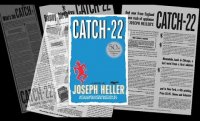
Earlier this year Simon & Schuster released a fiftieth-anniversary edition of Joseph Heller's Catch-22, the satrical novel set during World War II that is frequently cited as one of the great literary works of the twentieth century. Heller began writing it in 1953, and the novel was first published in November 1961.
Imagine a character whose job—such as a banker, thrift store cashier, babysitter, college president—typically implies certain traits about this person and a certain lifestyle. Write a story in which this character's life outside of his or her work is drastically different from what is typical. Explore in your writing why this is so, using it to inform the plot and to create tension in the story.
The National Book Foundation (NBF) announced the National Book Award finalists today from Portland on Oregon Public Broadcasting.
The finalists in poetry are: Nikky Finney for Head Off & Split (TriQuarterly Books/Northwestern University Press) Yusef Komunyakaa for The Chameleon Couch (Farrar, Straus and Giroux) Carl Phillips for Double Shadow (Farrar, Straus and Giroux) Adrienne Rich for Tonight No Poetry Will Serve: Poems 2007–2010 (Norton) Bruce Smith for Devotions (University of Chicago Press)
The finalists in fiction are: Andrew Krivak for his debut novel, The Sojourn (Bellevue Literary Press) Téa Obreht, who was honored by the NBF last year as a 5 Under 35 author, for her debut novel, The Tiger's Wife (Random House) Julie Otsuka for her novel The Buddha in the Attic (Knopf) Edith Pearlman for her story collection Binocular Vision(Lookout Books) Jesmyn Ward for her novel Salvage the Bones (Bloomsbury)
This year saw the first graphic book finalist, in the nonfiction category: Lauren Redniss's Radioactive: Marie & Pierre Curie: A Tale of Love and Fallout (It Books). The nonfiction shortlist also includes biographies of Malcolm X and Karl and Jenny Marx, as well as Stephen Greenblatt's The Swerve (Norton), a look at Lucretius's philosophical poem, "On the Nature of Things."
The National Book Award winners will be announced on November 16 in New York City.
In the video below, Finney reads and discusses the story behind a poem from Head Off & Split.
"How does reading about love affect how we fall in love today?" Jeffrey Eugenides, who wrote his third novel, The Marriage Plot, around that very question, discusses his new book, the influence of Nabokov, and the pressure of following up his Pulitzer Prize-winning novel, Middlesex.
The Association of German Publishers and Booksellers Foundation (Börsenverein des Deutschen Buchhandels Stiftung) awarded its 2011 German Book Prize on Monday evening just before the start of the Frankfurt Book Fair.
Fifty-seven-year-old author Eugen Ruge won the twenty-five-thousand-euro award (approximately thirty-four thousand dollars) for his first novel, In Zeiten des abnehmenden Lichts (In times of fading light).
The novel, which received the Alfred Döblin Prize in 2009 when still in manuscript form, was praised for its humor despite the gravity of its subject. "Ruge's family saga is a reflection of East German history," said the prize jury. "He manages to tame the experiences of four generations over fifty years into a dramatically refined composition. His book tells the story of the socialist utopia, the price demanded of the individual, and its gradual extinction."
An English translation of Ruge's novel is in the works, but a firm publication date has not been announced. In the meantime, English speakers can read a translated excerpt on the website Signandsight.
Adapted from Hunter S. Thompson's early novel, written in the early sixties but not published until 1998, Bruce Robinson's The Rum Diary, starring Johnny Depp, opens in theaters on October 28. In the meantime, check out Terry Gilliam's adaptation of Fear and Loathing in Las Vegas, also starring Depp.
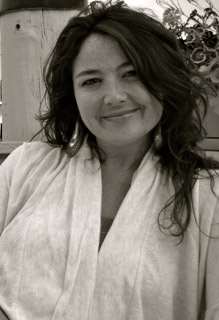
Instructor of applied theater at Cornish College of the Arts, Caroline Brown has facilitated workshops for diverse groups, including veterans, AIDS widows in Kenya, and incarcerated women, as well as P&W-supported writing/performance workshops with BABES Network-YWCA and Compass Housing Alliance in Seattle, Washington. Caroline shared some reflections on her work with us.
What makes your writing workshops unique? For the most part, my focus has been on the use of theater and performance as a means of helping marginalized communities share their stories with a wider audience. Writing has inevitably been an integral part of this process.
What techniques do you employ to help writers open up? I conducted a five-week writing workshop with Seattle-based BABES Network-YWCA, an organization that supports women living with HIV/AIDS. I asked the women to help me create group guidelines for the duration of the process. One woman shouted “spelling doesn’t count!” I was so pleased to hear her say this, as I know were the rest of the women. This simple guideline gave the women permission to avoid self-editing, trust their instincts, and find their voices.
I offer exercises that reveal commonality and reduce feelings of isolation amongst the group. I do this by asking participants to create collective poems or short stories that reflect both the diversity and similarities of the group. While conducting the workshop with Compass Housing Alliance, an organization that provides services and housing to homeless and low-income people, we created a composite character that reflected each individual’s respective experience. The group chose a key turning point for the character and took turns answering questions as that character. They were able to collectively narrate the story of how he met his goals. I feel strongly that the participants would not have been as engaged had the same subject matter been discussed outside the context of a fictional story.
What are the benefits of writing workshops for underserved groups? The work can be tiring and there are times when I yearn for a more conventional career. It is during moments of doubt that I remind myself of experiences such as the one I had working with incarcerated women in the Rhode Island state prison system. Upon completing a writing exercise one of the women asked me through tears if “we did these exercises on the outside.” She was being released from prison the next day and was scared of “going back to her old ways.” The workshops helped her to recognize herself as a good person, something she had never felt before. Her fear was that without such an outlet, she might forget this feeling and start making unhealthy decisions again. What stopped me in my tracks was the fact that such workshops are not so readily available to those who need them the most.
What effect has this work had on your life and/or your art? I am inspired by the risks individuals take within the creative process and the freedom they gain from doing so. My greatest challenge in this work is to remember how important that journey is to everyone, including myself. After seven years of encouraging others to endure the challenges that come with the creative journey, it is important to remind myself to embark on the same. I owe it to myself as well as to those who have shown so much courage in the face of their own hesitations toward the creative process.
Directed by Alan Govenar, the new film The Beat Hotel explores the legacy of Allen Ginsberg, Peter Orlovsky, Gregory Corso, and other American Beats who took refuge in a cheap no-name hotel in Paris during the late fifties and early sixties.
Write a scene for a story with two characters involved in the Occupy Wall Street movement. Use news stories about the movement in order to gather details to create a realistic setting.
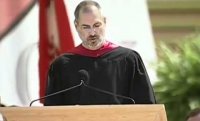
The visionary cofounder of Apple died of complications from pancreatic cancer yesterday at the age of fifty-six. Here are some choice cuts from his commencement address at Stanford University in 2005, presented in the form of a poem.







 What techniques do you employ to help writers open up?